Neil McDonnell: Trying to get champagne from a lemonade economy
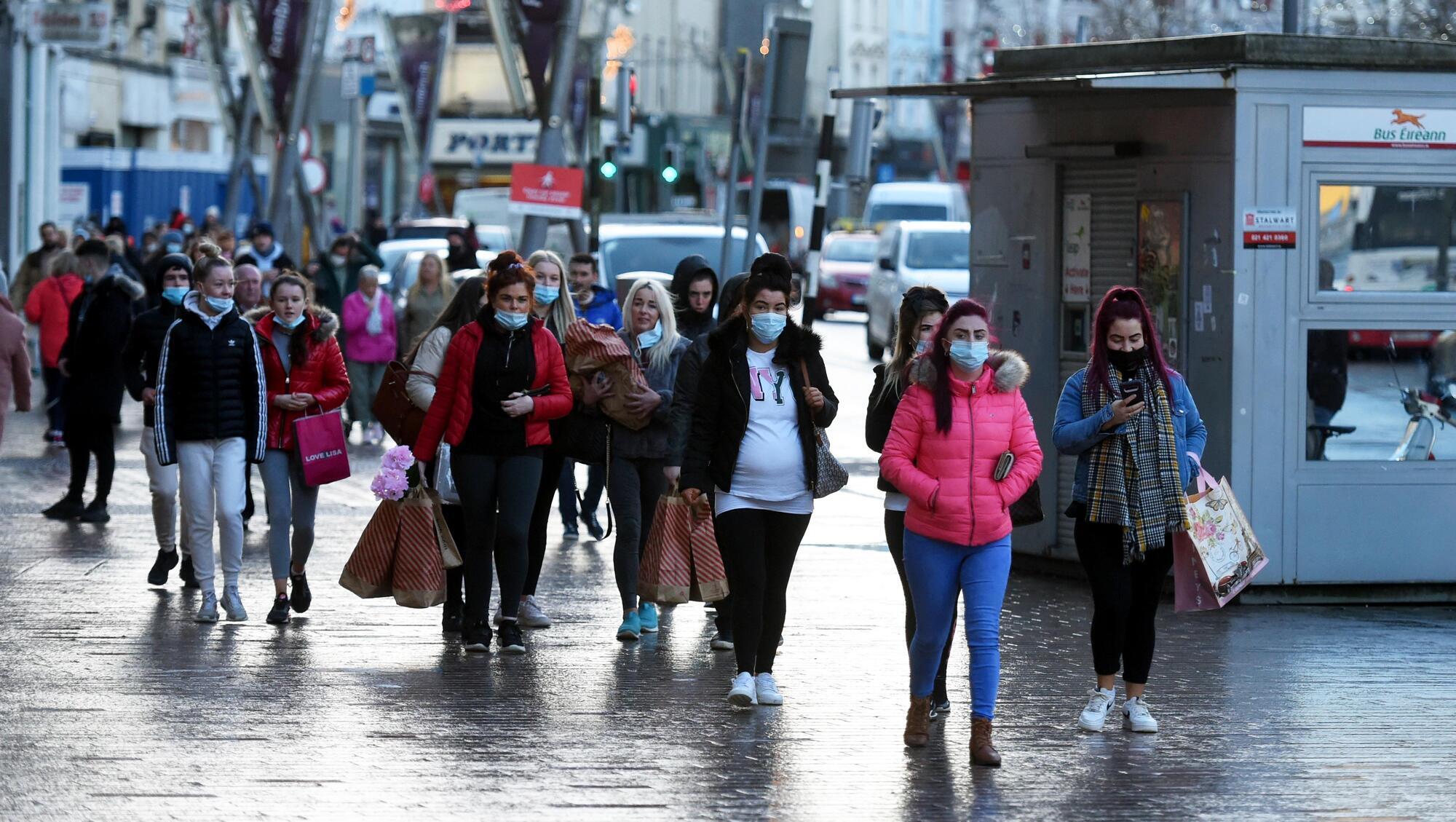
Shoppers on St Patrick's Street, Cork. Picture: Larry Cummins
Irish society has settled into the delusion we can sail through life with cheap housing, great pensions, free healthcare, cheap fuel, and that someone else will pay for it all.
Spring this year promised the ending of the great pandemic but unfortunately it also brought the return of inflation, and a tragic and imperialist war in Eastern Europe.
Before the invasion of Ukraine, the consensus social view was of the rude good health of the economy and improving economic output figures, albeit with a huge deficit in housing supply.
Political debate on housing creates much heat and anger but involves little engagement with problem solving.
Politicians suffer no ill-fortune for planning objections.
Meanwhile, performance in the domestic rather than the foreign-owned multinational economy is underwhelming.
The demand for increased public expenditure is insatiable, yet politicians lack the bottle to tell constituents that any such spending must be paid for.
Rising GDP figures mask a pedestrian domestic economy. Another key indicator of domestic performance is the number of listed companies here.
The Irish Stock Exchange has been delisting companies for two decades. That contrasts poorly with our peers.
The popular social media narrative suggests we live in a low-tax, low-regulation, low-wage, Stakhanovite-driven neo-liberal economy, with high levels of social deprivation and inequality, and public services starved of funding.
The opposition still uses the word “austerity” to suggest public sector under-funding.
While pre-tax and pre-transfer income inequality in Ireland is high, inequality in disposable income stood at its lowest recorded level on the eve of the pandemic.
The relatively high incomes enjoyed by employees in the public service and in our very large multinational sector contrast with the earnings in indigenous enterprise, and skew our average earnings figures.
A good example of perceived rather than actual parsimony in Ireland is the health service.
We are told we must spend at least another €2.8bn on Sláintecare even as healthcare spend has risen from €14.4bn in 2011 to an estimated €22.2bn.
Fixing the issues within the HSE and the wider public service is easy but taking the political decision to do so is hard.
Bureaucracies tend to look after themselves, not their clients.
A few years ago, on the BBC2 show , the late Donegal man dissected management and service performance at an English hospital.
What emerged was a sad picture of long waiting times, and no clear leadership, with consultants, doctors, and nurses working in silos.
One manager reckoned she could reduce an eight-week waiting list in a children’s clinic to two weeks, with a small increase in efficiency by consultants.
The series ultimately ended on a positive note, with waiting lists massively improved. However, the series also criticised the performance of managers and consultants.
It is likely that the same issues would be exposed if a similar programme was done here.
We can have the bigger state that our commentariat so desires, but must acknowledge that pouring more money into unreformed public services will not improve them.
It will just impoverish those other less powerful sectors of the economy crying out for resources.
And if we want to splash more cash on the public service, we need to encourage our indigenous enterprise sector to prosper.
- Neil McDonnell is chief executive of business group Isme
CONNECT WITH US TODAY



Be the first to know the latest news and updates