Austin Hughes: Not to intervene over inflation may risk a wage-price spiral
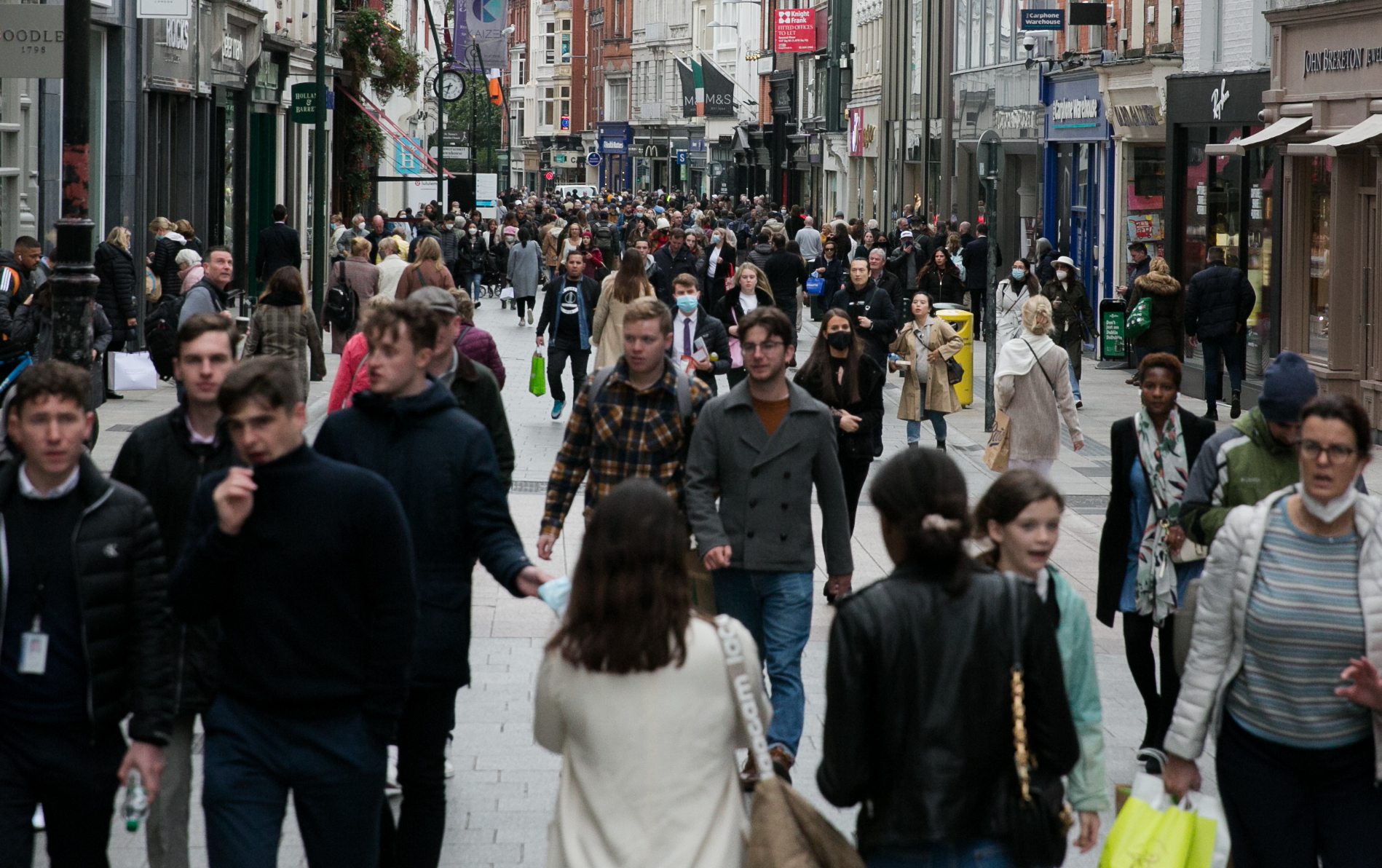
Shoppers on Grafton Street in Dublin. This week also saw some slight easing in Irish consumer price inflation to 5% in January from 5.5% in December.
A busy week for Irish economic data saw a sharp and widely shared improvement in the jobs market, a further rapid rise in property prices that partly reflects current economic strength, and ongoing cost of living pressures largely global in nature.
It is entirely understandable that the main focus in economic headlines at the moment is centred on cost of living pressures in general and surging property prices in particular.
To some extent, this is because what seemed like a much larger problem when the pandemic struck-the risk of large and long-lasting job losses and a dramatic rise in unemployment-has been avoided.
The strength of the turnaround in the Irish jobs market has been much more forceful than that seen elsewhere.
After an initial sharp drop in employment when Covid-19 first emerged sharp losses, numbers at work in Ireland at end 2021 recovered to stand 117,000 above the pre-pandemic peak.
In contrast, employment is still below its pre-pandemic level in the US, the UK and the rest of the eurozone.
The pace of job creation did slow somewhat in the final quarter of 2021, likely reflecting renewed Covid-related restrictions in some sectors and skill shortages in others.

Encouragingly since early 2020, employment has increased for all age groups, with the strongest improvements among younger workers.
The turnaround in the Irish jobs market has also been seen across all geographic regions with the increased incidence of working from home translating into stronger gains outside Dublin.
Almost inevitably, jobs market conditions vary significantly across sectors.
The pandemic and related structural changes have seen sustained employment losses in a number of sectors, most notably hospitality-related areas and support services.
Some other activities, including construction, are seeing relatively sluggish improvements while various sectors significantly associated with the operations of multinational companies are showing buoyant growth.
Importantly but not surprisingly, increased jobs in healthcare reflect demand for such services.
These differences pose notable challenges for policymakers.
‘Overheating’ concerns are confined to a number of sectors, implying that a restrictive fiscal stance is not warranted.
While ongoing support will be needed in areas such as hospitality and cultural activities for some significant time, finding the most efficient and fairest means to do this is not straightforward.
Finding a solution to the rapid rise in Irish property prices is also a major policy challenge.
This week saw Irish residential property price data show increases of 14.4% year-on-year in December, the fastest pace of increase in almost seven years.
There is little question that the resolution of current problems in regard to housing lies primarily in relation to increasing supply.
However, current pressures have been notably amplified by the current buoyancy of homebuyer demand.
Over the past 10 years, Irish household income growth has been more than twice as fast as the rest of the eurozone, while population growth has been about four times as fast.
As a result, we see surging property prices even though preliminary transactions data show December 2021 transactions as the highest monthly level on record.
This week also saw some slight easing in Irish consumer price inflation to 5% in January from 5.5% in December.
This is most likely a temporary interruption to the sharply rising trend seen through 2021.
That trend mirrors pressures worldwide, largely due to surging global oil prices and, to a lesser degree, problems with global supply chains in the wake of the pandemic.
A more generalised increase in price pressures is now a significant risk for 2022 and beyond. But, with a little luck and considered policy actions, a gradual easing should take Irish inflation materially lower into 2023 although it is likely to run a good deal hotter in coming years than prior to the pandemic.
The Irish Government cannot insulate this economy from what is effectively an adverse global supply shock and attempts to do so could well produce even larger and longer-lasting economic and social difficulties as Ireland’s extremely painful experience of the late 70s and early 80s warns.
However, this does not mean that temporary measures are not required to soften the economic blow generally and avoid particularly damaging outcomes for those most affected by the surge in prices.
Not to intervene may also increase materially the risk of a damaging wage-price spiral.
This means it may be economically and socially desirable to implement additional targeted supports in coming months.
- Austin Hughes is chief economist at KBC Bank Ireland
CONNECT WITH US TODAY



Be the first to know the latest news and updates