US investment vital to Irish economy, says IDA chief
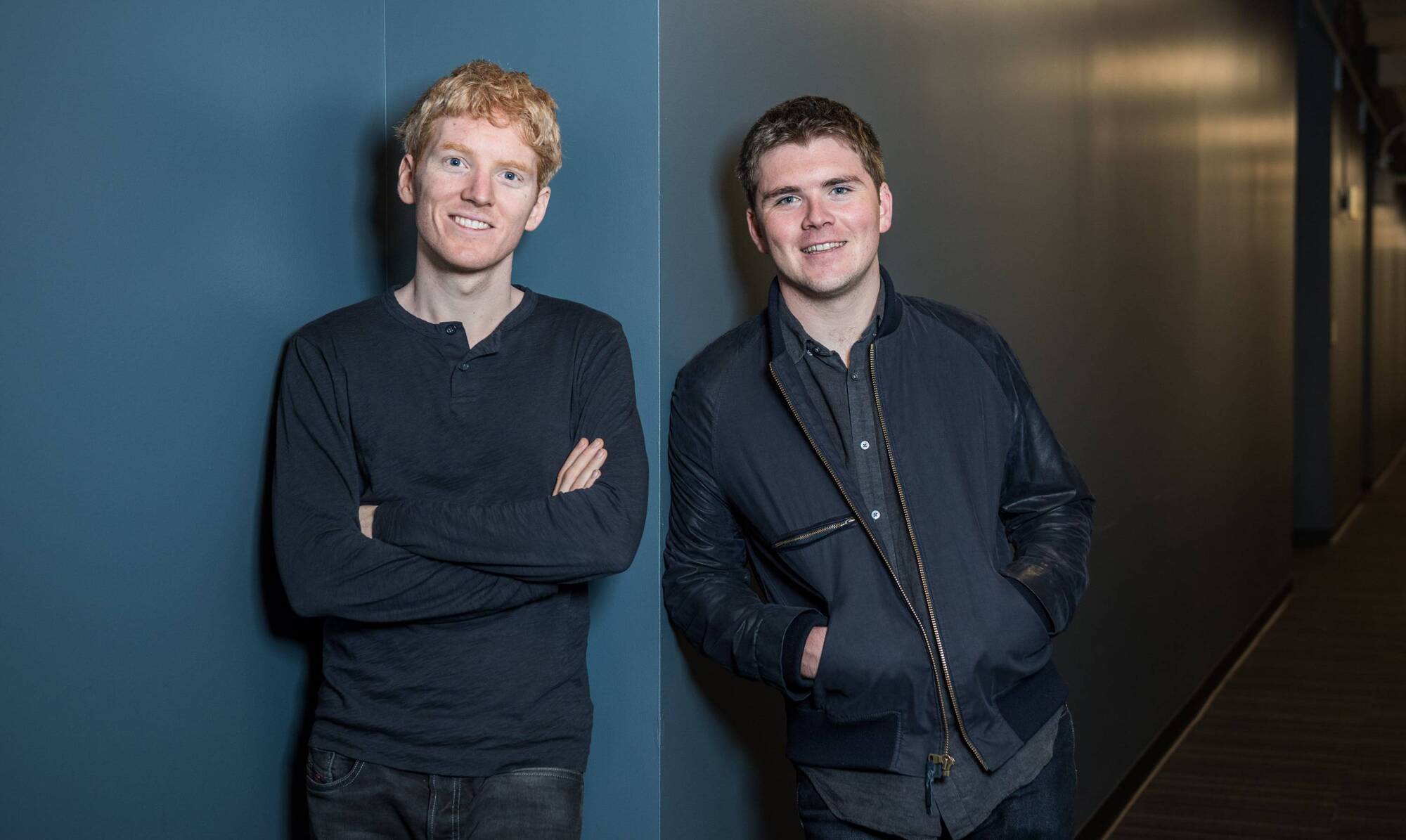
John Collison and Patrick Collison of Stripe, which expanded in Ireland and globally during 2021, as did other IDA client companies including Intel, Amazon, State Street, Repligen and Fiserv.
, CEO of IDA Ireland, reflects on a very good year for US investment in Ireland

Investing overseas can significantly enhance a company’s growth prospects, but it is an inherently risky undertaking.
It is in this context that Ireland has established its reputation and track record as a trusted partner to companies from all over the world on their investment journeys for decades, providing stability and certainty through periods of adversity, success and constant change. As we enter 2022 against a backdrop of a continuing Covid-19 global pandemic, we face a period that is likely to be characterised by a rapid pace of change. Ireland remains well placed as a destination where companies can innovate, transform, and succeed.
The activities of US multinational companies (MNCs) supported by IDA in Ireland make a crucial contribution to our FDI success. In 2021, IDA clients from the US had almost 900 operations in Ireland, employing over 190,000 people directly and over 152,000 indirectly.
The bulk of FDI in Ireland in 2021 once again came from the US – 160 of the 249 investments won. 104 of those 249 investments won were new name companies, investing in Ireland for the first time. US companies like Medallia, Poly, OLED/PPD, Tegus and ClickUp were among the new investors, while established companies such as Intel, Stripe, Amazon, State Street, Repligen and Fiserv numbered among those who expanded their Irish operations last year.
FDI is most often considered in terms of job creation and that is an obvious benefit, but the additional benefit of these multinationals’ presence in Ireland goes considerably beyond their direct and indirect employment contribution.
Their impact nationally and regionally to public finances, regional development, global value chain integration, spin-off indigenous enterprise, innovation and more is clearly evident in their expenditure in the Irish economy. In 2020 the payroll spend was €16.8bn, up 11%, €11bn was spent on materials and services sourced in Ireland, up 6%, to give a total spend in the Irish Economy of €27.9bn, up 8.8% on 2019. Exports were valued at €290.7bn, up 9.2% on 2019.
Capital investment amounted to €7.5bn, up 3.7% on 2019, with the largest spend once again coming from the Life Sciences and Technology sectors. A high proportion of this spending was from US companies in Ireland.
Foreign Direct Investment has been transformative for Ireland over seven decade. Attracting, retaining and growing FDI remains a key plank of industrial policy.
In implementing the objectives of our 2021-24 strategy, IDA will continue to partner with Ireland’s established base of companies and with the next generation of MNCs. We believe there are opportunities for Ireland to compete to win investment as the global economy digitises and decarbonises at an accelerating pace, new business models emerge and companies consider how to respond to issues ranging from supply chain resilience to the future of work.
In planning for the future, it is essential that we continue to seek to win new activities and anticipate the fast-paced changes in technology and business models. Therein lies challenges, certainly but the twin digital and green transitions also create investment opportunities that are aligned with many of Ireland’s key strengths. As Ireland embraces technological change; seeks to becomes a leader in areas such as AI and Industry 4.0; and sets a path towards net zero emissions, we anticipate our partnership with US companies once again being central to our success in promoting growth that is sustainable, resilient, and transformational.
The focus on economic resilience and the supply chain risks associated with international production were clearly demonstrated during the Covid-19 pandemic. It is worth noting however that, throughout the pandemic, critical physical and digital supply chains to and from Ireland have remained open and largely uninterrupted.
US companies have continued to provide goods and services to customers in Europe and further afield from their resilient and innovative Irish bases, with many growing and adding to their mandates in Ireland despite the adverse international economic landscape.
If anything, the pandemic has underlined not only Ireland’s resilience and robustness as an investment location, but also the remarkable fortitude and dynamism of our existing FDI base. In each corner of the country our companies of US origin are providing sustainable, resilient jobs in activities driving global growth – from the technology, software and services that are the foundation of the digital economy to leading-edge advanced manufacturing reshaping industry and essential healthcare products for patients around the world.
IDA Ireland entered 2022 in the extremely strong position of having achieved record results for 2021. We announced in December 2021 the highest increase in FDI employment in a single year and the highest FDI employment ever, at 275,384. 29,000+ new jobs were created in 2021, a net increase of almost 17,000 jobs year on year.
As we enter 2022, IDA Ireland is acutely aware of those international issues that have the potential to impact on FDI, including the spread of Covid-19 variants, the varying level of vaccination rates across countries, the future trajectory of monetary and fiscal policies should current inflationary pressures last longer than expected, supply chain challenges, climate change and geo-political developments that will potentially impact on investors’ decision making.
And, while our record results for 2021 and the staircase growth in Ireland’s FDI performance over the last decade gives us a strong platform from which to sustain that robust growth, there can be no resting on laurels. As a country, we need to continue to focus on what is required to consistently improve Ireland’s attractiveness as a place to live and competitiveness as a place to do business, de-risking investment decisions, and building on our stable and consistent pro-enterprise policies.
CONNECT WITH US TODAY



Be the first to know the latest news and updates