ISME lead calls for a state agency for small firms
If we are serious about distributing wealth in Ireland, when are we going to start scaling and listing our domestic enterprises in order to create it?
ISME lead calls for a state agency for small firms

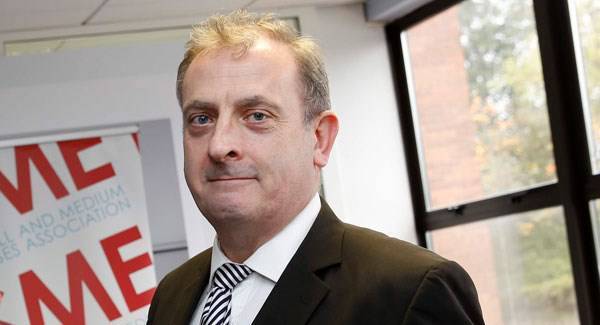
Neil McDonnell, chief executive of ISME, wants to see a third state agency to address the needs of small enterprise.

While Christmas 2020 was celebrated under the cloud of Covid-19, we looked forward with optimism to vaccination in 2021 as our get-out-of-jail card.

Twelve months later, it is difficult to see when that cloud will have moved on. 

As we deal with emerging variants of the virus, with various iterations of social restriction, what has yet to emerge is a coherent societal strategy to live with it, or with any future viral pandemic.

The Government must not be distracted by the tactical approach of Nphet, and must start addressing the long term.

2021 was a year in which we welcomed two long-overdue pieces of legislation onto the Irish statute book.

First, in July, was the enactment of the Perjury and Related Offences Act 2021. 

High insurance costs

We're not so naïve as to think this is the silver bullet to high insurance costs and white-collar crime. 

However, slowly, as the first prosecutions make their way through the courts, people will realise that signing a false affidavit has real consequences. 

We must hope that our judiciary does not attempt to water down the impact of this important law.

Secondly, after intense lobbying of the Government, November saw the commencement of the SCARP legislation, designed to provide an affordable examinership process to small business. 

The 'Great Recession' was characterised by banks moving their debtors into insolvency.

A decade later, the banks are far better capitalised, and are comfortable with Ireland's new bankruptcy and personal insolvency environment. 

This time, it will not be the banks moving on SMEs, it will be other SMEs.

The huge losses incurred during the pandemic must, ultimately, land on someone's balance sheet. 

We have already seen the fate of some high-profile commercial retail tenancies decided in court, and more will follow. 

So, it will be very interesting to see how commercial creditors and landlords engage with SCARP as we work through the red ink of Covid-19.

We thought 2021 was the year we would make some serious progress on insurance reform. How wrong we were. 

It took the judges months to agree an inadequate reduction in awards levels via a Judicial Council process that may yet be found unconstitutional.

The question of personal responsibility when we undertake any physical activity is a philosophical one: We concede there is no definitively 'correct' answer. 

What we will never concede, however, is the notion that we, or our children, bear no responsibility for our actions on someone else's land. 

That, regrettably, is where Irish law usually rests.

Successive decisions in the High Court have confirmed the reality that occupiers' risk is essentially strict: If it happens on your premises, you're to blame. 

How our sports clubs and voluntary bodies will survive under this burden, no one really knows. 

The Occupiers' Liability Act requires urgent reform. 

Our laws on liability also need to address gratuitous unfairness in deciding foreseeability, negligence, causation, mental harm, contributory negligence, and liability in dangerous recreational activity.

One area in which Covid-19 has worked is in demonstrating how paper can be made redundant, how mundane procedures can be moved online, and administration simplified. 

The potential repercussions for the legal system are huge, if we have the guts to execute them. 

There are no impediments to streamlining pre-litigation procedures, save the parties who exploit them for cash.

The Department of Justice must commit to a radical programme of Courts Service administrative reform, and capping legal costs in the circuit and High Courts.

While both the domestic and multinational arms of our economy power ahead, they continue to diverge, with the latter expanding at far greater speed than the former. 

As this coincides with a rapidly expanding state sector, it is difficult to see how domestic small enterprise can avoid being squeezed. 

This is a socio-economic issue no political party has decided to address.

While there is near unanimity among politicians of the importance of small enterprise, no one wants to do anything about it. 

ISME has long sought a third state agency to address the needs of small enterprise.

Among the political parties, it is interesting that only Sinn Féin supports this policy. 

Israel, with a population of 9.4m people, has a stock market with about 440 listed companies. 

Closer to home, Finland, with a population just half a million greater than ours, lists 131 companies on its stock exchange. 

The ISEQ, or Euronext Dublin, lists only a little over 30. 

If we are serious about distributing lots of wealth in Ireland, when are we going to start scaling and listing our domestic enterprises in order to create it?

  • Neil McDonnell is chief executive of ISME

x

More in this section

The Business Hub

Newsletter

News and analysis on business, money and jobs from Munster and beyond by our expert team of business writers.

Cookie Policy Privacy Policy Brand Safety FAQ Help Contact Us Terms and Conditions

© Examiner Echo Group Limited