Back-to-office delay 'to harm retail and hospitality jobs'
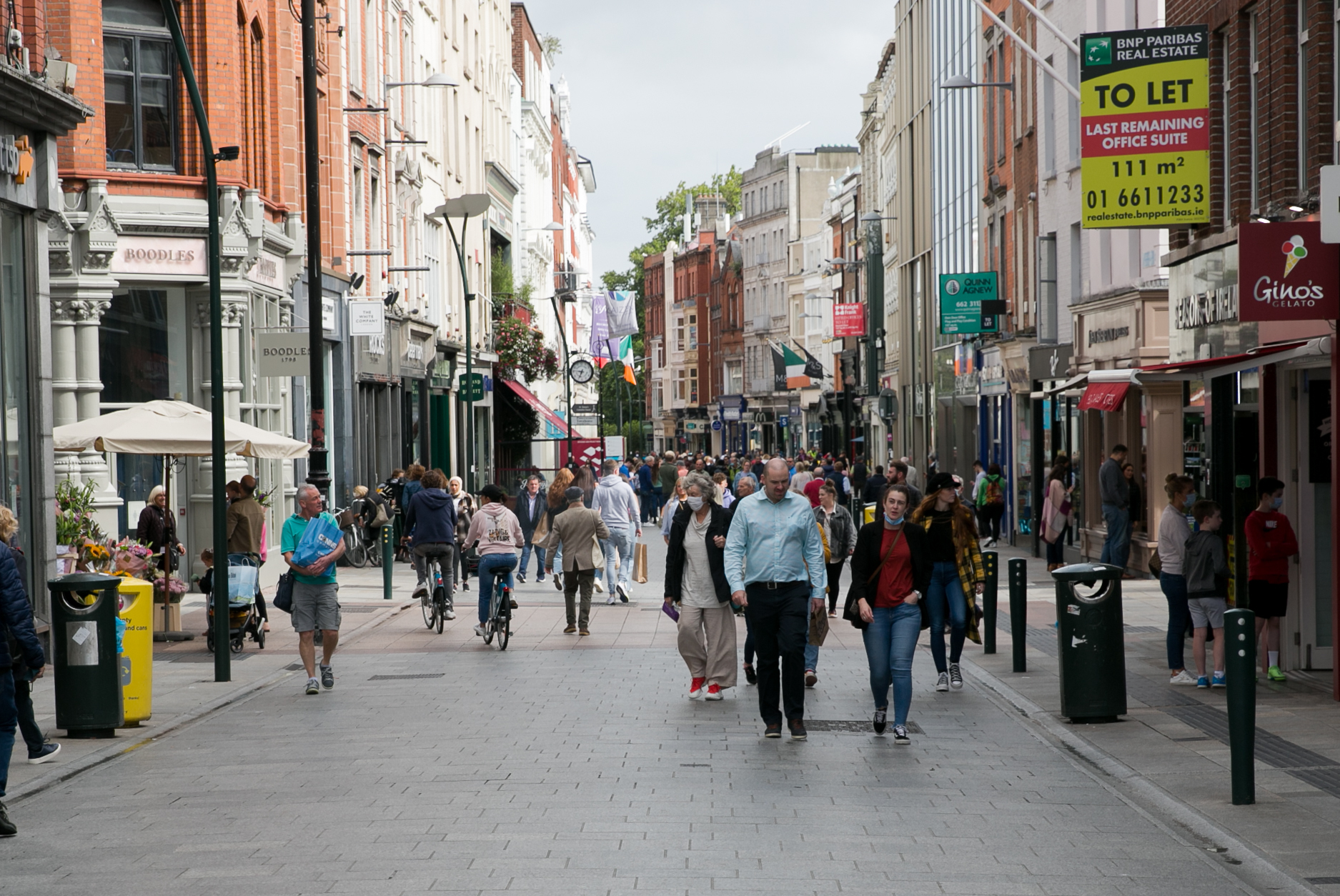
Delays to the return to working in the office will harm the full recovery of retail and hospitality, a leading economist has warned.
Delays to the return to working in the office will harm the full recovery of retail and hospitality, a leading economist has warned.
Professor Kieran McQuinn at the Economic and Social Research Institute said the economy appears to be roaring ahead but that some sectors most exposed to the pandemic crisis will be scarred.
He said retail and hospitality will likely be affected most as companies delay bringing back staff to city and town centres amid concerns about the Delta variant of the coronavirus.
“If we don’t see the mass return back to work and even if the economy continues to perform very strongly, the chances are you are going to get a partial return of workplaces as people talk about a blended arrangement of working from home and the office," Prof McQuinn said.
His remarks come as new figures show only a small fall in the numbers availing of the Pandemic Unemployment Payment for a second week.
The Department of Social Protection said the number of people requiring the PUP declined by 4,400 people, to 153,310.
At almost 31,770, accommodation and food services accounted for the single largest number of people on the PUP, down by just over 2,000 people from last week.
The second largest group remains wholesale and retail, at 24,290, while the effects of the health restrictions still weigh on large numbers of people working in administrative support jobs, as well as construction.
Prof McQuinn said a range of indicators "were pretty much consistent" with earlier ESRI projections for an unemployment rate at just below 10% at the end of the year.
"All the economic indicators suggest a pretty strong recovery this year – a double digit growth – and it appears that the labour market will benefit from that as well. Based on the latest data, we would still be confident about the unemployment rate of just below 10%," he said.
However, the economist said the outlook remains that it will still be 2023 before unemployment falls back to its pre-pandemic level of below 5%, of February last year. On scarring, he said a delay in return to office working will slow a widespread recovery.
“Overall, there will clearly be a recovery – that is what the figures would suggest. But within that there is a real distributional story as some sectors weren’t affected at all, while other sectors even benefited, and there are other sectors that will face long-term challenges because of the pandemic," he said.
"The economy does seem to be performing quite well, which brings pre-pandemic levels of unemployment reachable at the end of 2023," the economist added.
The recent tax revenue figures showed the economy was growing very strongly, with adjusted income tax revenues showing they had more than fully recovered.
"That suggests that it is not just a bounce back you are experiencing this year," Prof McQuinn said.
"You are experiencing growth on top of the bounce back," he said, adding there will be some sectors that will not get back to their previous levels of growth after the pandemic.
CONNECT WITH US TODAY



Be the first to know the latest news and updates