Conor O'Connell: 'Help to buy and shared equity schemes could help deliver the homes we desperately need'
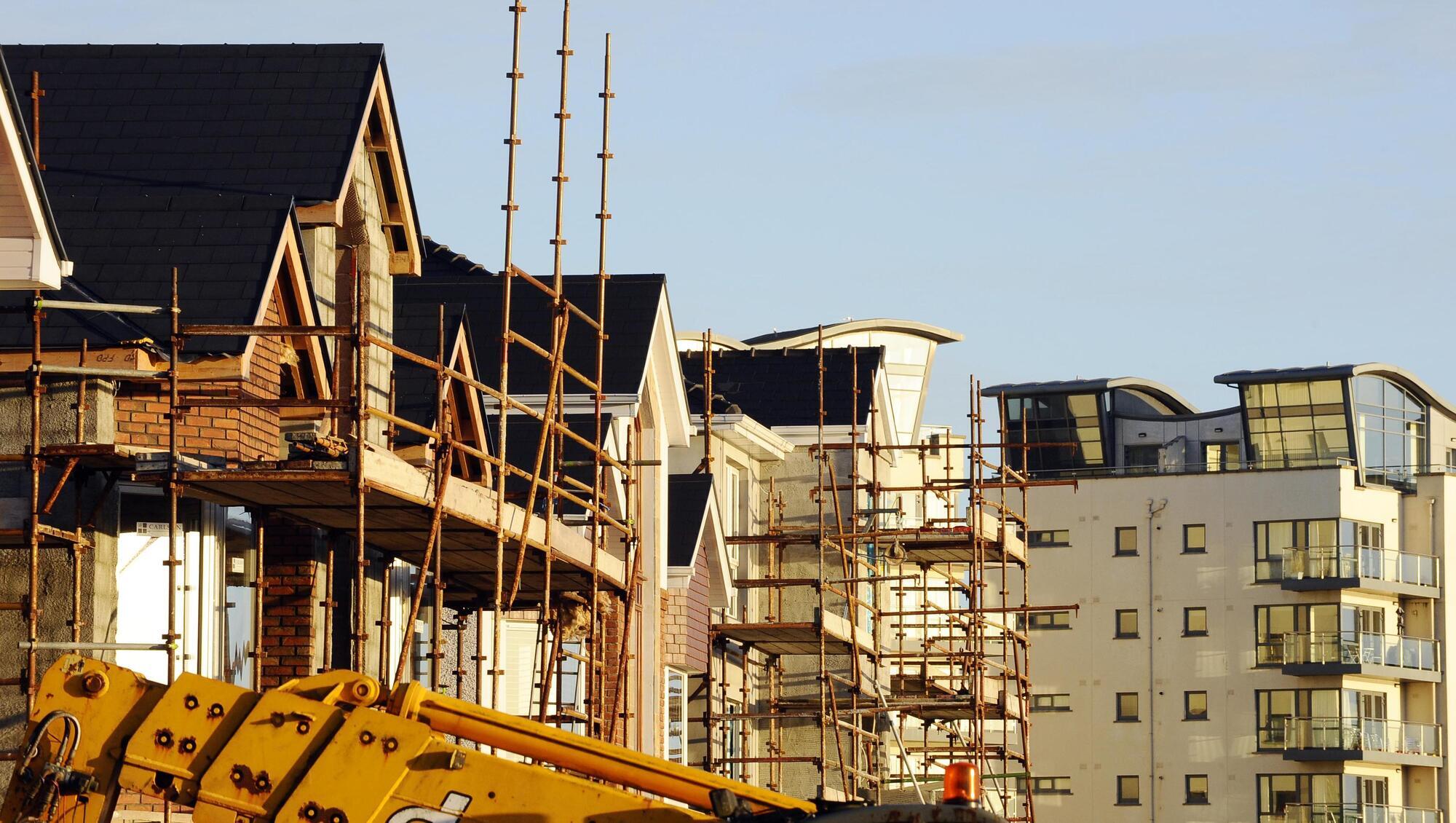
The construction industry says a range of measures must be taken if Ireland is ever to deliver 35,000 units per year
Conor O'Connell: 'Help to buy and shared equity schemes could help deliver the homes we desperately need'

The Construction Industry Federation's Conor O'Connell says house-building has become 'an incredibly complex and lengthy process'. Picture: Denis Scannell

It seems that housing and residential construction always remain at the top of the political agenda and in recent years we have seen a significant upsurge in the level of commentary, analysis, and political campaigning on the matter.

New residential construction has become an incredibly complex and lengthy process. The regulatory environment facing housebuilders has changed dramatically over the last 10 years as the State put in place measures and regulations to protect Ireland from another property-related recession caused by too much credit.


We need a range of ways of providing housing 

Housing must be provided by a wide variety of different types and methods. We need to construct an estimated 35,000 units per annum, according to a recent ESRI report, yet we only achieved 21,000 last year.

It has to be acknowledged that one mistake in our housing policy in the past has been a failure to invest sufficiently in social housing. There was a reluctance among policymakers to go back to building large-scale social housing estates due to the many instances in the past of inappropriate location, design, density, and scale. 

A milestone in housing policy

However, in 2020, the Government pledged €500m for social housing new builds. This is a significant milestone as local authorities, approved housing bodies, and the private sector have returned to building social housing. 

Then Taoiseach Leo Varadkar and Tánaiste Simon Coveney, housing minister Eoghan Murphy, Lord Mayor of Cork John Sheehan, Ann Doherty CEO Cork City Council, with representatives of the developers turning the sod at an affordable housing scheme at Boherboy Rd in Mayfield, Cork City. Picture: Tony O'Connell

Affordable housing remains one of the biggest challenges in the sector. Some commentators and politicians consistently quote unit construction costs compiled by the Department of Housing as their metric for the costs of housing construction.

The Department of Housing is one of the biggest clients for the construction sector. The figures show construction costs varying widely, but in a range from €220,000 to €280,000 for a typical three-bed semi.

However, they do not include many costs such as enabling infrastructure (roads, water/wastewater, diversions, internal labour costs) and exclude replacement land costs (there is no such thing as free land) and lifetime maintenance costs.

False premise 

Social housing projects also do not pay development contribution scheme charges — special development charges for instance for living within 1km or a commuter rail line, VAT at 13.5%, and financing costs, to name but a few. Therefore, the housing policy of some political parties and other commentators — using the department’s unit construction costs rather than the real total delivery costs — is based on a false premise that you can deliver social and affordable units cheaper to the State by direct builds on public lands.

Ireland also introduced many changes to the regulatory environment over the last 10 years, such as new macro-prudential rules and other changes to the building regulations that have made affordability all the more difficult.

Home ownership rate is falling

Home-ownership rates in Ireland have dropped dramatically in recent years and we are now 21st out of 27 in Europe for ownership, at 66% of households. Rents, in contrast to new home sales prices, continue to increase dramatically.

Ireland is no different to many countries right across the world that are struggling with similar problems. 

Many solutions are being developed, such as the help to buy scheme, shared ownership scheme, and cost rental schemes. Some commentators, economists, and politicians warn against such schemes.

The main thrust of their warnings and concerns is that they may inflate house prices. Since the help to buy scheme was introduced in 2017, the rate of new house price inflation as measured by the CSO has decreased significantly, from 11% in Q1 2018 to 2% in Q3 2020.

Average earners are entitled to support too

The budget for the proposed shared equity scheme is €75m compared to a social housing budget of €3.1bn. Are young middle-income workers, who are paying a significant amount of tax on their income and a significant contribution to infrastructure, not entitled to some support and relief for purchasing their own home rather than renting?

Should we not have home ownership as the cornerstone of housing policy?

The shared equity scheme is small in terms of budget allocation, and will only affect a small portion of the market, less than 5%.

The possibility that it will impact in any significant way on house prices is very small, just as the introduction of the help to buy scheme did not increase house price inflation. Since help to buy was introduced in Ireland, 76% of those that availed of the scheme purchased units under €375,000.

Schemes such as help to buy and the proposed shared equity scheme are worth trying as part of a matrix of solutions and options. Similar schemes are widely used internationally. Indeed, it could be argued that a similar scheme is already available in Ireland for social housing tenants, so why not for affordable housing clients? 

Conor O’Connell is Director (Southern Region) with the Construction Industry Federation


x

More in this section

The Business Hub

Newsletter

News and analysis on business, money and jobs from Munster and beyond by our expert team of business writers.

Cookie Policy Privacy Policy Brand Safety FAQ Help Contact Us Terms and Conditions

© Examiner Echo Group Limited