Irish whiskey industry looks beyond US as Trump tariffs drive global expansion
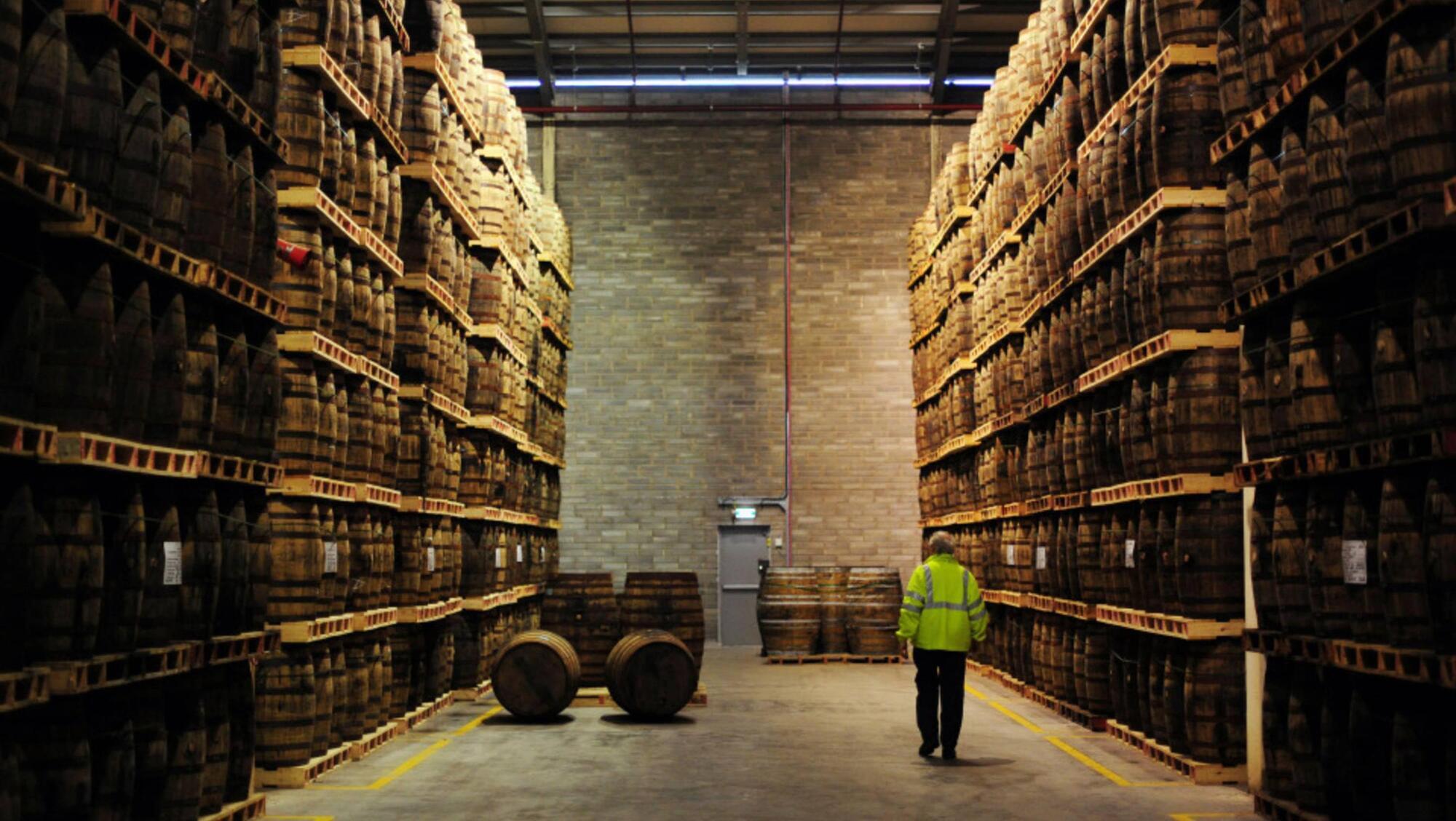
American oak barrels of Jameson whiskey that was produced by Irish Distillers in Midleton in Co Cork Picture: Aidan Crawley/Bloomberg
Maximise Your Options was one of the key principles espoused by Donald Trump almost 40 years ago when he explained his business philosophy in .
“I never get too attached to one deal or one approach,” the future US president said. “For starters, I keep a lot of balls in the air, because most deals fall out, no matter how promising they seem at first.” In a challenging environment and navigating the added complications of Trump tariffs, Ireland’s €930m whiskey industry is adapting the Maximise Your Options mantra, as it repositions its offering around the globe.
The global drinks industry is under pressure, with heavyweights like Diageo and Heineken seeking ways to mitigate a softer US market. Irish spirits face similar challenges. This week, Irish Distillers, producers of Jameson, the world’s best selling Irish whiskey, revealed its 2026 results to date, with a global net sales decline of 4%.
Irish Distillers chief Nodjame Fouad acknowledged the ‘soft’ market conditions in the US, but she also gave an insight into a wider focus by the Midleton drinks maker. "As we look ahead, we remain focused on continuing to bring the taste of Jameson and our broader Irish whiskey portfolio to more people around the world,” said Ms Fouad.
Jameson reported double-digit growth in Global Travel Retail, Germany, and Poland, and emerging markets including Mexico, China, and Nigeria. Overall, Jameson saw net sales growth of 9% in markets outside of the US. Facing tougher conditions in the US, the Irish spirits industry is maximising its options.
“Looking at 2023 figures, 49% of our total exports were going to the US. Last year, based on the Bord Bia figures that are released in January, 38% of our exports are now destined for the US," said Eoin Ó Catháin, director of the Irish Whiskey Association, the representative body of the all-island Irish whiskey industry.
Read More

“That's not to say that there's been a precipitous drop in exports. Actually, we sold more whiskey last year than we did in any other year ever. It means that as a result of the complications and the tensions that are there that exist in the US market, the industry is pivoting towards others where they might be a bit more further around or where it's a bit easier to trade.”
International Wine and Spirits Record figures show that 16.4m cases - 12 bottles to a case - of Irish whiskey was sold in 2025.
The industry is expanding its horizons, and Asia is a key focus. Japan is renowned as a mature market, with strong profit margins for Irish producers. The most popular method of drinking whiskey in the country is as a ‘Highball’, served with ice and soda water, and Carlow’s Royal Oak Distillery has carved out a hugely successful niche in Japan since it launched its Irish whiskey 'The Busker' there five years ago. Over 1.2m bottles of The Busker are now sold in Japan annually as it becomes the go-to Highball ingredient.
Royal Oak Distillery has now ventured into the ‘ready to drink’ sector in Japan with a Highball ready to drink offering sold in Japanese convenience stores.
China is also a target market for Irish producers. Late last month, Teeling’s Great Northern Distillery signed a long-term cooperation agreement with Tsingtao Brewery, the second largest brewer in China’s vast beer market.
The agreement, finalised in Dublin on July 30, will see Tsingtao introduce a range of Irish whiskeys through its distribution network.
Great Northern Distillery will supply whiskeys from across its range for the Chinese market, as well as developing a range of whiskey labels specifically designed for Asian markets. "This agreement represents a tremendous opportunity to participate in what I believe will be the next great growth market for Irish whiskey,” said Great Northern Distillery chairman John Teeling.
“Over the coming years, perhaps one billion people across Asia will join the middle class. As incomes rise, consumers increasingly seek premium international products and experiences, and Irish whiskey is exceptionally well placed to meet that demand.”
The India EU free trade agreement which was signed in January is expected to see tariiffs on Irish whiskey slashed from 150% to 75% next year. “There’s huge opportunity there,” said Mr Ó Cathain.
Closer to home, Irish whiskey export volumes to the EU26 have risen by 21.5% over the last four years. Germany, Poland and France, account for a combined export value of €97.2m.
Newer markets are also developing, with export volumes to Greece and Italy up 88% and 68% respectively over the last four years.
As part of its pre-Budget submission, the Irish Whiskey Association has called on the Government to play its part, reducing the regulatory burden on producers on the global stage.
Of course, the US market remains vital to Irish whiskey, valued at between €400m and €420m. New York State alone sells more whiskey than many key markets such as France, Canada, and Ukraine.
Tariffs, like fashions, seasons, and indeed US presidencies, will come and go. So it’s worth remembering another Trump lesson from : Protect the downside and the upside will take care of itself. “If you plan for the worst – if you can live with the worst – the good will always take care of itself,” Mr Trump said.
Irish Distillers said the second half of the year saw improved results for Irish whiskey, and has doubled down on hits commitment to the US. "Our long-term confidence in this market is demonstrated by a series of significant recent investments," said Ms Fouad. The company signed a partnership with the NFL, making Jameson its Official Spirits Sponsor.
Read More
Cork whiskey producer Clonakilty Distillery has doubled its sales in the US during the first half of 2026, adjusting its price point to the trade realities. "These results demonstrate that Clonakilty is building sustainable momentum through strong consumer demand and strategic execution," said Clonakilty founder Michael Scully.
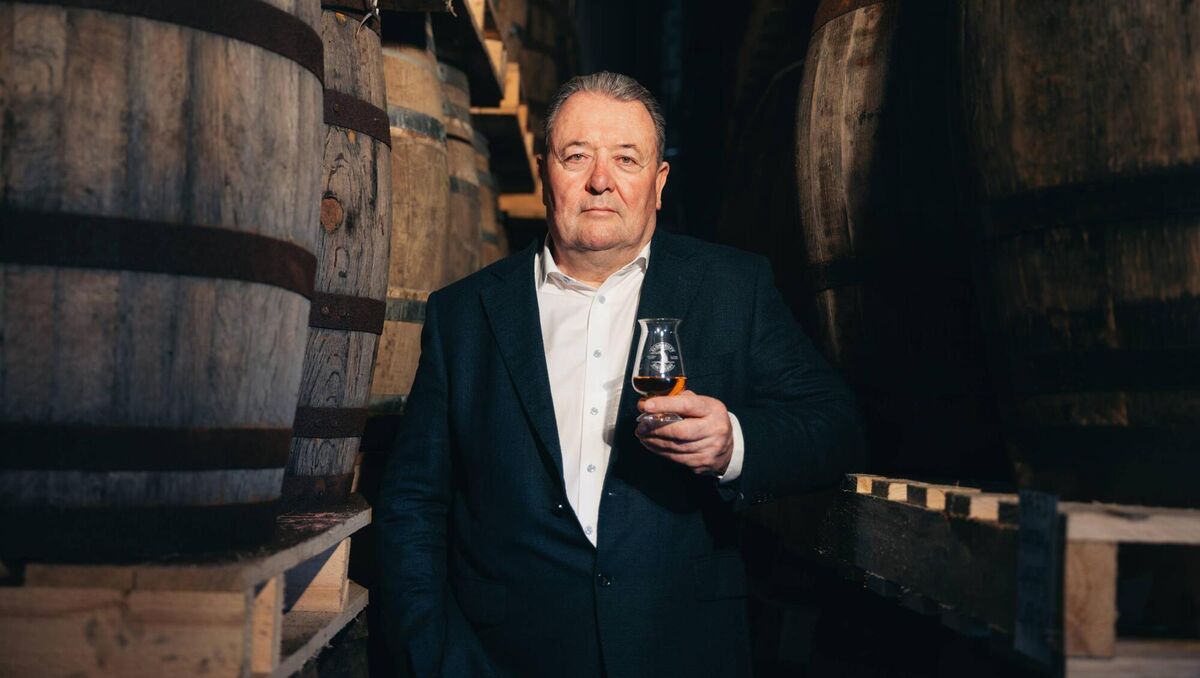
Irish whiskey producers have had to roll with the waves of the trade war storm, as tariffs jumped to 15% before the now relatively settled 10% tariff. "There was a lot of uncertainty in the market last year when you had the introduction of the tariff, but companies have readjusted their place in the market," said Mr Ó Cathain. "What everyone wants to avoid was an increase in the price on the shelf because the US consumer is very sensitive to those changes. And the introduction of tariffs obviously complicates that.
"Some companies have de-invested in the US, have decided to focus on certain states rather than a broad plethora of states. Despite it being a very lucrative market, the US is actually quite a challenging one as well. You have a number of control states where the sale of liquor is controlled by an authority, a state body. And you also have a three tier system, which means the importer, the wholesaler and the distiller all have to take a cut out of it. But the US market is too big for there to be a full recalcitration. They were never going to pull back. But it is interesting to see how people are adapting to it and perhaps being a bit more selective.
“The US market is a behemoth and always will be. It’s the most lucrative spirits market in the world. But I think it's a sign of a far healthier industry that there's a more diverse destination of our exports that we're not focusing on the one.”


CONNECT WITH US TODAY



Be the first to know the latest news and updates