Security guard stabbed on the job awarded €3.4k for missed wages while on sick leave
Ankit Rawat began working as a security guard for the respondent’s entity YSS Pvt Ltd at a shopping mall in the Clondalkin area in Dublin in December 2023. He was stabbed during the course of his work on May 22 last year.
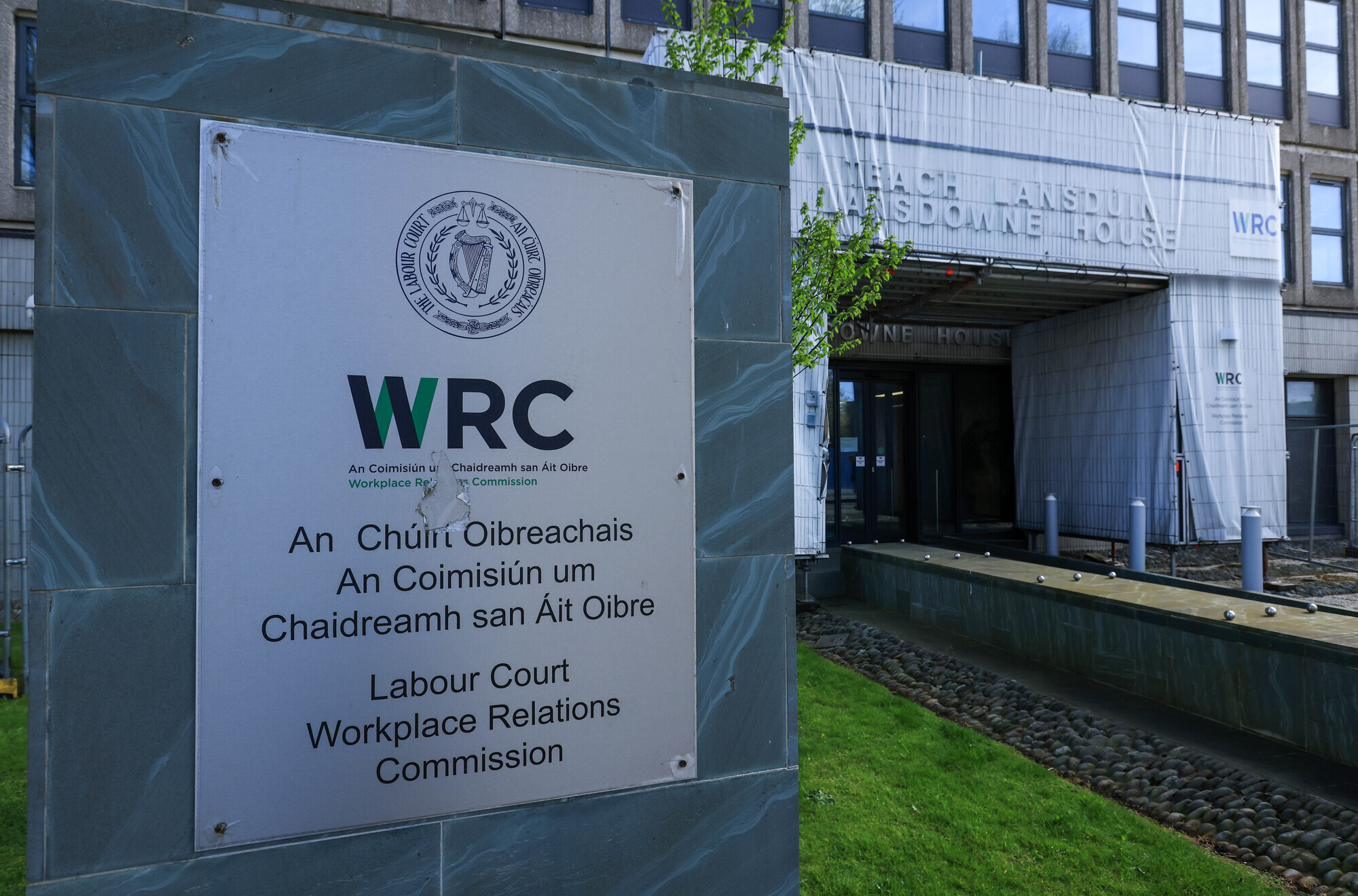
The Workplace Relations Commission (WRC) has ordered a company to pay a security guard, who was stabbed on the job, compensation of €3,400 as he did not receive his full wage entitlement when he was away on sick leave.
The hearing took place on June 8 and the respondent in the case did not attend.
According to the complainant, named Ankit Rawat, he began working as a security guard for the respondent’s entity YSS Pvt Ltd at a shopping mall in the Clondalkin area in Dublin in December 2023 but he was not provided with a contract of employment until around January 2025.
The WRC said this “unacceptable delay” placed Mr Rawat at a distinct disadvantage as they did not know the terms or conditions of his employment until the contract was formally given to him.
The contract stated a number of entitlements that Mr Rawat had not been aware of including Sunday premium pay. Despite this, Mr Rawat continued to work for the respondent.
On May 22 last year, Mr Rawat was injured during the course of their work as a security guard having been stabbed by a third party. He was brought to the hospital to have his injuries assessed and was out sick for four weeks.
The WRC noted that the complainant’s employment was governed by Employment Regulation Order (Security Industry Joint Labour Committee) 2024 which “provides for a period of payment or benefit for any employee subject to an attack in the course of employment”.
Mr Rawat returned to work on June 19 but his wage slips show that he was not paid the full basic pay for the four-week absence as he was entitled to. Mr Rawat was paid for a 27-hour week and not for a 40-hour week to which he was entitled.
“The complainant feels very strongly that his employer had not, during the course of the employment, provided adequate protection and support and that the injury he sustained was avoidable,” the WRC said.
“He formed the view that the respondent employer was liable. Mr Rawat consulted a solicitor and initiated a personal injury claim against the employer who is insured to meet claims for accidents and incidents in the workplace.” Mr Rawat left this job in August last year.
In addition to the pay issue, Mr Rawat stated that he was not always given a rest period of not less than 11 consecutive hours in each period of 24 hours and provided evidence that this happened 30 times in the six months before the complaint form was issued.
In addition, Mr Rawat said the employer failed to ensure that he did not work for a period of more than four hours and 30 minutes without allowing him or her a break of at least 15 minutes.
“Also, that the employer failed to not require him to work for a period of more than six hours without allowing him a break of at least 30 minutes,” he said.
“Lastly he gave evidence that the employer failed to ensure that the employee would have, in each period of seven days, a rest period of at least 24 consecutive hours. The evidence given by the complainant was that this happened at least three times in the six-month period prior to the complaint form issuing,” the WRC said.
In total, the WRC agreed with three of the six complaints with the remaining three being withdrawn by the complainant. In total, the WRC ordered the respondent to pay Mr Rawat €3,400 in compensation.

CONNECT WITH US TODAY



Be the first to know the latest news and updates