Stripe and equity firm Advent offer $53bn for PayPal

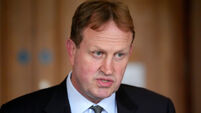
Patrick and John Collison the co-founders of Stripe. Stripe and private equity firm Advent International have made a joint offer to acquire PayPal for $60.50 per share, in a deal that would value the payments company at more than $53bn (€46bn), two people said.
Payments company Stripe and private equity firm Advent International have made a joint offer to acquire PayPal for $60.50 per share, in a deal that would value the payments company at more than $53bn (€46bn), two people said.
The offer, submitted earlier this month, is backed by about $50bn in committed financing from banks, said one of the people. The offer represents around a 28% premium to PayPal's closing share price on Tuesday.
The people, who are familiar with the matter, declined to be named as the deal discussions are confidential. PayPal, Stripe, and Advent declined to comment.
Read More
Stripe, which was founded by the Collison brothers John and Patrick, is among the industry's most valuable companies. It was valued at $159bn in a tender offer for employees and shareholders in February, a more than 70% jump from a similar share sale a year earlier.
The company, with headquarters in Dublin, allows companies to accept payments, make payouts and automate financial processes.
The proposal follows an initial approach made in early April, the sources said. Stripe and Advent have not received a response from PayPal and are seeking to advance discussions in the coming weeks, the sources added.
Under the proposal, Stripe and Advent would jointly own PayPal, with each holding an equal stake, rather than breaking up the company, the people said. There is no certainty the approach will result in a transaction, they added.
Founded in the late 1990s, PayPal was an early player in digital payments, but has faced increasing competition as consumers have embraced alternative payment methods and rivals such as Apple Pay and Google Pay have gained market share.
It has spent the past several years grappling with slowing growth and intensifying competition in digital payments, wiping out much of the value it gained during the pandemic.
The company's market capitalization peaked at about $360bn in 2021 and fell to as low as roughly $36bn this year. It has lost more than 40% of its market value over the past 12 months.
After taking over in March, PayPal CEO Enrique Lores started a sweeping turnaround exercise to simplify the payments provider and sharpen its focus on growth.
In April, the company split its operations into three units covering checkout, consumer financial services Venmo, and payments and crypto, while making a series of management changes.
The potential PayPal transaction, if completed, will add to the recent M&A activity in the global payments sector, where buyers have pursued targets amid rapid changes in financial technology and the rise of artificial intelligence.
Payment companies are also increasingly seeking scale through M&A as well as exposure to faster-growing segments such as cross-border and business-to-business payments amid slower growth for traditional payment processing.
In 2025, Global Payments agreed to acquire rival Worldpay from FIS and private equity firm GTCR for $24.25bn in a complex three-way deal. As part of that deal, GTCR sold its 55% stake and FIS exited its remaining 45% holding.
The sector has also seen a steady stream of smaller deals, including the acquisition of Payoneer Global by Canadian payments firm Nuvei for $2.75bn. Nuvei is backed by Advent International and other private equity firms.
Mastercard is exploring the sale of a majority stake in its UK payments subsidiary Vocalink back to British banks as it responds to concerns about a critical asset being under US ownership, the Financial Times reported this week.
PayPal's revenue rose 7% to $8.35bn in the first quarter, beating analysts' average estimate of $8.05bn. On a currency-neutral basis, total payment volumes jumped 8% over a year ago to about $464bn.
Lores outlined plans in May to leverage artificial intelligence to streamline operations across the company and eliminate duplication in workforce layers, but did not provide additional details.
The company has said these initiatives would save about $1.5bn over the next two to three years, adding it will reinvest that amount to drive new growth.
Reuters

CONNECT WITH US TODAY



Be the first to know the latest news and updates