Bawag plans dividend limit to help fund €1.62bn PTSB deal
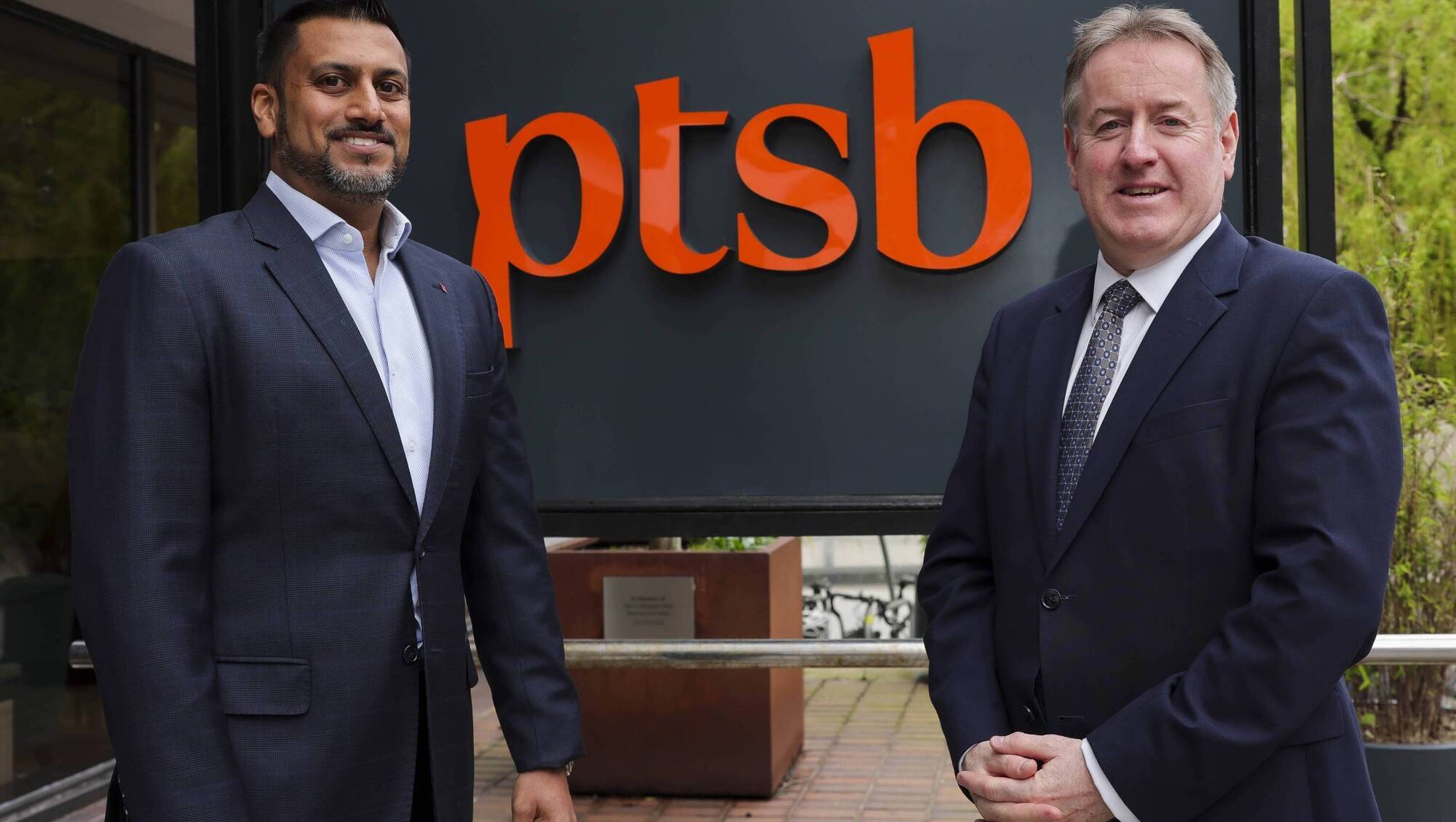
Sat Shah, deputy chief executive of Bawag Group, with Eamonn Crowley, chief executive of PTSB. Picture: Chris Bellew/Fennell
Bawag Group will pause investor payouts and rely on significant risk transfers to fund the €1.62bn acquisition of Permanent TSB.
The Vienna-based bank will not pay a dividend from first-half earnings, saving about €500m, it said in a statement. Surplus capital already at hand at the end of 2025, as well as SRTs and other balance-sheet steps will contribute the rest of the price tag.
In the second half of the year, Bawag may exceed its regular target of paying out 55% of net income as dividend, chief financial officer Enver Sirucic told reporters.
The bank plans to fund its largest-ever acquisition without tapping external financing sources. The deal will offer Bawag a larger foothold in the Irish market, and allow the Government to exit its final bank stake that is a legacy of bailouts during the global financial crisis.
Paying for the acquisition will likely stretch Bawag’s finances, reducing its common equity tier 1 ratio — the most common measure of bank capitalisation — to the 12.5% management target. Further adjustments to the dividend and raising fresh capital remain an option in case of adverse market developments, according to Sirucic.
Bawag also plans balance-sheet optimisation steps, including a SRTs related to unsecured loans following a mortgage transaction completed in the first quarter.
Once taking over Permanent TSB, likely at the end of 2026 or early 2027, Bawag will seek to boost the unit’s existing mortgage and small business lending, while adding leasing, factoring and brokerage products, chief executive Anas Abuzaakouk told analysts in a separate call. Commercial real estate and public lending could also offer “interesting opportunities”, he said.
The bank confirmed its target for €960m net income this year. It recorded €232m net income in the first quarter, up 16% from a year earlier but below the €245m average analyst estimate in a Bloomberg survey.