OPEC+ to keep oil supply steady despite turmoil in Venezuela
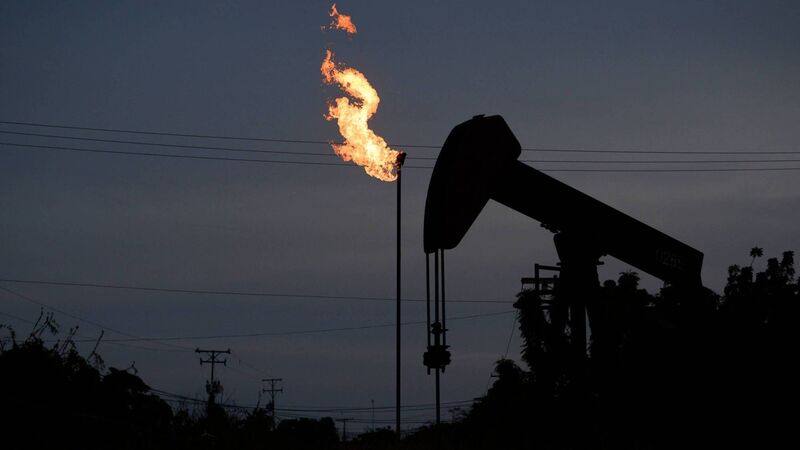
During their monthly video conference on Sunday, key OPEC+ members led by Saudi Arabia and Russia are reviewing their decision last November to halt further supply hikes
OPEC+ to keep oil supply steady despite turmoil in Venezuela

While Venezuela was once an oil-producing powerhouse, its output has declined precipitously over the past two decades and now represents less than 1% of global supplies.

The Organisation of the Petroleum Exporting Countries (OPEC+) is likely to stick with plans to pause production increases during the first quarter, their policy unaffected by escalating risks in Venezuela and elsewhere, delegates said.

OPEC+ consists of member nations from the Middle East, Africa, and South America. Venezuela, which has the world’s largest supply of proven oil reserves, is a member of the organisation.


Key OPEC+ members led by Saudi Arabia and Russia will hold a monthly video conference on Sunday, and review a decision — first made in November — to halt further supply hikes during the first quarter after rapidly reviving production earlier last year.

Last week, delegates who asked not to be identified said the move would probably be rubber-stamped at the video conference. On Sunday, they said the decision probably wouldn’t be affected by the shock ousting of Venezuelan leader Nicolas Maduro.

US attack on Venezuela

Venezuela’s oil infrastructure wasn’t affected after a series of US attacks in Caracas and several states, people with knowledge of the matter said on Saturday. Key facilities such as Jose port, the Amuay refinery and oil areas in the Orinoco Belt are still operational, said the people, who declined to be named because the matter is confidential.

While the arrest of Mr Maduro following US airstrikes marks a seismic geopolitical development, early signals suggest that the global oil market will largely take the move in its stride.

While Venezuela was once an oil-producing powerhouse, its output has declined precipitously over the past two decades and now represents less than 1% of global supplies. Recent US pressure on Maduro’s regime, including the seizure of tankers carrying Venezuelan crude, forced the country to start shutting some oil wells.

Trump's statement 

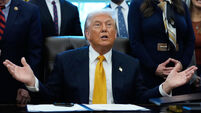
US president Donald Trump said during a press conference on Saturday that sanctions on Venezuela’s oil industry will remain in place and US oil companies will help rebuild infrastructure and revive output. Such a reconstruction would be highly ambitious and most likely a distant prospect.

In the meantime, worldwide oil supplies are expected to exceed demand by 3.8m barrels a day in 2026, which would mark a record glut, according to the International Energy Agency.

Crude prices have slumped in recent weeks to around $60 a barrel. One weekend retail trading product run by IG Group showed US crude prices at one point rising by close to $2 from Friday’s close.

“I assess that Brent crude prices will rise only marginally at the open on Sunday evening, by $1-$2 or even less,” said Arne Lohman Rasmussen, chief analyst at A/S Global Risk Management.

Even under normal conditions, a disruption of this magnitude is manageable for the market. 

"In particular, all forecasts point to a significant oversupply in the first quarter, driven by seasonally weak demand and OPEC+ production increases.” 

The tanker seizures in the Caribbean in recent weeks have spooked operators of sanctioned vessels. At least seven ships have reversed course or halted at sea, according to ship movements tracked Friday by Bloomberg. That adds to four others that turned away in the immediate aftermath of US forces boarding the vessel Skipper in mid-December.

Despite the volatility of the past month, US oil producer Chevron has continued to operate in the country under a sanctions waiver issued by the Trump administration.

“Chevron remains focused on the safety and wellbeing of our employees, as well as the integrity of our assets,” the company said in a statement on Saturday. “We continue to operate in full compliance with all relevant laws and regulations.” 

The capture of Mr Maduro raises speculation over the fate of the Venezuelan oil industry in the longer-term. The country is estimated to hold more oil reserves in the ground than Saudi Arabia, and over the past century it has attracted some of the biggest international operators.

But two waves of nationalization left a bad taste in the mouth of the likes of Shell PLC, Exxon Mobil Corp and ConocoPhillips. Exxon and Conoco later sought compensation after their assets were seized by the late President Hugo Chavez.

In addition to Chevron, Spain’s Repsol, Italy’s Eni SpA and France’s Maurel et Prom SA are also still present in Venezuela and partner in oil and gas ventures with state-owned Petroleos de Venezuela SA.

  • Bloomberg

x

More in this section

The Business Hub

Newsletter

News and analysis on business, money and jobs from Munster and beyond by our expert team of business writers.

Cookie Policy Privacy Policy Brand Safety FAQ Help Contact Us Terms and Conditions

© Examiner Echo Group Limited