Retail and hospitality insolvencies decline in 2025
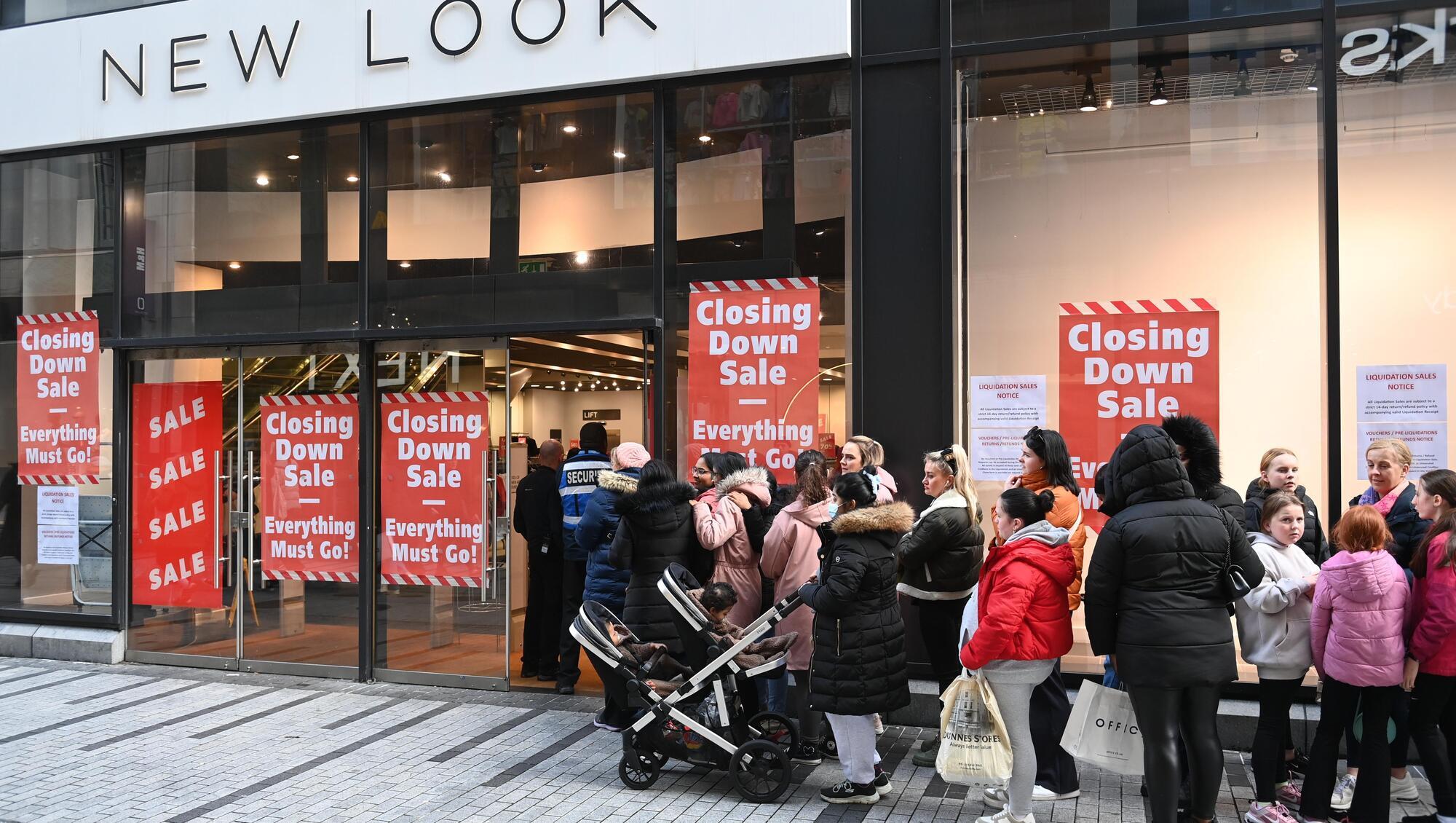
Queues at the fashion store New Look on Opera Lane in Cork City in April last year for the closing down liquidation sale.
The number of retail and hospitality business insolvencies declined throughout 2025 as the overall number of company closures remained steady, new data from professional services firm PwC shows.
The latest PwC Insolvency Barometer shows the number of insolvencies recorded in 2025 hit 848 which is down from the 868 recorded in 2024. However, it is still higher than the 736 in 2023.
There was an average 204 insolvencies in each quarter since the start of 2023.
“These steady figures highlight that, despite some quarterly fluctuations, insolvency levels remain consistent over the past three years,” PwC said.
“This is as a result of Ireland’s recent robust economic performance and demonstrates the resilience of Irish businesses to navigate the many current macro-economic challenges.”
Despite retail topping the list for the sector with the highest number of insolvencies, with 151 cases, the overall number is still down 25% year-on-year.
“This sustained decline may reflect improved trading conditions, stronger consumer sentiment along with possible successful restructuring efforts within the sector,” PwC said.
The hospitality sector also saw an 8% drop in insolvencies last year with 141 recorded.
The final quarter of 2025 saw just 30 cases, continuing the downward trend since the start of 2025.
PwC warned that persistent cost and inflation pressures mean the hospitality industry remains under close watch heading into 2026.
In July, the Vat rate on food service will be reduced to 9% from 13.5% following a decision in October’s budget.
Across all insolvencies, court-appointed liquidations increased nearly 80% to 113, up from 63 in 2024.
PwC said the Revenue Commissioners were behind three out of every five petitions, reflecting their “increased recovery efforts following the end of the debt warehousing scheme and a growing reliance on court enforcement”.
There was still a very low uptake of the Small Company Administrative Rescue Process (Scarp) during 2025 with 23 processes commenced down from 30 in 2024.
Scarp aims to facilitate simplified out-of-court debt restructuring for small businesses deemed to be viable.
By contrast, Personal Insolvency Arrangements introduced in 2012 to assist individuals with debt levels of approximately €3m saw substantial early adoption with approximately 2,500 recorded in the first four years, and now average between 1,100 and 1,300 cases per year.
There was also a marked increase in examinership activity with 23 commenced up from 11 in 2024. Receivership appointments rose to 113 in 2025, up 12% from 101 in 2024.
Creditor voluntary liquidations fell to 576 in 2025, down 13% from 663 in 2024.
Dublin, Cork, and Galway accounted for 70% of all insolvencies recorded in 2025, with Dublin alone responsible for 55%.
Business recovery partner at PwC Ireland Ken Tyrrell said despite geopolitical instability, inflation, interest rate variability, and tariff changes in recent years, “the Irish economy has continued to perform well, and is reflected in the current low and stable levels of corporate insolvencies”.
“However, our analysis also shows that if Irish unemployment were to continue to increase, we will also likely see increasing insolvencies in the future.”
The company said a 1% increase in the unemployment rate could correlate to additional 245 insolvencies.
During 2025 the unemployment rate increased from 4% in January to 4.9% in November and if this trend persists during 2026, based on PwC’s statistical analysis, PwC expects to see an increase in insolvency levels during the coming years.

CONNECT WITH US TODAY



Be the first to know the latest news and updates