Guinness maker Diageo facing €133m annual hit from US tariffs
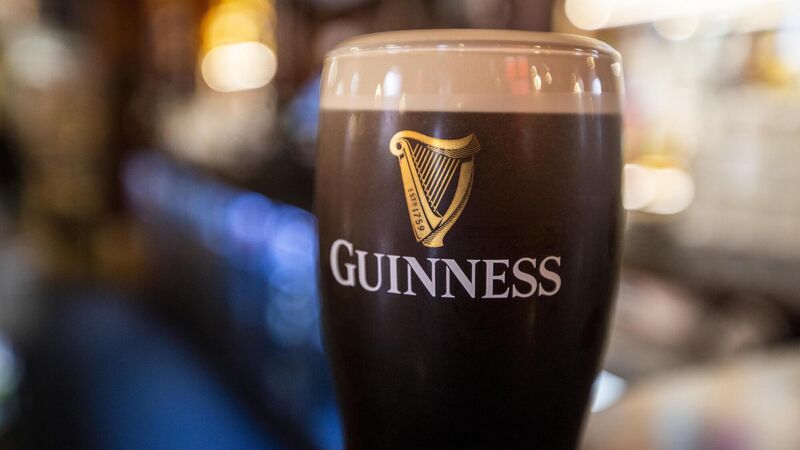
Guinness maker Diageo forecast an annual $150m (€133m) hit from US president Donald Trump's tariffs, and has launched a $500m (€446m) cost-savings programme.
Guinness maker Diageo is forecasting a €133m annual hit from US President Donald Trump's tariffs, and has launched a $500m (€446m) cost-savings programme.
The world's largest spirit maker, whose brands include Baileys, Johnnie Walker, Smirnoff and Tanqueray, said it would be impacted by a 10% tariff on European and UK imports into the US. Diageo's CEO Debra Crew said they will be able to mitigate around half of this impact, but put the cost of the impact at $150m (€133m).
In a trading update, the company reported that net sales grew by 2.9% to $4.37bn (€3.89bn) for the three months to March 31, amid a boost from continued strong Guinness sales. In Europe, Guinness sales were up double digits with strong demand for both Guinness Draught and Guinness 0.0.
Ms Crew later told reporters that "nothing has changed" with regards to well-performing beer label Guinness, which Diageo ruled out selling earlier this year. It was reported in January that a potential spin-off sale of Guinness was under consideration given the stout is an outlier in its business which is dominated by spirits. The company said cost cuts would come from changes to Diageo's trade investment and advertising spend, overheads and supply chain. The plan does not include large-scale redundancies.
"In the third quarter we delivered strong organic net sales growth and are on track to deliver on our guidance of sequential improvement in organic net sales performance in the second half of fiscal 2025," Ms Crew said.
"We also reiterated our organic operating profit outlook for fiscal 2025, including the impact of tariffs based on what we know at this time. We continue to believe in the attractive long-term fundamentals of our industry and in our ability to outperform the market.
"We view the near-term industry pressure as largely macro-economic driven, with continued uncertainty impacting both the timing and pace of recovery."
Additional reporting Reuters


CONNECT WITH US TODAY



Be the first to know the latest news and updates