My Job: How Gleasure Funeral Homes reshaped Irish funerals over 50 years
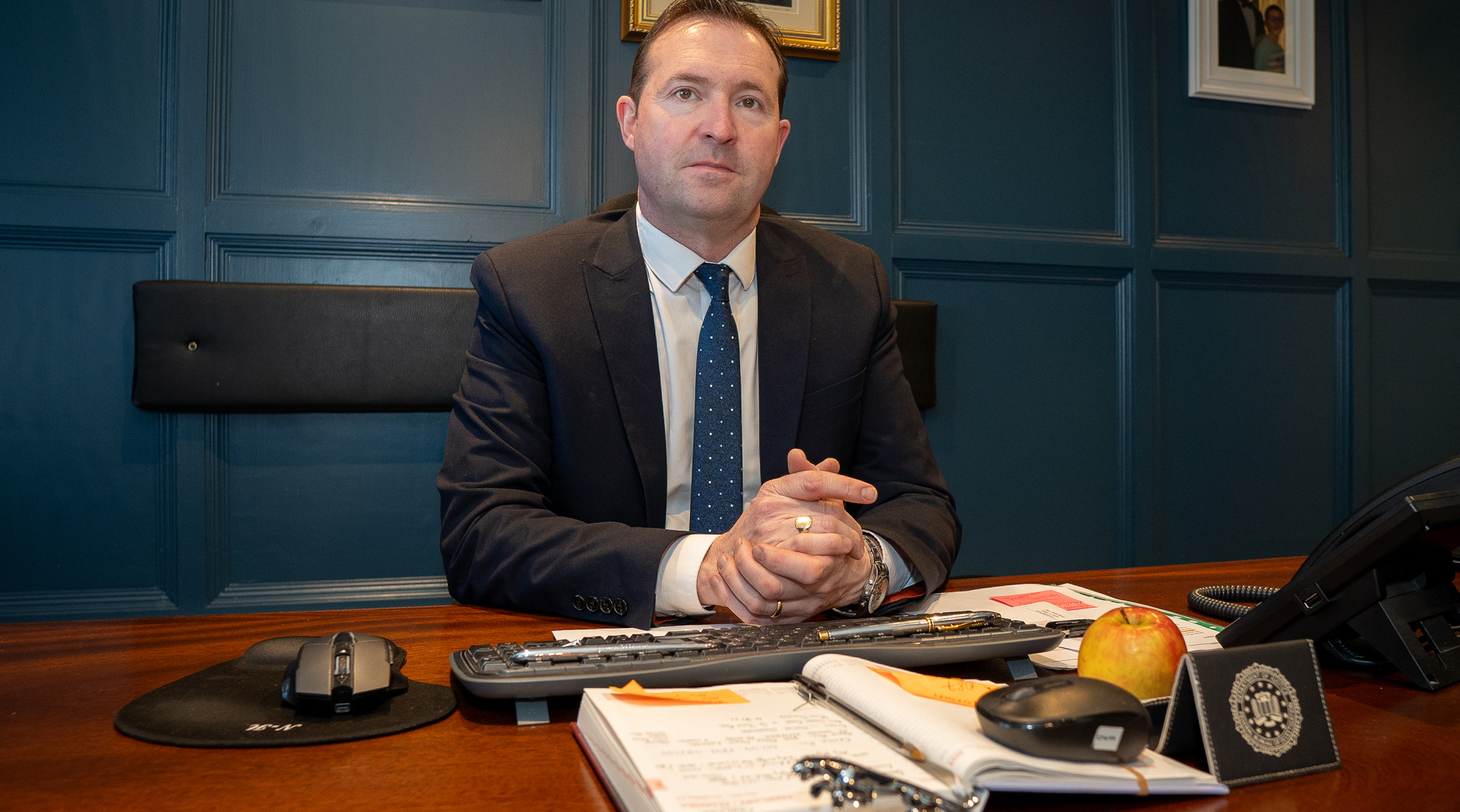
Graham Gleasure: 'Having a tone of empathy and respect is something that has not changed over half a century.' Photo: Mark O'Sullivan
: Graham Gleasure
: Managing Director, Gleasure Funeral Homes
: In business for over 50 years, this family business has witnessed many changes in how funerals are managed.
Operating at its branches in Tralee and Listowel, Gleasure Funeral Homes has seen many changes over the past half century. Back in the early 1970s, Pat Gleasure saw an opportunity in a changing sector and decided to take a commercial chance by turning the sod on the Gleasure Funeral Home.
Working at the time in the family businesses in Tralee, Gleasure’s pub and the mill at the Market Gate, he opened the funeral home in 1974 - the second purpose-built premises in Munster in an era when removals to the Church were exclusively from the hospital mortuary or the deceased’s residence.
“My father was working in the family’s furniture shop and heard about the idea in America where they had special premises for funerals to take place,” Graham explains of the original light bulb idea.
“Up to then in Ireland, every funeral took place at the mortuary in the hospital or at the home. There were no funeral parlours or dedicated spaces as we know them now available in that time.” Driven to make this new idea a reality, Pat Gleasure began the slow process of finding a suitable premises and furnishing it to a standard already proven in the USA.
“My father was also very proactive about the idea of embalming bodies, which would also have been very new in Ireland.
"For that reason, he took it upon himself to become a fully trained embalmer, and saw it as being a key part of the business offering.”
The idea of a spacious premises which provided a soothing atmosphere with adjacent parking facilities was central to the original business plan, a reality achieved through the purchase of a number of local firms, amalgamating their smaller numbers, and initiating the process of building a client base.
“It was a slow build during those times of high interest rates, and very tough going in the early days. It did take quite a few years to become a viable commercial proposition.”
Having gone to college and looked for a time to different possible career horizons, Graham eventually saw the business as a very viable career choice and joined the family firm. “My father and mother built the business together, doing everything themselves in the beginning before starting to slowly employ more as it gained a more secure footing.”
While the idea of a dedicated funeral home might have become the norm overseas, it did take time for the Irish public to adapt to this new means of helping people through an often distraught, but inevitable, episode of life.
Back in the 1970s, the phone was still a new addition to most Irish households - and a vital lifeline to the emerging Gleasure Funeral business. “The landline phone in our house, as it was back then, was of paramount importance and had to be attended at all times, day and night.
"Even if we were all away at any kind of local happening elsewhere, the answering machine had to be on and would give the caller the other phone number where we were contactable at.”
From a young age, Graham learned the importance of the telephone, and the correct way in which it needed to be answered: “As soon as you got the call that someone had died, you immediately went into funeral mode taking down the information and explaining how the process worked. From a young age I was answering phones in a very respectable way,” he recalled.
“Having a tone of empathy and respect is something that has not changed over half a century - and that is the same tone you must have whether the phone rings at midday or three in the morning. Even today, we always try to have a member of the family answering the phone.”
Funeral directing is often considered a vocation as it involves direct dealing with upset, bereaved people in difficult, emotionally fraught situations. Graham continues the tradition of empathy and understanding while slowly enhancing the business with newer methods.
“We provide a personal service that meets the needs of grieving families in all aspects of the funeral business; whether involving cremation, exhumation, repatriation to or from abroad, pre-need consulting or embalming.”
Traditionally the only way to say goodbye to a loved one was burial in a grave, whether an existing plot owned by the family or a new grave. Today the options of cremation and resomation are available.
“The question of being buried or cremated is truly based on personal choice and people choose one or other for different reasons. There is an obligation in Ireland for a new grave plot to be available to everybody, at a reasonable cost and within reasonable distance.
"In Kerry the local authority, Kerry County Council, owns nearly all the cemeteries and a grave cannot be purchased before there is a need for it – only when someone has died.”
Generally a single plot will accommodate two or three coffin-burials over a generation; with a double plot taking up to six coffin-burials.
Resomation, also known as Water or Green Cremation, is an alternative to cremation or burial. “It is a gentle, green and eco-friendly end-of-life choice, and clearly as we become more aware of our environmental footprint, there’s a growing call for eco-friendlier alternatives.
"A funeral involving Resomation is a familiar ceremony, similar to flame cremation but instead of using fire, water is used to return the body to calcium phosphate (ash) and is returned in an urn similar to cremation.”
Similar to cremation, families receive an urn with the pure white remains of their loved one. “Resomation represents a thoughtful choice for our final farewell, leveraging a natural water-based process that is softer on the body and more environmentally considerate.”
An interest in people and what you can do to help them are essential attributes of the business, according to Graham, added to with a sympathy for the situation people are in when the phone rings at an unexpected hour.
But there are those funerals that are not the result of a long life, and are instead the result of sudden accidents or other fatal traumas: “They are heartbreaking for a million different reasons, and in those cases it does challenge and wear on you when everything is going on around you.
"There are those traumatic circumstances where you are melted by what has happened to bring these people to this point. They are very tough occasions for the families and everyone concerned, and are a necessary part of the business. So it is important to be able to stand back from the job on occasions, and to recharge yourself to be able do your best for clients who need it.”

CONNECT WITH US TODAY



Be the first to know the latest news and updates