Analysis: Intel's Irish workers are too valuable to cut
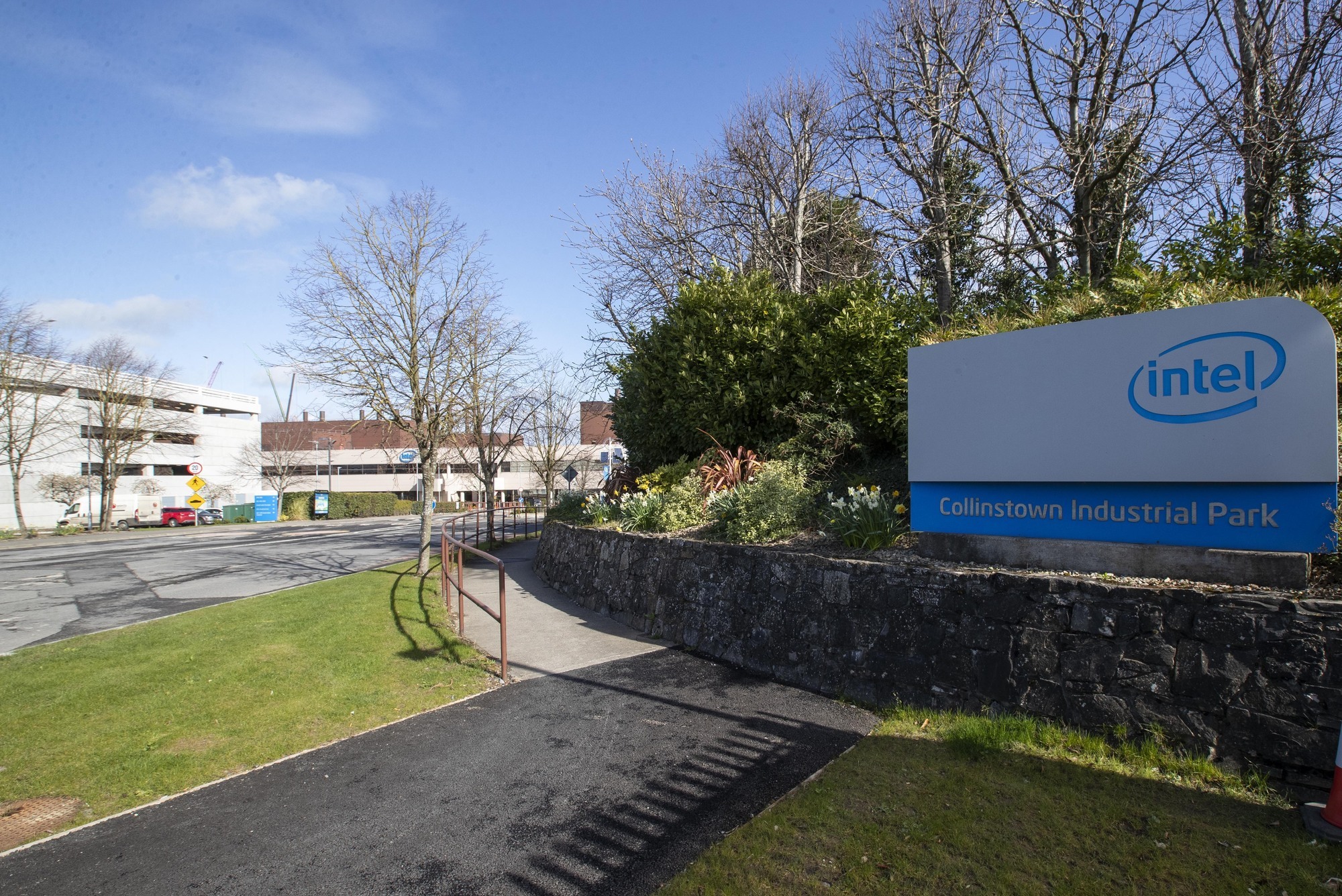
Intel’s Irish base is its second-largest after the US and is paramount to the chipmaker’s global operations. Picture: Colin Keegan
Once the domineering force in computing and data centre processors, technology giant Intel’s inattentive response to the global AI shift has led to it ceding critical ground to its largest rivals.
The chipmaker is now struggling to keep up with key competitor Nvidia, which saw revenue climb to more than $39bn in its last fiscal quarter on the back of its datacenter unit, responsible for powering most generative AI models, which continues to soar in demand.
In addition, rival Taiwan Semiconductor Manufacturing saw revenue in its last quarter total $26.4bn, also underpinned by resilient demand for advanced chips used in AI applications.
Meanwhile, struggling chipmaker Intel saw revenue fall by 7% to just over $14bn in its latest fiscal quarter, with the company due to release earnings for the past three months on Thursday, which will offer the clearest look yet at the company’s latest strategy to reverse operational lapses.
In the past 12 months, Intel’s stock has declined by about 43%, closing on Tuesday at $19.51, a far cry from its $34 share price in April 2024.
However, also expected this week are plans by the embattled chipmaker to cut 20% of its staff, as new CEO Lip-Bu Tan aims to eliminate bureaucracy and streamline leadership across the firm. Assuming the top role just last month, Mr Tan has vowed to spin off company assets that he deems are not central to Intel’s mission.
The latest reported cuts follow efforts by the company in August last year to slash around 15,000 jobs. Intel had 108,900 employees at the end of 2024, down from 124,800 the previous year.
Of that number, some 5,000 workers are based here in Ireland, concentrated primarily in the company’s campus in Leixlip, Kildare. Some 300 employees are based at the company’s research and development base in Shannon, however, the company announced last year that it would close this facility by the end of 2025 as part of its savings plan, with staff being offered the opportunity to move to remote working.
Since 1989, Intel has invested more than €30bn in its Irish operations, with its Leixlip base home to the company’s European manufacturing hub. In 2023, the chipmaker opened its €17bn Fab 34 factory, the largest construction project to ever be undertaken in Ireland, according to Intel, which doubled the chipmaker’s manufacturing space in Ireland.
In June last year, it was announced that asset management firm Apollo Global would provide more than €10bn to Intel to buy a 49% stake in the Fab 34 facility, with the transaction allowing the chipmaker to retain majority ownership and control the plant while also having access to funding needed to pursue future expansions.
Intel’s Irish base is its second-largest after the US and is paramount to the chipmaker’s global operations. Its Leixlip campus is poised to produce the majority of its Intel 4 technology, which includes the company’s extreme ultraviolet (EUV) chips, the most advanced semiconductor manufacturing technology on the market.
According to Intel, EUVs play a “critical role” in driving the company towards its goals of delivering five nodes in four years and regaining leadership in process technology by 2025.
The Fab 34 facility in Leixlip is also part of what the company calls a “first-of-its-kind end-to-end leading-edge semiconductor manufacturing value chain in Europe,” with the site being combined with a wafer fabrication facility in Germany and an assembly and test facility in Poland.
Yet, despite Ireland being a cornerstone of Intel’s global manufacturing footprint, the sheer size of its operations makes it unlikely it will come out completely unscathed by the chipmaker’s latest round of global layoffs.
Around 5% of all Intel staff are based in Ireland, with a 20% reduction in staff, if applied uniformly across operations, equating to more than 900 Irish job losses.
But with a new facility able to serve viable markets for another few years, and a need for Intel to keep Fab 34’s minority shareholder sweet to avoid any financial penalties, cutting a large number of Irish staff seems counterproductive from a purely business standpoint.
Hence, while administrative and soon-to-be remote working R&D staff may be caught in the firing line of Intel’s latest restructuring scheme, it seems unlikely that those on the ground on Fab 34 and the broader Leixlip campus will be hurt. On a global scale, they are simply too valuable.
CONNECT WITH US TODAY



Be the first to know the latest news and updates