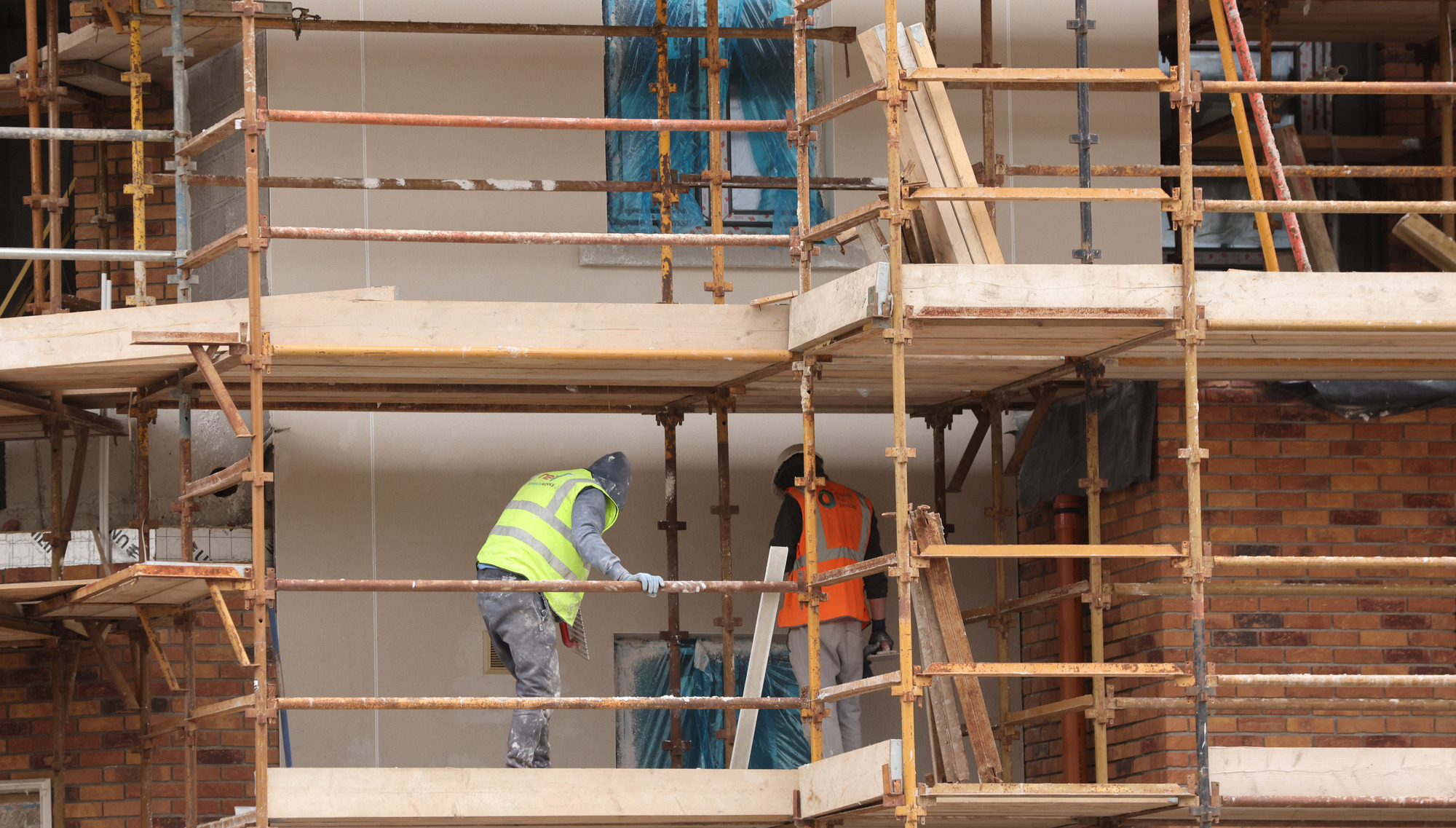
Government housing targets are likely to be missed despite a solid rise in housebuilding activity, an industry survey has suggested.
BNP Paribas Real Estate Ireland's Purchasing Managers Index for the construction industry showed housebuilding activity increased for the fifth consecutive month in July, and at a pace that was the fastest since April, marking the first time this has happened in over two years.
However, new dwelling completions fell by 8.6% in the first half of the year.
“This means 20,700 units need to be delivered in the second half for the Government’s target of 33,450 completions to be met," BNP Paribas Real Estate Ireland's director and head of research John McCartney said.
This requires an 11% jump over units delivered in the second half of last year, which Mr McCartney said “would appear to be quite challenging” as the number of units under construction in Dublin was already down 13% year-on-year at the start of 2024.
Scroll for results in your area
Cork East
Cork North Central
Cork North West
Cork South Central
Cork South West
Kerry
Clare
Limerick City
Limerick County
Tipperary North
Tipperary South
Waterford
Dublin Bay North
Dublin Bay South
Dublin Central
Dublin Fingal East
Dublin Fingal West
Dublin Mid West
Dublin North West
Dublin Rathdown
Dublin South Central
Dublin South West
Dublin West
Dun Laoghaire
Carlow/Kilkenny
Kildare North
Kildare South
Laois
Longford/Westmeath
Louth
Meath East
Meath West
Offaly
Wexford
Wicklow
Wicklow/Wexford
Cavan/Monaghan
Donegal
Galway East
Galway West
Mayo
Roscommon/Galway
Sligo/Leitrim
He said commencements have picked up sharply in recent months, but “it may be 2025 before the recent surge in early-stage construction yields a material uplift in completions”.
Residential construction has largely been supported by Government efforts as policymakers scramble to make progress in addressing the chronic shortage of supply that is likely to be a dominant issue in the upcoming general election.
The overall reading in the July index for the construction sector was 49.9, just below the 50.0 mark which is associated with expansion while everything under is regarded as contraction.
Elsewhere, there was a sharp rise in new orders last month while commercial building output was broadly unchanged following a sharp reduction in June.
Firms continued to hire more staff to respond to higher workloads, but the pace of job creation slowed compared to previous months amid a tight labour market and record low unemployment.
Companies also expanded their purchasing activity, both in response to higher new orders and to replenish stocks despite input costs rising again as inflation remains stubborn for some construction materials.
CONNECT WITH US TODAY
Be the first to know the latest news and updates