Runway to boost Ryanair flights but hauliers fear impact on trade
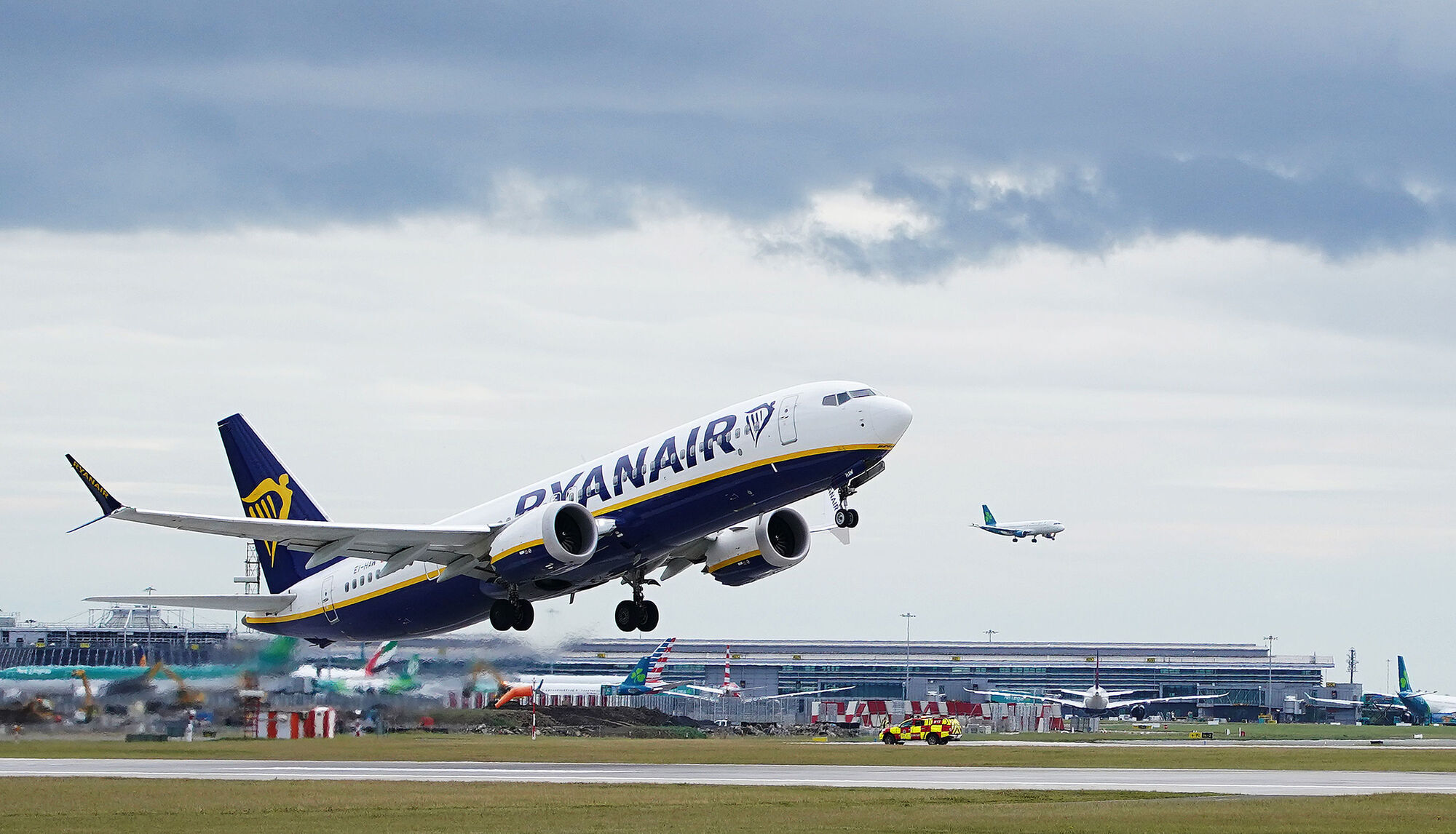
Ryanair flight FR1964 takes off from Dublin Airport's new North Runway. Picture: Brian Lawless/PA
Ryanair hails the opening of a new runway at Dublin Airportand said it will help ramp up operations post-pandemic, but a haulier representative group has warned it could hinder trade.
There is currently a cap on the number of flights permitted between certain hours due to noise regulations and CEO of Freight Transport Association of Ireland (FTAI) Aidan Flynn said that while the new runway offers more availability to travellers, it could impact freight services.
“Following the changes to the way in which night flights are operated at Dublin Airport, it is critical that crucial express freight services are still prioritised for time slots that support intricate and efficient global supply chain links which rely on overnight flight links,” said Mr Flynn.
Night flights currently transport around €19bn worth of imports and exports each year, with cargo night flying supporting €1.1bn in GDP and approximately 15,000 jobs, according to the FTAI.
Mr Flynn is also concerned that the new runway will cause access issues for express services.
“The opening of the new runway has blocked the direct access to these terminals and support services, as the West Apron Surface Crossing has been closed. Closure of the direct access to the freight operators’ airside operations will create significant logistics issues that are not easily resolved,” he said.
The FTAI added that the new runway is “an opportunity to enhance Ireland’s global connectivity and trade opportunities, and provide a boost for the Irish economy”.
The runway was used for the first time by Ireland’s largest airline, Ryanair. An aircraft carrying 197 passengers used it to depart for Eindhoven.
“This new second runway capacity will enable Ryanair to operate more flights to and from Dublin airport,” said Ryanair CEO Eddie Wilson.
The initial cost of building the runway was estimated at €250m and Ryanair was critical of Dublin Airport when the cost increased to €320m.
Ryanair boss Michael O’Leary described the cost increase at the time as “nonsense” and without justification.
“A second runway is a good idea and hopefully we will need it,” he told the in 2016.
The new runway is set to support 31,200 new jobs and over €2bn in additional economic activity.
“As we enter an era of higher oil prices, and increasing environmental taxation, it is imperative that Ireland, as a country on the periphery of Europe, enhances our low-cost connectivity to Europe and the wider world,” said Mr Wilson.
Ryanair recently appealed to the courts after Hungary fined it for passing on to customers the cost of a business tax meant to target excess profits.
Nationalist prime minister Viktor Orban's government in May announced the special tax targeting "extra profits" earned by major banks, energy companies and other firms.
The new levy on the airline industry involves a tax worth 10 to 25 euros per passenger departing Hungary from July.

CONNECT WITH US TODAY



Be the first to know the latest news and updates