UK house price growth near zero as Brexit rut deepens
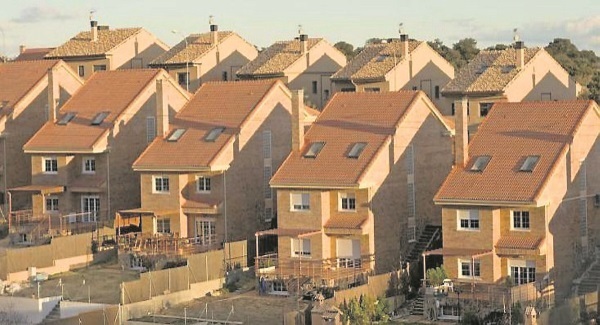
British house price growth remained weak in June as uncertainty about Brexit hung over the market, mortgage lender Nationwide has said.

UK house price growth near zero as Brexit rut deepens

British house price growth remained weak in June as uncertainty about Brexit hung over the market, mortgage lender Nationwide has said. House prices increased by 0.5% compared with a year ago, slowing slightly after a 0.6% rise in May but in line with expectations.

At the time of the Brexit referendum in 2016, UK house prices were growing by about 5% a year, according to Nationwide’s measure. In monthly terms, UK house prices in June edged up by 0.1%, a slightly smaller increase than expectations for a rise of 0.2%.

Nationwide’s data chimed with other housing indicators which have suggested that a weakening of the market seen in 2018 might have bottomed out as investors wait for Britain to resolve its Brexit crisis.

“While healthy labour market conditions and low borrowing costs will provide underlying support, uncertainty is likely to continue to act as a drag on sentiment and activity,” Robert Gardner, Nationwide’s chief economist, said.

Price growth and transaction levels were likely to be little changed over the coming months, he said. Britain is waiting for the Conservative Party to choose its new leader who, as next prime minister, will attempt to strike a new Brexit deal with the EU before the October 31 deadline for the country’s departure from the bloc.

Nationwide’s data showed that prices in London fell for an eighth quarter in a row in the April-June period although the pace of decline moderated to 0.7% in annual terms from 3.8% in the previous quarter. Prices in the capital were around 5% below the all-time highs seen in early 2017 and were about 50% above their levels in 2007, before the global financial crisis, Nationwide said.

Prices in Britain, as a whole, were only around 17% higher over the same period. House prices in the second quarter rose most strongly in Northern Ireland and Wales, up by an annual 5.2% and 4.2% respectively.

The Brexit crisis also tipped Britain’s construction industry into its sharpest fall in a decade in June, a survey showed, in a stark sign of how quickly the world’s fifth-biggest economy is slowing.

The yield on 10-year British government bonds sank to its lowest level in nearly three years as investors, already anxious about the prospect of a no-deal Brexit under the country’s next prime minister, took fright at the scale of the fall. Construction accounts for only 6% of Britain’s economy. But there have been other signs that overall activity has stalled, and possibly even contracted, in the second quarter.

Reuters

x

More in this section

The Business Hub

Newsletter

News and analysis on business, money and jobs from Munster and beyond by our expert team of business writers.

Cookie Policy Privacy Policy Brand Safety FAQ Help Contact Us Terms and Conditions

© Examiner Echo Group Limited