Architect and engineer agreed scheme to move €7m before bankruptcy, court told
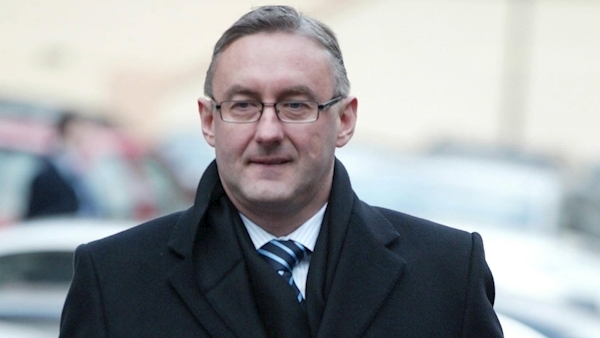
An architect and an engineer agreed a scheme to move shares in a firm worth US$8m (€7.1m) as the architect got into financial trouble and later filed for bankruptcy, the High Court heard.

Architect and engineer agreed scheme to move €7m before bankruptcy, court told

An architect and an engineer agreed a scheme to move shares in a firm worth US$8m (€7.1m) as the architect got into financial trouble and later filed for bankruptcy, the High Court heard.

As a result of a dispute over that scheme, the court dismissed most of a case brought by Dublin architect, Jeremiah Ryan, acting as a trustee of the shares in his Abu Dhabi firm Horan Keogan Ryan Middle East (HKRME) and by the firm itself. The case was also brought by Patrick Stafford as another trustee of the trust involved, the Ryan Family Trust (RFT).

The case was against Winthrop Engineering firm founder Barry English.

Mr Justice Denis McDonald said he did not find credible the evidence of either Mr Ryan, who was also principal of the architects firm HKR Dublin, or of Mr English.

He made his comments in a judgment rejecting a case by Mr Ryan and HKRME and Mr Stafford seeking the return of the US$8m which Mr Ryan said were held in a caretaker arrangement by Mr English for the trust he set up for his children, the RFT.

Mr English said there was no such caretaker arrangement. He claimed he agreed to buy the shares at a time when Mr Ryan was facing bankruptcy and to sell them back to him after he exited bankruptcy "at market value".

The sum agreed between the two men for the company was just €100,000 but after Mr Ryan entered his UK bankruptcy, some US$8m was transferred from HKRME to a Guernsey bank account.

That account was held by a British Virgin Islands-registered firm called Sunvit which was controlled by another trust established for the benefit of Mr English's family.

HKRME was primarily established in the hope of winning a large project, the Abu DhabiPlaza, in Astana, the capital of Kazakhstan, and won that contract in 2010 for fees of US$41m.

Mr Justice McDonald said the claim by Mr Ryan and Mr Stafford as trustees of the RFT must be dismissed as he was satisfied that trust did not have any beneficial interest in the shares of HKRME.

He found the true nature of the agreement between Mr Ryan and Mr English was that Mr English would act as caretaker of the shares on Mr Ryan's behalf, but not as caretaker on behalf of the family trust.

As Mr Ryan had made no personal claim in the proceedings, this finding was of no benefit to Mr Ryan, he said.

HKRME could also not succeed on the basis of the two men's agreement. However, HKRME was entitled to succeed against Mr English in relation to a claim by it for unjust enrichment.

However, this was only in relation to the extent of HKRME's claim concerning unpaid and lawful liabilities of which the court has yet to hear any evidence. A hearing to decide the nature and extent of such liabilities will be held later.

On conclusion of that hearing, the court will order Mr English to pay HKRME the amount found to be due in unpaid liabilities, he said.

He also dismissed HKRME's claim for damages for unpaid fees for the Kazakhstan project and for the loss of a chance to secure a follow-on contract.

Earlier, Mr Justice McDonald found Mr Ryan lied to a board meeting of HKR Dublin in March 2011 when he told fellow directors HKRME's shares were held in trust for HKR Dublin.

He said Mr Ryan "consciously and deliberately told lies" to representatives of the trustee handling his bankruptcy in the UK about the sale of HKRME. Mr Ryan told the representatives Mr English "purchased the business in Abu Dhabi... with a full valuation and good luck to him".

He also had serious concerns about the evidence of Mr English. It was clear very substantial payments were to be paid the Sunvit, Guernsey, company "in return for fictitious introductions by Mr English to sources of work for HKRME. It was simply an arrangement whereby extremely large sums could be extracted from HKRME and transferred offshore.

The judge said:

The fact that Mr English agreed to be party to such bogus arrangements raises a very serious issue in relation to his probity.

Mr English was also involved in the "sham termination" of Mr Ryan's involvement in HKRME. He generated a fictitious invoice to create a paper trail on the sale of the shares and also backdated the agreement to acquire the shares.

More in this section

The Business Hub

Newsletter

News and analysis on business, money and jobs from Munster and beyond by our expert team of business writers.

Cookie Policy Privacy Policy Brand Safety FAQ Help Contact Us Terms and Conditions

© Examiner Echo Group Limited