Why China? Why not, as a global giant eyes change
It is big. It’s far away and they have pollution problems. They live in big cities.
They make our tech products and our seasonal Christmas tat and restrict their populace to just one child per family due to a stunning surplus of people.
Those same babies may also be admired from afar by Irish dairy farmers, consuming as they do a goodly slug of Irish milk, albeit in powdered form.
While one of these observations is no longer accurate — the one-child policy was ended in January 2016 — the basic cliches do tend to survive under scrutiny.
Yet, Irish people still have significant gaps in knowledge and understanding that tend to shape our perspectives on China.
One underlying reason may be that the country has not been placed on the traditional diaspora map we have all learned to internalise. Happily, this has been changing.
When I told family and friends that I would “try out” Shanghai, there was a striking lack of variety in the responses.
My father even quoted a ballad about a rascal named Johnny Doyle, who absconds on an Eastern-bound schooner after getting a Dublin girl in trouble.
In Shanghai a month later, at a lunch for the online education company I had joined after a short job search, the CEO — a wealthy investor who was using his main company to fund the start-up as a pet project — asked me the same question: Why China?
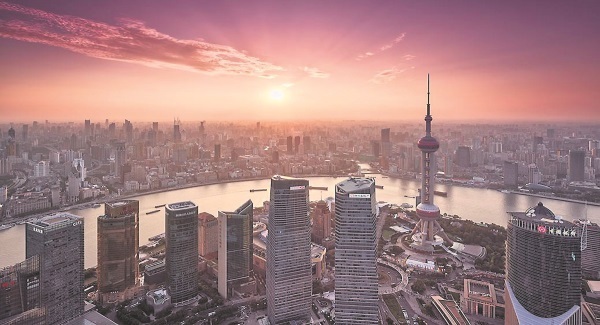
The restaurant was high up in Liujiazui, a rapidly erected answer to Manhattan, with a view over the historic waterfront.
I looked at the transports and ferries moving on the Huangpu River and the immense skyline behind and muttered something about witnessing historical change.
The intervening three years afforded a view of a society convulsing with extraordinary change, affecting daily life, the fundamentals of the economy, and moral outlook of the people.
The Chinese are on a drive that could be called “ceasing-to-be-the world’s factory” to become instead a services giant.
The fact that I was employed on a project that sought ambitiously to launch an online global service based in English was no coincidence.

While the Chinese leadership pushes “the Belt-and-Road” initiative — the massive infrastructure-building project that hearkens to the glory days of state-led growth — more than three-quarters of its industry is now in private hands.
While the plan is truly colossal, some of the messaging has fallen flat.
Before a major international forum on the plan in Beijing in May last year, no one apparently noticed that the acronym, BARF, struck an awkward note in English.
Within its mega-cities there is a will to move from manufacturing. The rising middle classes are producing educated consumers who have a range of desires, which may include learning English, studying and travelling abroad, and working for an international company.
It would be hard to overstate how different these aspirations are from those of any previous generation.
Having overseen the raising of half a billion people out of poverty in a few decades, the government must now manage their expectations.
Analysts at McKinsey and elsewhere have pointed out how the rise of robotics will cause a good many manufacturing jobs to cease to exist around the world.
The majority of the jobs under threat are in places like Shenzhen, the city of more than 10m on the Pearl River delta that didn’t even exist 30 years ago.
It’s also where Apple’s contractor Foxconn maintains some of its massive facilities.
There is no doubt that downturns in China’s GDP growth have immediate affects elsewhere.
In the Dublin ballad, the eponymous Johnny Doyle is eventually persuaded to make good and return to family duties.
The ever stronger and more learned sons and daughters of China will have many benefits in the future.
Maintaining the experience of plenty they have enjoyed will also require resources of creativity — and perhaps a more flexible and informed relationship to the outside world.
They have a sufficient will to arrive there, in my opinion.