Greek banks may reopen after ECB agrees to increase emergency funding
Eurozone ministers have agreed to give Greece a €7bn bridging loan from an EU-wide fund to keep its finances afloat until a bailout is approved.

Greek banks may reopen after ECB agrees to increase emergency funding

Eurozone ministers have agreed to give Greece a €7bn bridging loan from an EU-wide fund to keep its finances afloat until a bailout is approved.

The loan is expected to be confirmed on Friday by all EU member states.

In another development, the European Central Bank agreed to increase emergency funding to Greece for the first time since it was frozen in June.

The decisions were made after Greek MPs passed tough reforms as part of a eurozone bailout deal.

It means Greek banks, which have been closed for nearly three weeks (since June 29), could reopen in the next few days.

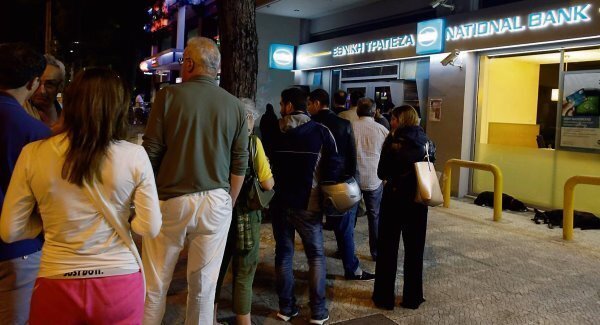
Greeks queue outside an ATM in late June.

The ECB’s governing council had halted the credit flow due to concerns the banks would go broke and not pay the money back.

Greece's interior minister said the government is likely to call an early election in the autumn after losing support in parliament for an austerity law.

Nikos Voutsis said the left-wing government narrowly avoided collapse in the vote.

Mr Voutsis told Sto Kokkino radio that elections are “very likely” and that if they do not take place in September, then it would be October.

The austerity bill was approved with opposition party support, but the ruling Syriza party saw 38 of its 149 politicians defy prime minister Alexis Tsipras by either voting against or abstaining.

Mr Voutsis said the government could have collapsed if the number of dissenters had risen to 42 – that would have made it more difficult for Syriza to legislate.

In a news conference following the regular policy meeting, ECB head Mario Draghi said they had agreed to increase that credit amount by €900m over one week.

The decision came after the Greek parliament approved a bill of budget savings and economic reforms that the eurozone countries said was required to start talks on a new bailout programme worth about €85bn over three years.

It was unclear when the Greek banks might reopen or when the country might be able to lift or ease limits on cash withdrawals and money transfers.

ATM withdrawals have been limited to €60 per person per day. Normal commerce is impossible as suppliers demand businesses pay cash they don’t have.

Every day of delay makes Greece’s recession worse, costs the government lost tax revenue, and increases the amount of money needed to rescue the government from bankruptcy.

Mr Draghi also re-stated that the ECB is willing to use all the stimulus measures at its disposal to prevent market turmoil from destabilising the economic recovery in the 19 eurozone countries.

Greece is less than 2% of the economy of the eurozone, but earlier phases of the six-year-old Greek crisis created financial pressure for other indebted countries who found their market borrowing costs rising.

More in this section

The Business Hub

Newsletter

News and analysis on business, money and jobs from Munster and beyond by our expert team of business writers.

Cookie Policy Privacy Policy Brand Safety FAQ Help Contact Us Terms and Conditions

© Examiner Echo Group Limited