Thatcher official warned of 'unscrupulous practices' after stock exchange deregulation
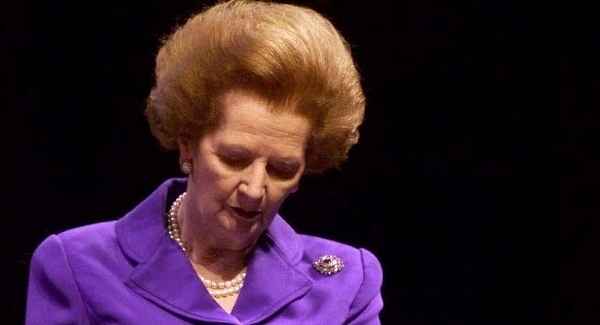
Margaret Thatcher's most senior official warned privately that her financial sector reforms were giving birth to a new culture of corner-cutting and "unscrupulous" practices in the City, according to newly-released UK government papers.

Thatcher official warned of 'unscrupulous practices' after stock exchange deregulation

Margaret Thatcher's most senior official warned privately that her financial sector reforms were giving birth to a new culture of corner-cutting and "unscrupulous" practices in the City, according to newly-released UK government papers.

Robert Armstrong, the Cabinet secretary, took the unusual step of setting out his personal concerns about "the things that people think are going on in the City" in a highly prescient memorandum to No 10.

1986 was the year of "Big Bang" - the deregulation of the London Stock Exchange which swept away the old gentlemanly world of "jobbers" and "brokers", bringing in electronic trading floors and a wave of foreign incomers armed with sack-loads of cash.

It ensured London's pre-eminence as an international financial centre and ushered in the "loadsamoney" era of conspicuous consumption which characterised the late 1980s as the newly-rich City boys and girls revelled in their wealth.

But it was a period also of financial scandals - most notably the Guinness share-rigging affair - and, in the eyes of critics, it helped sow the seeds of the great crash which engulfed the world some two decades later in 2008.

In an extraordinary memorandum contained in files released by the National Archives in Kew, west London, Armstrong put down on paper his doubts about the effect the changes were having.

His note, dated March 17 1986, seven months before Big Bang, was addressed to Mrs Thatcher's private secretary Nigel Wicks, who would almost certainly have shown it to her.

While he acknowledged his concerns were "pretty vague and unspecific", he said that he was by no means alone in harbouring such doubts.

"I do not know whether you are having the same experience but I am finding, among people who work outside the City of London but whose activities bring them into touch in some degree with the City, that there is increasing disquiet about the things that people think are going on in the City," he wrote.

"I do not just mean the levels of remuneration; a lot of people, including some from inside the City, think that is a bubble that will be pricked in a year or two.

"They think more about the way in which corners are being cut and money is being made in ways that are at least bordering on the unscrupulous.

"It tends to be summed up by the people saying that they doubt whether it really is good enough any more to leaving the policing of the City to self-regulation.

"I'm afraid that all this is pretty vague and unspecific; but I find it sufficiently prevalent to be concerned."

Mrs Thatcher received an altogether rosier assessment from David Willetts, who was then working in the No 10 policy unit and who co-authored a paper for her on the likely impact of Big Bang.

The paper dismissed concerns that it could lead to a repeat of the "boom and bust" which followed previous City deregulation in 1971 when a property boom was followed by a market collapse and a banking crisis.

"This does not mean that there might not be individual financial failures as a result of bad commercial decisions, but we do not expect a systemic problem," the paper noted.

More in this section

The Business Hub

Newsletter

News and analysis on business, money and jobs from Munster and beyond by our expert team of business writers.

Cookie Policy Privacy Policy Brand Safety FAQ Help Contact Us Terms and Conditions

© Examiner Echo Group Limited