Little movement for Dow
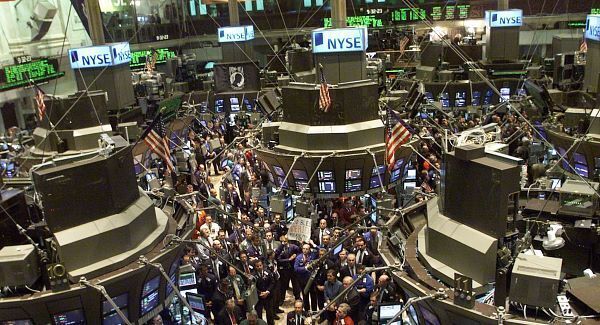
Stocks closed little changed on Wall Street last night as budget talks continued in Washington.
The Dow Jones industrial average closed down 13.82 points at 12,951.78 after trading in a narrow range of just 82 points.
The Standard and Poor's 500 was down 2.41 points to 1,407.05. The Nasdaq composite was down 5.51 at 2,996.69.
Investors are waiting on developments from Washington in the budget talks, which are aimed at avoiding the "fiscal cliff".
That refers to a series of sharp government spending cuts and tax increases that begin to kick in on January 1 and could eventually cause a recession.
President Barack Obama said a proposal by House speaker John Boehner on Monday was "still out of balance". President Obama, in an interview with Bloomberg Television, insisted on higher taxes for wealthy Americans.
Republicans, led by Mr Boehner, have balked at Mr Obama's proposal of $1.6 trillion (€1.22 trillion) in additional taxes over a decade, and on Monday called for increasing the eligibility age for Medicare and lowering cost-of-living increases for Social Security benefits.
"Politicians are doing their negotiating dance. They both start out on their extreme positions. The question is how long until they get into the middle," said Rex Macey, chief investment officer at Wilmington Trust Investment Advisors in Atlanta.
Among stocks making big moves, Darden Restaurants, owner of the Olive Garden, Red Lobster and LongHorn Steakhouse restaurant chains, fell $5.02, or 9.6%, to 47.40 after cutting its profit forecast for fiscal 2013.
Separately, analysts at Credit Suisse said that restaurant-goers would "quickly lose their appetite" if the US went over the "cliff" because the job cuts that would likely follow would curb discretionary spending.
Stock trading will probably become increasingly more volatile the longer talks progress without a deal, said JJ Kinahan, chief derivatives strategist at TD Ameritrade.
"If you looked back a week ago, most people were under the impression that we'd get this solved fairly quickly," Mr Kinahan said. "There hasn't really been any positive news, or any positive movement, in the last few days, and with that it makes people more and more nervous."
Despite the slow pace of the talks, the stock market has gained back nearly all of a post-election slide caused by concerns about the fiscal impasse. The S&P is now about 1.5% below where it was on November 6. In mid-November it had dropped as much as 5%.
Bill Gross, the managing director of fund manager PIMCO, told investors in his regular newsletter that they should expect annualised bond returns of 3 to 4% at best in the future and stock returns that are "only a few percentage points higher."
The S&P 500 has risen 12 % this year. High debt levels and slowing global growth will weigh on the economy, Mr Gross said.
The yield on the 10-year Treasury note fell 1 basis point to 1.61%.