Canadian lands UK's top banking role
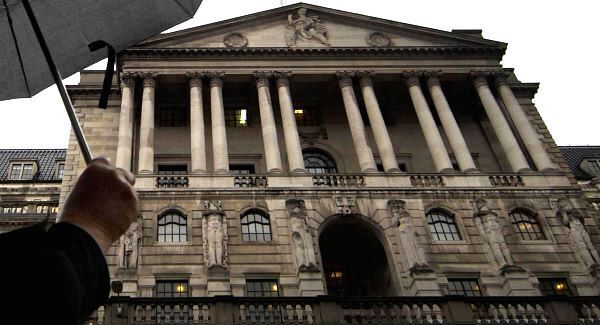
Chancellor George Osborne shocked the City today as he unveiled Canadian Mark Carney as the first non-British citizen to be appointed as governor of the Bank of England.
Beating a host of financial heavyweights to the £300,000 a year post, the current governor of the Bank of Canada will succeed Sir Mervyn King when he steps down next June.
The appointment was dubbed a “huge surprise” and “unprecedented” by experts who had, until the last minute, backed the Bank’s deputy governor Paul Tucker as the likely successor.
The Chancellor’s decision to overlook Mr Tucker prompted speculation that his recent entanglement in the Libor-rigging scandal at Barclays had damaged his chances.
Revealing Mr Carney as the new Governor, Mr Osborne told the House of Commons: “He has got what it takes to help bring families and businesses through these incredibly challenging economic times.”
The job is considered to be one of the most powerful in Britain with the Bank of England taking on extra responsibilities for banking supervision as part of an overhaul of financial regulation following the economic crisis.
Mr Carney, a former investment banker at Goldman Sachs, will be responsible for setting interest rates, regulating banks and heading a new committee designed to spot and ward off future crises.
The 47-year-old is the first governor in the Bank’s 318-year history to be appointed after an open recruitment process, in which the role was advertised and candidates interviewed by a panel.
He said: “This is a critical time for the British, European and global economies, a decisive period for reform of the global financial system, including its leading financial centre, the City of London, and a crucial point in the Bank of England’s history as it accepts vital new responsibilities.”
Canadian-born Mr Carney intends to take on British citizenship to serve as governor for five years, the Treasury said.
Mr Carney took up his post as Bank of Canada governor in the depths of the financial crisis in 2008.
At the time of his appointment, he was the youngest central bank governor among the G8 and G20 groups of nations and was later named as one of the world’s most influential people by Time Magazine in 2010.
But it is the 13 years on Mr Carney’s CV that he spent at investment banking giant Goldman Sachs that may raise an eyebrow.
The 47-year-old worked for the US firm – now synonymous with excessive pay and risky banking – in London, Tokyo, New York and Toronto offices.
Philip Shaw, economist at Investec, said the Chancellor “sprang a huge surprise” with the announcement.
He said: “Mark Carney is a surprise choice but he is a highly respected central banker.”
Mr Carney will continue as central bank governor in Canada until the end of May next year and will remain chair of the global Financial Stability Board until 2018.
He will not comment in public on the UK economy before taking up his new post, but will appear before the Treasury Select Committee for a pre-appointment hearing – the first Bank governor to be subjected to a grilling by MPs in this way.
Mr Osborne said the new governor’s pay and benefits would be determined by the non-executive members of the Court of the Bank of England, and would be “broadly equivalent” to Sir Mervyn’s package.
He is expected to receive a relocation package to move to the UK with his British wife Diana and four children, who have dual British-Canadian nationality.
Sir Mervyn said: “I am delighted to welcome Mark Carney as my successor. He represents a new generation of leadership for the Bank of England, and is an outstanding choice to succeed me.
“Since Mark became governor of the Bank of Canada, I have worked closely with him and admired his contributions to the world of central banking, in which he is widely respected.”
Mr Tucker, who joined the Bank in 1980, was the bookies’ favourite for the position.
He was dragged into the Barclays rate-rigging scandal after the bank’s former boss Bob Diamond published a record of a contentious phonecall with the deputy governor.
He fiercely denied that he had sanctioned the bank’s efforts to manipulate its borrowing costs downwards and survived a grilling on the issue by MPs.
Jeremy Cook, chief economist at foreign exchange company World First, said: “Reports over the weekend suggested that Paul Tucker would be the man for the job, but I would think that the stench of Libor investigations and his involvement with that rather sordid episode in the banking world’s history must have damaged his chances.”
Other candidates were understood to include Adair Turner, former chairman of the Financial Services Authority, and Sir John Vickers, former Office of Fair Trading boss who led the Government’s review into breaking up the banks.
Mr Carney’s appointment was welcomed as a “good choice, good judgment” by shadow chancellor Ed Balls.
But the TUC’s general secretary Brendan Barber said: “The new governor has a job that the Chancellor has made close to impossible. Government policies of austerity have sent the economy back into recession and threaten a lost decade of stagnation.”
Charlie Bean will be re-appointed as Bank deputy governor for monetary stability for a further year until the end of June 2014, to help oversee the extension of the Bank’s powers and the transition to a new governor at Threadneedle Street.
CONNECT WITH US TODAY



Be the first to know the latest news and updates











