Bank of England interest rate cut 'unlikely'
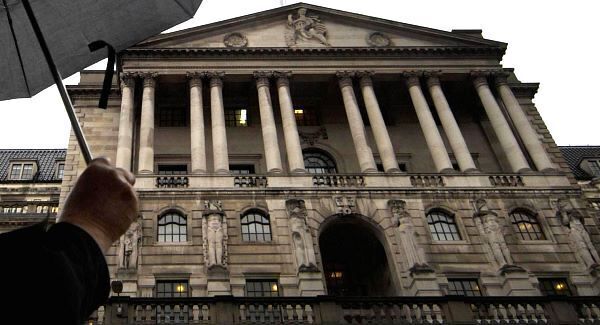
British interest rates are unlikely to be cut below their historic lows, but Bank of England policymakers have left the door open for more cash to be pumped into the UK economy, a report revealed today.
Minutes of the November Monetary Policy Committee (MPC) meeting showed the bank effectively ruled out further reductions in interest rates, currently at 0.5%, saying it was "unlikely to wish to reduce Bank rate in the foreseeable future".
But the report suggested the Bank had not yet called time on its quantitative easing (QE) programme, as it remained split on more economy-boosting measures.
One member of the MPC - David Miles - voted to increase QE by £25bn (€31.1bn) to £400bn (€497.3bn), arguing that the case for more QE was "strong".
While Mr Miles was out-voted by eight to one to keep the economy-boosting programme on hold at £375bn (€466.3bn), economists said the minutes signalled the Bank was keeping its options open.
According to the minutes, the MPC said "a case could be made for a further easing in monetary conditions" as it warned the UK economy could shrink again in the fourth quarter.
Details of the meeting come after the Bank slashed its growth forecast last week for next year to around 1% and said gross domestic product (GDP) could decline in the final three months of this year after a return to growth in the third quarter gave an "overly optimistic impression".
It also revised its inflation forecast and said the rate was not expected to fall towards the 2% target until the second half of next year.
Today's minutes showed the MPC believed there were "substantial risks" that inflation might not fall back to target as commodity prices remained volatile.
The MPC decided there was a danger that a cut in rates could prove counterproductive by hitting already fragile profit margins for some banks and building societies, which could see them rein in lending even further.
Howard Archer, chief economist at IHS Global Insight, said the Bank was likely to keep rates on hold for at least another two years.
He is instead forecasting more QE in the first quarter of 2013.
"With economic recovery currently looking feeble, fragile and far from guaranteed, we continue to lean towards the view that the Bank of England will ultimately decide to give the economy a further helping hand with a final £50bn (€62.2bn) of QE," he added.
There has been mounting speculation that the Bank may close its QE programme as policymakers have increasingly questioned the impact of further asset purchases.
Today's report confirmed concerns over the effectiveness of QE, with MPC members saying that economic activity was "less responsive to lower borrowing costs than normal".
"But this situation could easily reverse," they added.
While the shock rise in inflation to 2.7% in October added to worries over increasing QE, the Bank said ongoing weakness in the economic recovery meant "it was possible that output could be expanded without generating material additional inflationary pressure".
The MPC also took into account the recent deal for the Bank to give the Treasury £35bn (€43.5bn) received in interest on assets held under QE, which will effectively loosen monetary policy.












