As a nation we need to talk about ... rape

LET’S talk about rape. One in five women that walk among us has been raped. One in 10 men has experienced sexual assault. One in five girls and one in six boys have been sexually abused.
In cases of child sexual abuse, 89% of perpetrators are male, and acted alone.
Approximately 76% of all of these victims knew their assailant. So when we tell our kids to be careful on a night out, bear in mind that so-called ‘stranger danger’ is the situational
odd one out.
When it comes to disclosing acts of sexual violence, 42% of us have never said a word to anyone and only 8% have ever reported it to gardaí.
What about conviction rates? Ireland has one of the lowest in the EU, at 8% for sexual crimes.
And when we do convict, what kind of sentences are handed out?
In 2011, a Kerryman, 24, described as an “upstanding” member of his community, was given three years for raping a woman while she slept.
In 2012, our courts gave a man aged 26 18 months for sexually assaulting an eight-year-old girl while he babysat her.
In 2015, Justice Patrick McCarthy gave Magnus Meyer Hustveit, also 26, a wholly suspended sentence when he was found guilty of raping his girlfriend, Niamh Ní Dhomhnaill, while she slept. This was later upgraded to 15 months in prison.
Rape is the second-most serious crime on our statute books. It carries the possibility of a life sentence. The most serious crime? Murder. But murder victims take the consequences of that crime immediately to the grave. With rape, you live with its consequences.
These include post-traumatic stress disorder, self-harm, suicidal ideation, if not suicide, eating disorders, and depression, to name a few.
We talk a lot about mental health these days; to share our feelings, discuss things with friends. But do we tell people to talk about and disclose rape, a most prevalent issue in our society and a major source of mental health issues?
As a society, we really, really need to talk about rape, the crime, and its perpetrators. But we don’t. We talk about its victims, what they should and could have done differently.
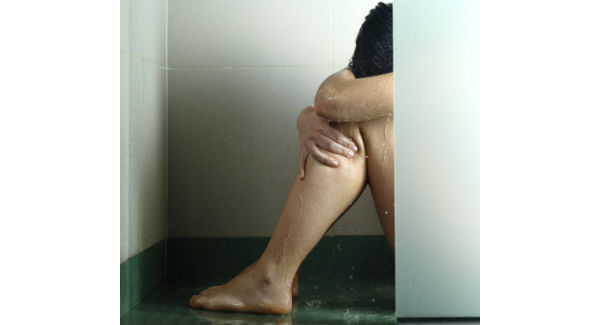
So let’s talk about rape and responsibility because, if this last week has shown us anything, it has exposed the deep fault lines between those who understand who owns the responsibility for this abhorrent crime and those who are conflicted and confused.
To shout down those who are confused about a “woman’s responsibility to protect herself” only serves to further entrench their views. People continue to get raped and people
continue to live with the consequences of it in silence. Meanwhile, the perpetrator goes without punishment and moves on to his next victim.
Don Hennessy, who has spent decades working in the area of sexual and domestic violence, says that the moment we move our focus to the victim, we lose sight of the solution.
“There are a couple of things about it,” he says. “If anyone is assaulted or attacked, you can’t say it’s the victim’s fault because once you do that you’re looking for solutions in the wrong place. If you follow that logic to the end, you’re telling your sons and daughters not to go out.
“Everyone looks at the victim to put some of the responsibility on them and that relieves people of having to do anything about it. All that is necessary for the triumph of evil is that good people do many things without addressing the real issue.
“The issue is that responsibility lies with the attacker. Until we accept this, we are colluding in some way with them.”
This attempt to focus on the victim is known as the ‘just-world hypothesis’.
People need to believe that one will get what one deserves and, in doing so, they rationalise an inexplicable injustice by naming things the victim might have done to deserve it.
We say: “I won’t do what they did and so it won’t happen to me.”
Stacey Scriver, from NUI Galway’s school of political science and sociology and co-author of the book Rape and Justice in Ireland, says no matter what safety measures a person takes, a criminal will seek to overcome these.
“What we should do to take care of personal safety is nothing to do with the fact that a crime is committed,” she says.
“In the majority of rape cases, the victim is raped by someone they know and trust. They did the right thing. They went home with someone they knew. Then that trust is betrayed and violated.”
“Personal safety is largely irrelevant. The crime is done in such a way that it often times negates whatever steps were taken to ensure personal safety.”
Mr Hennessy, after many years of working with perpetrators of sexual violence, concurs.
“If a man is intent on raping you, you could be wearing a sack, it doesn’t matter what you are wearing,” he says. “I’ve had perpetrators tell me that, that they already undress women with their eyes.”
Ms Scriver says it is a dangerous logic to look at the behaviour of the victim in relation to the crime.
“We look for all sorts of reasons to blame the victim. In one culture it might be their red lipstick, in another it’s the length of their skirt, in another it’s that they didn’t go out with a male chaperone, or they were working late at night. It’s subjective. The goal posts always move.
“It’s a dangerous logic to follow because you end up at a place where women don’t go out, don’t work at night. You don’t blame people for their vulnerabilities. It doesn’t make a crime any lesser when you take advantage of someone because they’re vulnerable, be that alcohol or a disability. The vulnerability does not mitigate the crime.”
Mr Hennessy says he firmly believes that focusing on the victim is a cop-out for all of us.
“Society says it’s up to women to protect themselves,” he says. “That’s a cop-out because it allows us to ignore the problem. It’s a man’s problem and it’s a man solution. We need to teach men to behave much better than they are.”
But what about men reading this who take issue with that statement, who are offended by its inferences?
“Rape lets men down,” says Mr Hennessy. “A lot of decent men find it difficult to accept that men, apparently like me, will act like that towards half of the human race.”
In cases of rape, the most serious crime in the statute book that the victim must live out, it is not about their actions or our opinions.
Instead, it is about constructive discourse, fostering safe spaces where well-meaning people can tease out their own biases and confusions and where we all end up with better attitudes that create a far safer society for us all to live in.
READ MORE: LISTEN: Victim says media needs review of how it discusses rape

CONNECT WITH US TODAY



Be the first to know the latest news and updates