Exporters to Britain brace for further political hit to sterling
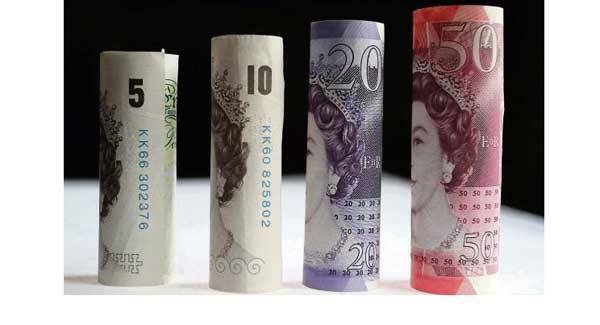
Sterling dropped last week, rounding off the worst week this year, as a poll showed Theresa Mayâs Conservative Party leading the main opposition Labour Party by just five points, a gap that even this month had been as high as 24 points in some surveys. That left investors questioning whether the UK prime minister would achieve the increased majority that had been baked into the pound for the past few weeks.
If the result of the poll is uniformly spread, it could mean the Tories end up with a smaller majority than in 2015, which analysts say could spell more losses for a currency that was buffeted by the Brexit vote in 2016.
âIf there is one thing markets do not like itâs uncertainty and for the next two weeks the election looks to be providing just that,â Jordan Rochester, a foreign-exchange strategist at Nomura International, wrote in a note to clients. The latest poll âshows the Tory lead narrowing to just five percent, which is the key level of when Theresa Mayâs majority starts to be put into question.â
Against the euro, sterling slumped to 87.3 pence on Friday, a level last recorded in early March, after recent months when it appeared that the pressure on Irish exporters from a weak sterling was at last easing. The UK currency is now 15% lower from its level just before the UK voted to leave the EU almost a year ago.

Weak sterling is uniformly seen as bad for Irish exporters trying to sell goods and services across the Irish Sea to Britain because the value of their contracts slumps as a result. There is also evidence that fewer tourists are crossing the Irish Sea from Britain.
Conversely, the stronger euro should mean that many goods in Irish supermarkets and in household appliance stores should fall at a more rapid pace because so many retail goods sold in the Republic are sourced from wholesalers in Britain.
Sterling, which was trading at 76 pence on the eve of the Brexit vote in June, fell as low as 91 pence last October.
The latest UK polls presage what could be a rocky spell for sterling, with the June 8 election coming against a backdrop of a slowing economy and increased security risks.
Data last week showed growth in the first quarter was slower than first thought while consumer confidence has also fallen to its lowest since the Brexit vote, according to an index compiled by YouGov and the Centre for Economics and Business Research. Below is a selection of strategistsâ views on sterling.
Credit Agricole sees the risk âis one of growing political uncertainty,â Valentin Marinov, head of group-of-10 foreign exchange strategy, wrote in a note to clients. âIt seems that rising central bank rate expectations and/or falling political uncertainty are needed in order to trigger fresh buying to the benefit of the currency,â he said.
The poll âcertainly has the potential to prompt some further pound selling over the short-term,â said Derek Halpenny, European head of global markets research at MUFG. âThe consensus of a clear victory for PM May has been very strong and that in itself might be enough for further weakness over the short-term.â Even so, âwe suspect this bounce in the polls will either fade quickly or prove once again to be entirely inaccurateâ and pound depreciation on this issue will be unlikely to last,â Mr Halpenny said.
Nomura International said sterling âis likely to continue to be under pressure now until the election is out of the way if polling continues to indicate itâs a tighter raceâ. Mizuho Bank said that a lead of âfive percent is starting to cause people to factor in a lower majority.â âPeople are starting to sell sterling again,â the bankâs head of hedge-fund sales, Neil Jones, said.
Standard Bank said recent polls cast some doubt on the assumption that the Conservatives will secure a majority.
âHence we think the pre-election rise weâve seen so far in the pound is likely to be given back,â said its head of group-of-10 strategy, Steve Barrow.












