SPECIAL REPORT: Sarah’s long fight for justice led to false accusations against her family
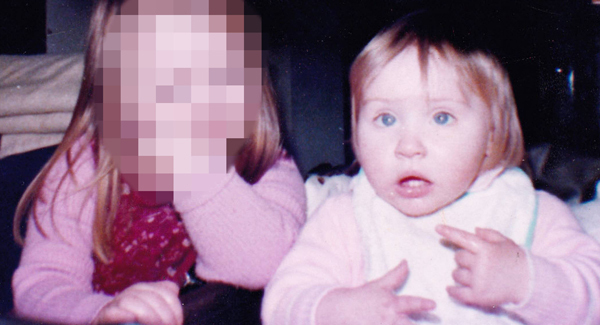
From her birth, Sarah’s family constantly battled with the State to ensure that she received the same rights, opportunities, care, and treatment as non-disabled Irish citizens.
But they found themselves in the line of fire once they began to raise concerns about her foster home.
“Every milestone that Sarah reached was achieved despite the lack of appropriate support from the HSE. It was done through people coming, in a private capacity, to support her to develop and grow. It was a very bleak landscape at the time,” her sister says.
Once Sarah’s mother discovered that her child was being schooled to adopt sexual poses, and she raised the alarm, the family found itself at the centre of suspicion that the abuse might have been happening at home.
“But what we subsequently heard was that meetings were happening to review and discuss serious concerns the health board had around the placement,” Sarah’s mum says.
“I was never informed of any of these conversations. They never engaged with us, as Sarah’s family. It was the voice of the foster mother the health board engaged with”.
Something more sinister was at play.
“So, what we discovered later, when we got the documentation, was that there was a clear pattern of covering up by the health board. They documented alleged meetings with Sarah’s family, and reports which deeply criticise Sarah’s family, particularly her mother,” her sister says.
“Sarah didn’t have any regular or meaningful interaction with a social worker, so there was no advocate on her behalf, or communication from the HSE to the family.
“The only voice Mam had with the health board was through the school, which was a health board-funded placement. So they, in a sense, became Sarah’s champion, because it went direct from Mam to the school. They would raise some of the concerns to the HSE, but the HSE only ever responded to the school. They never came back to us, except when they came back to suggest things were happening to her within her family home,” Sarah’s sister says.
“The only engagement with Sarah’s family was when her mother raised concerns around Sarah being a victim of sexual abuse and the HSE response was to position the fault and blame back to the family,” she says. When Sarah’s mum was confronted with the awful truth and raised the alarm, the system refused to listen and warned her to shut up and go away.
“There was no process or structure in place which included the voice of the victim or her family. I was aware of the school completing an investigation. However, outside of that, we were left totally in the dark”, she says.
In Sarah’s situation, when concerns were raised by her mother around the possibility of sexual abuse, Sarah’s family became the focus of senior management within the HSE.
There was only one meeting, which was attended by a senior official, who requested that her mother answer a list of questions. This placed the focus on Sarah’s family and away from the foster placement.
“At that meeting, we were advised by our family lawyer not to engage, for our own safety. So, we placed our focus on supporting Sarah instead,” she says.
The family had to get an alternative place for Sarah, but nowhere in the Republic of Ireland would take her. Incredibly, having been failed by the State, Sarah and her family had to seek refuge in Northern Ireland.
After four years in the North, she was given a residential placement in a centre closer to her home, but it was not suitable for her.
“The structure of the residential setting didn’t suit Sarah. It failed to support her around her bowel and health issues, and offered her little choice and control. This meant that, while the HSE continued to fund her placement, she came home to be supported by her family up to nine months of every year. Sarah wanted a normal life and so began the long journey with the HSE, in terms of advocating for her to get her voice heard and to secure a different way of supporting her to live her life,” her sister says.
But Sarah’s bowel function was worsening and there was no reason for it. She had a healthy diet, because of the allergy-testing.
Her mother’s worst fears were then confirmed by a doctor that the abuse Sarah had suffered years previously was the cause.
“Sarah was hospitalised, due to serious illness, in an attempt to understand what was happening to her bowel.
“While Sarah’s mother received verbal confirmation, we are still awaiting written accountability,” says Sarah’s sister.
No-one cared about their plight, so Sarah’s family put their energies into ensuring Sarah got the support and care she needed.
Only years later, when a social worker made contact in relation to the abuse suffered by Grace at the same foster home, did things begin to move.
“I was contacted by a senior social worker. While I was weary from past experiences, for the first time I felt someone within the system was listening and believing what happened to Sarah.
“Nobody before that had paid any attention. He did his job, he was professional and respectful, he cared about the truth, and wanted to ensure that the voice of Sarah was heard,” Sarah’s mum says.
This finally was a positive working relationship with someone in the HSE. The whistleblower went forward with the details of Sarah’s experience within the foster placement, requesting an external investigation to ensure accountability. This is yet to take place.
But then, incredibly, the foster mother accused Sarah’s mum of attempting to “ruin her business”.
When the whistle was finally blown, in 2009, and the HSE commissioned two internal reports, Sarah’s exhausted and beleagured family were reluctant to take part. Both investigations failed to answer the family’s request about the purpose of the process, and what information the staff were seeking.
“We had honoured Sarah, we had engaged with the HSE, we had cooperated and worked in partnership with the garda criminal investigation, but we didn’t trust an internal investigation, particularly as they refused to answer our questions,” her sister says.
Incredibly, that malicious and false accusation of possible sexual abuse within the family resurfaced in 2014, when a local garda, as part of the Resilience Ireland report, called to the door.
“The local garda sergeant arrived at my door, regarding a request he had received for information around any historical local sexual abuse files linked to our family. This was while we were engaging with the official garda criminal investigation into the foster house. I was deeply shocked and saddened by the obvious attempt at trying to cover up, by placing the focus, once again, away from the foster placement. I did raise the request with the criminal investigation team at the time.
“They knew nothing of the matter. They were supportive and professional, and we continued to work with them around Sarah’s experience,” her mother says.
Sarah and her family have received formal, official apologies from HSE director general, Tony O’Brien, for what happened to her in the home.
“Through this process, we have also experienced the support of champions, who continue to stand beside Sarah and her family: The original male whistleblower, who finally listened to us, as a family, who brought it repeatedly to the attention of the HSE and requested an external investigation; the garda team, who have worked with her family around the criminal investigation into her foster placement; members of government, who continue to raise the need for truth and accountability for what happened to Sarah and who will not allow her voice to be forgotten; members of the media, who share her story and her fight for the truth and justice for all those who suffered while under the care and protection of the HSE,” her sister says.
Sarah is now beginning a new chapter in her life, through her individualised funding, which offers her choice, control, and the opportunity to live within her own community and close to her family.
Her family, despite it all, continue to engage and work in partnership with the HSE, building their relationship to ensure that Sarah receives the supports and opportunities she deserves.
So clearly failed by the State in the first instance, Sarah and her family suffered a double injustice in their quest for answers.
That is truly a scandal.
CONNECT WITH US TODAY



Be the first to know the latest news and updates