Telling parents their baby has an abnormality is never easy
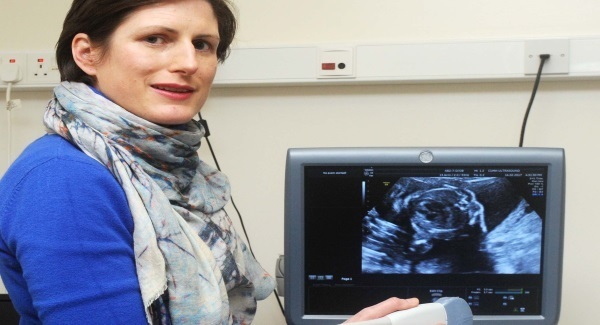
Consultant obstetrician Nóirín Russell says routine fetal anomaly scans for all pregnant women should be a basic standard of care and must be implemented without delay    

Telling parents their baby has an abnormality is never easy

When parents are told they need to see a fetal medicine specialist, they are surprised and shocked. They don’t know what to expect or how best to prepare.

Mostly, they are filled with an overwhelming nervous anxiety because a midwife or doctor has discovered an unusual ultrasound finding. Until that moment, they had thought that all was normal with their pregnancy but now there is a suggestion that their baby may have an abnormality.

For me, that first ultrasound is hugely important as I need to examine baby from top to toe, looking at each different organ in detail and trying to determine firstly if there is an abnormality present and if so how serious it is, what the most likely underlying diagnosis is and what this is going to mean for baby’s prognosis.

As I am coming to the end of the scan, I can usually feel my heart beating a little faster and I take a deep breath or two before I speak. The words that I speak next will irrevocably alter parents’ lives. I am aware that my words are woven into the fabric of the worse day in many people’s lives.

Even though I cannot change the diagnosis or the prognosis for their baby, I can ensure that parents receive adequate support and counselling as their world crashes down around them. Nothing can prepare a parent to hear that their baby has an abnormality of such severity that it is likely that he/she will not survive long after birth.

In some cases of serious abnormality, there is uncertainty regarding the eventual outcome for baby. In many ways, this is even more difficult for parents to prepare for.

I vividly remember a particular patient who came in for her 36 week visit, having had a straightforward pregnancy. She had finished work and was settling into that lovely maternity leave window where you plan to spoil your first born rotten before number two arrives.

Her baby appeared small so she was sent for an ultrasound scan. The sonographer confirmed that baby was small and also that he had a cleft lip. When I scanned her baby, it was evident that he was severely growth restricted with a cleft lip and palate and a heart defect. I remember every minute in that room that day, her numb shocked silence, her partner’s bravery, trying to stay positive and be strong.

Due to evidence of fetal distress, she had an emergency caesarean section later that day. Her baby had postnatal chromosomal testing which revealed trisomy 13. He received palliative care and died in his first week of life.

Just a few months previously, I myself had been 36 weeks pregnant and ready to welcome my baby into our lives. I tried to imagine how I would have coped if this had happened to me. I had also recently returned to work as a consultant in Cork after fellowship training in France, where all patients receive at least one detailed scan in each trimester. The contrast in the basic standard of care between the two countries was stark.

For too long the issue of routine anomaly ultrasound has been tethered to the non-availability of termination of pregnancy in this jurisdiction.

In cases of life limiting fetal abnormality/lethal fetal abnormality, all parents should be offered care and support from the bereavement and loss team regardless of whether they choose to continue with the pregnancy or terminate the pregnancy.

Information on external agencies that provide counselling services should also be made available. These valuable opportunities are lost when a mid-trimester anomaly ultrasound is not performed. Regardless of what choices parents decide to make for their baby, there is no logical argument that can be made for waiting until the baby is born to find out that he or she is not going to survive. This accentuates the trauma for parents, other children and the wider family.

There is no easy way to tell parents at any stage of pregnancy that their baby has a severe fetal abnormality and will probably die in the hours or days after birth. However, to give parents this news late in pregnancy or, worse still, after birth is inhumane and cruel.

Routine anomaly scans for all pregnant women should be a basic standard of care for all Irish women. The National Maternity Strategy states that “all women must have equal access to standardised ultrasound services, to accurately date the pregnancy, to assess the fetus for ultrasound diagnosable anomalies as part of a planned prenatal fetal diagnostic service”. This must be implemented without delay.

Nóirín Russel is a consultant obstetrician/gynaecologist and specialist in maternal and fetal medicine

More in this section

The Business Hub

Newsletter

News and analysis on business, money and jobs from Munster and beyond by our expert team of business writers.

Cookie Policy Privacy Policy Brand Safety FAQ Help Contact Us Terms and Conditions

© Examiner Echo Group Limited