Mark Carney seeks answers as funds avail of sterling crash
There were some losers too but many of these hedge funds have been running significant bets against the pound since earlier this year, ahead of the June 23 referendum on Britain’s EU membership.
The $200m (€180m) computer-driven hedge fund Piquant Technologies made between 10 and 15 basis points of profit — or roughly $200,000 and $300,000 — from a short position made before the flash crash.
Piquant’s artificial intelligence systems, which follow market patterns, bet against the pound about two weeks ago and have been building that position strongly. The pound has been under pressure for most of this week as anxiety grows that Britain will opt for a “hard” exit from the EU.
Yesterday, however, it declined about 10% from levels of around $1.2600 to $1.1378 in a matter of minutes in thin early Asian trade.
That low level was later revised to $1.1491 — still the weakest level for sterling since 1985.
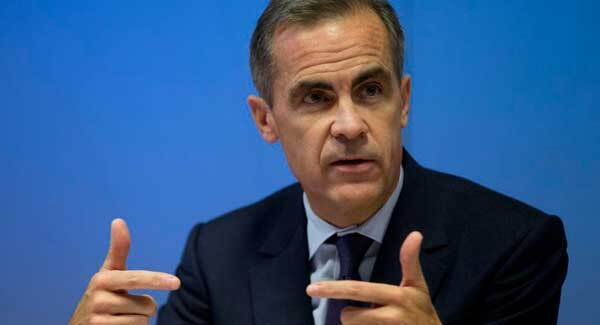
Bank of England governor Mark Carney has asked the Bank for International Settlements (BIS) to look into the pound’s sharp drop in trading yesterday, which initially sent the currency to a 31-year low.
Speaking to journalists in Washington DC, while attending the annual IMF meeting, Mr Carney said the BIS’s Markets Committee will look into the flash crash. Earlier, the BoE had said it was looking into the reasons behind the drop.
While sterling pared its decline, the tumult compounds its weakness since the UK’s vote to leave the EU. The currency has fallen 16% since the June 23 referendum.
“The pound flash crash was not explained by any fundamental reason but the lack of liquidity,” said Aurelija Augulyte, a strategist at Nordea Markets in Copenhagen. “The pound weakness will be a boon for UK industry and a headache for the BOE.”
The extent of the drop adds to signs that bouts of extreme volatility are becoming more commonplace in the global currency market as the volume of transactions dwindles and algorithmic traders pick up market share.
The BoE has previously highlighted the trend, saying in its December 2015 Financial Stability Report that market corrections can be amplified by “fragile” liquidity.
The move came at the end of a week that saw UK prime minister Theresa May indicate Britain may end up with a so-called hard Brexit — which would limit its access to the EU’s single market — and home secretary Amber Rudd proposed tougher rules for foreign workers in Britain.
Before Friday’s events, forecasts for the bottom of the pound’s fall had generally been around $1.20-$1.25, with the caveat that there is no technical support between there and all-time lows just above parity with the dollar.
HSBC strategist David Bloom forecast a fall to $1.10 by the end of next year.
“Sterling used to be a relatively simple currency that used to trade on cyclical events and data, but now it has become a political and structural currency,” he said.
“This is a recipe for weakness given its twin [budget and current account] deficits. The currency is now the de facto official opposition to the government’s policies.”
CONNECT WITH US TODAY



Be the first to know the latest news and updates