Ireland: 6 key questions ahead of Euro 2016
What do Ireland need to improve most?

Ireland: 6 key questions ahead of Euro 2016

Keeping and using the ball better. Four years ago Ireland’s average rates of possession (40%) and passing accuracy (58%) were the worst of any finalist at Euro 2012. In the recent qualifying campaign Ireland had lower rates (48% and 83%) than Sweden (52% and 85%), Belgium (62% and 90%) or Italy (56% and 90%). The price of wasting possession will be high.

Who will play at centre-back?

Despite starting only one of Sunderland’s last 11 league matches, John O’Shea looks likely to lead against Sweden. He was partnered by Richard Keogh in three qualifying matches and by Ciarán Clark in two, before Keogh and Clark combined impressively in both legs of the play-off. An O’Shea-Clark pairing offers the best balance: Clark is naturally left-footed, which allows O’Shea to operate on the right of the duo.

When Keogh plays, O’Shea moves to the left, which is not ideal for a predominately right-footed 35-year-old, whose struggles on his weaker side in Warsaw culminated in a red card. Ireland’s two defeats in the qualifiers featured the Keogh-O’Shea combination. Shane Duffy is untested at competitive level.

Who will play at left-back?

Stephen Ward and Robbie Brady filled the No. 3 role six times each on the road to France. But since early March eight of Brady’s 10 starts for Norwich City were in midfield, while Ward played a big part in Burnley’s promotion push as first-choice left-back.

Ward’s anticipation and covering when opponents deliver crosses from the opposite flank are impressive. Brady is more creative, but his grasp of the nuts-and-bolts of defending is still developing.

Will Ireland use different formations in Group E?

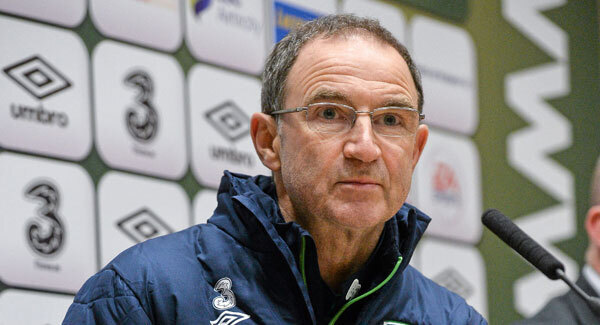
Undoubtedly, and sometimes during the same match. Martin O’Neill ditched the diamond that downed Germany in favour of 4-1-4-1 in Poland (defeat), then used 4-2-3-1 for both legs of the play-off (draw, win). Against the Netherlands last week he changed Ireland’s shape for part of the second-half (from diamond to 4-4-1-1, then back again). It’s now the norm that when Glenn Whelan and James McCarthy both start, Brady drops out of midfield to play left-back. O’Neill’s study of Ireland’s rivals will tell him that Wales’ 5-3-2 formation proved Belgium’s undoing in Cardiff.

Will James McClean be Ireland’s impact substitute?

He could well be. But the nature of the impact depends on McClean channelling his natural aggression (14 fouls, 4 yellow cards and one suspension in 467 minutes during the qualifiers). O’Neill has recently used McClean as a centralstriker, where his pace and physical presence make him a potential late-stages sub for Shane Long. Astwin strikers against Slovakia in March, each of them converted a penalty-kick. After the Netherlandsgame McClean had played some part in 21 of O’Neill’s 25 matches, scoring five goals.

How important will the tournament experience of O’Neill and Roy Keane be?

Both men know how tournament football works. O’Neill was captain of the Northern Ireland team which famously beat Spain in Valencia in 1982 to progress to the second round of the World Cup finals. Keane was one of the driving forces behind the Republic of Ireland’s magnificent win against Italy at Giants Stadium 12 years later. Influence matters.

More in this section

The Business Hub

Newsletter

News and analysis on business, money and jobs from Munster and beyond by our expert team of business writers.

Cookie Policy Privacy Policy Brand Safety FAQ Help Contact Us Terms and Conditions

© Examiner Echo Group Limited









