Ugly lies about the man telling the truth
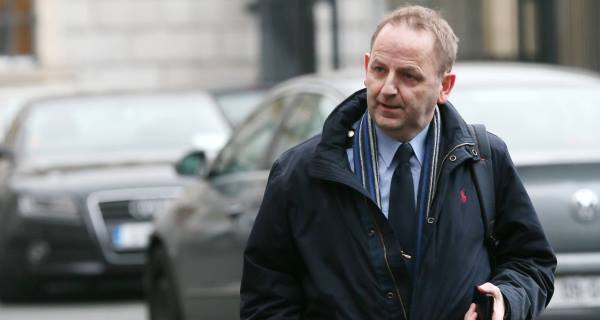
The selective leaking of the O’Higgins report and the attempt to sully the character of Garda Maurice McCabe are typical examples of whistleblower reprisal, a backlash against the character, reputation, and livelihood of those who speak out, says Tom Clonan

Ugly lies about the man telling the truth

GILBERT and Sullivan’s song, ‘A Policeman’s Lot is Not a Happy One’, subtitled ‘Slave to Duty’, sums up the experience of garda whistleblower, Sgt Maurice McCabe.

The selective leaking and publication of the O’Higgins Commission of Investigation has evolved into a tragi-comic opera in the last fortnight. The attempt by members of An Garda Síochána, and others in political and media circles, to destroy the reputation and character of McCabe has become obvious.

Internationally, whistleblowers often experience negative consequences for speaking truth to power. Examples abound, including American citizens, Edward Snowden and Chelsea Manning. But some jurisdictions recognise and reward the immense pro-social and economic value of whistleblowers.

In 2011, for example, the US Security and Exchange Commission (SEC) awarded a whistleblower $30m for revealing fraudulent activities to the regulatory authority. In an Obama-led initiative to incentivise whistleblowing, the SEC’s director said “this record-breaking award sends a strong message about our commitment to whistleblowers and the value they bring to law enforcement”.

In mature democracies, ethics and morality go hand-in-hand with common-sense approaches to those workplace samaritans, or whistleblowers, who seek to end corrupt, dangerous, or criminal practices.

In Ireland, however, the opposite is the case. Transparency International Ireland have observed that the phenomenon of “whistleblower reprisal” — revenge attacks on the character, reputation, and livelihood of those who speak the truth to power — is exceptionally high in Ireland. Whistleblowers in workplace settings as diverse as the HSE, An Garda Síochána, the financial services, and the banking sector have all suffered the same fate.

In Ireland’s toxic political and public discourse, when a citizen speaks the truth about wrongdoing — no matter how serious — he/she can expect to lose their job. Irish whistleblowers, with very few exceptions, can also expect to have their reputation systematically destroyed.

The exceptionally high prevalence of whistleblower reprisal in Ireland follows a weary and repetitive pattern. For whistleblower reprisal to succeed, it requires the active and passive co-operation of a large number of stakeholders. Such reprisal is often co-ordinated and driven by senior management, and assisted by inaction on the part of those with political responsibility for the area concerned.

Contemporary politicians and ministers often use rhetorical devices, such as “I cannot comment on individual cases” or “I am legally constrained from intervening or commenting”, to distance themselves from a crisis and to suggest that they are not responsible. Journalists are often happy to collaborate with, and extend, this discourse.

Many of the intellectual and ethical failings of the Celtic Tiger could have been avoided, had Ireland had a supportive culture for whistleblowers in areas such as finance, banking, and regulatory affairs. Many Irish citizens — including our most vulnerable — might not have suffered the worst aspects of austerity had our political and media establishment recognised, and valued, the worth of our whistleblowers.

In my own case — as an army whistleblower who revealed sexual violence towards women in the Defence Forces — the then minister for defence, Michael Smith, did the right thing. After a concerted attempt on the part of the military authorities to destroy my reputation — via a strategy of character assassination similar to the one endured by Maurice McCabe — the minister took responsibility for the crisis and initiated an independent root-and-branch review of the equality environment of the Defence Forces.

As a result, the Irish Defence Forces is now one of the most equality friendly armies in the world, with state-of-the-art dignity in the workplace policies and practices.

Then, as now, for the Taoiseach and for the Minister for Justice, Frances Fitzgerald, the solution to the current crisis in An Garda Síochána is not rocket science. The administration of justice in Ireland needs radical root-and-branch reform.

The O’Higgins report is explicit in its findings. It thoroughly, and unambiguously, vindicates Sgt Maurice McCabe. It speaks of the integrity of Sgt McCabe and his personal courage in highlighting systemic, systematic, and fatal flaws at all levels of An Garda Síochána in the Cavan/Monaghan division.

For the obtuse in political and media circles, O’Higgins also includes in his introduction a special section, ‘Observations on Whistleblowers’, to highlight the importance, status, and extraordinary value to society of whistleblowers. The O’Higgins report stresses the huge personal price paid by McCabe, for speaking truth to power, and emphasises the requirement for whistleblowers to report wrongdoing without fear of repercussions. Although, in the selective reporting of some journalists, one could be forgiven for not knowing that any of these conclusions or issues were dealt with by O’Higgins.

It is profoundly shocking, and of grave concern, that, in this context, we learn of concerted attempts by members of An Garda Síochána, and others, to destroy the reputation of Maurice McCabe. It would appear that state resources were mobilised — from Garda man-hours to taxpayer-funded legal strategies — to engage in whistleblower reprisal. This is completely unacceptable. Any politician, public servant, or journalist who engages in such a practice ought to consider his or her position.

The solution to the current crisis in the administration of justice in Ireland is not without precedent. It simply requires leadership on the part of the minister for justice, and the political will to simply do the right thing. Ms Fitzgerald and Garda Commissioner Noirín O’Sullivan need to clarify — by their actions — their respective positions on what constitutes the right thing.

Dr. Tom Clonan is a security analyst and academic

x

More in this section

The Business Hub

Newsletter

News and analysis on business, money and jobs from Munster and beyond by our expert team of business writers.

Cookie Policy Privacy Policy Brand Safety FAQ Help Contact Us Terms and Conditions

© Examiner Echo Group Limited








