Migrant issue in hands of politicians focused on next election
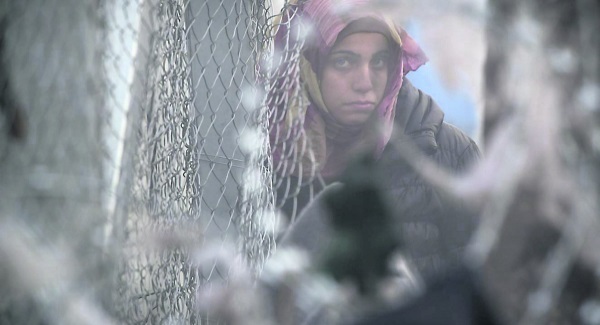
The UN warns that the EU deal with Turkey to return asylum seekers is illegal â and those who masterminded it suspect they are correct.
They also know pictures flashed around the world of migrants being forcibly returned to a country they donât want to go to will be awful.
They apologise in advance for ugly ideas, such as shutting routes, returning migrants, and deterring refugees.
However, all the UN Conventions, international treaties, and pictures of dead babies washed up on beaches mean little to politicians whose vision and ambition is restricted to their next local election.
The Slovak election on Sunday proved the point: 20% voting for a xenophobic party that would repeat the atrocities of the Second World War, despite, or because of, the fact that most are living in areas with few outsiders.
German politicians turned against their chancellor Angela Merkel who, from a mixture of humanitarian justice and demographic need, opened her countryâs doors to those fleeing war.
The final straw, as some significant state elections loom, was, in her view, a knife in the back from her erstwhile ally, Austrian Chancellor Werner Faymann, who shut the borders, the final gate along the Balkan route.
The only shred of a plan that appeared to mollify increasingly reactionary leaders over the past few months was the idea that Turkey was key, which was rational, as most migrants were being shunted over the border by Turkish authorities.
However leaders like the Dutch premier Mark Rutte declared the border must be sealed tight with no crossings before they would consider how to deal with the migrant issue. Also, his mantra was picked up by the others, desperate for a cost-free way out.

The EU president, former Polish prime minister Donald Tusk, did his tour of states on the migrant route last week, culminating in his meeting with the Turkish President Recep Tayyip Erdogan on Friday. His announcement in Greece that the Balkan route was shut had reverberated, and Erdogan, beset with problems and pressures around his countryâs involvement in the Syrian war, was not amused.
The threat of the EU creating a blockade around Turkey, increasing the 2.8 million refugees trapped inside, infuriated Erdogan, but opened him up to coming to an arrangement. This followed a stormy meeting last November when EU Commission president Jean Claude Juncker was also present and Erdogan threatened to open up the border with Bulgaria also to push more refugees across.
However, the deal that Mr Tusk brought back was not enough to dig Chancellor Merkel out of her threatened political crisis, so she went a few steps further in her six-hour meeting with the Turkish prime minister, Ahmet Davutoglu, that finished at 3am the day before the EU summit.
It went a lot further than Mr Tuskâs proposals, leading many to suggest that the great friendship between the two was now rocky. The finer details are being worked out for a hoped final agreement at next Thursdayâs summit.
Itâs a masterpiece, a near mirage, that seeks to bridge the largely domestic fears of intransigent politicians in the EU and Turkey. Turkey will shut all its borders and Nato will patrol the sea off its coast with Greece.
It fits with another idea that caught the imagination of panicking prime ministers: To âbreak the smugglers business modelâ. This will be achieved by sending back all migrants â Syrians included â on the Greek islands to Turkey, forcibly if necessary. This may be the fate only of those who arrive, when those currently on Kos and Lesbos are moved to the mainland, where they will be registered as refugees if they qualify, or sent back if they donât.
However, for every Syrian sent back, Turkey will be able to send one Syrian whose status as a refugee has been confirmed.
The âone for oneâ deal was important for the Turks to show they were not conceding all to the EU.
While the European Commission recites the articles of various treaties to prove this is legal, many suspect it is not, but by the time the courts rule, they hope the many weak EU leaders will have calmed their electorate sufficiently to agree to construct a proper EU refugee policy.
A borderless EU where each countryâs border is sovereign and where the first country a migrant enters is responsible for that person was always a half-formed policy. EU leaders have agreed the next steps: Real money and help for the most stressed countries, such as Greece; money for the care of refugees in Turkey; the distribution of 160,000 asylum seekers, mainly from Greece, to various willing EU countries; and a system in migrant camps for people to apply for asylum in the EU.
The final piece of the jigsaw should be an EU-wide system to grant asylum and distribute refugees around the EU; the Commission is expected to make such a proposal next week.
Nobody, is under any illusion the migrant crisis will go away anytime soon, despite the wishes of short-termism politicians or xenophobic citizens.