China rubbishes economic ‘hard landing’ talk
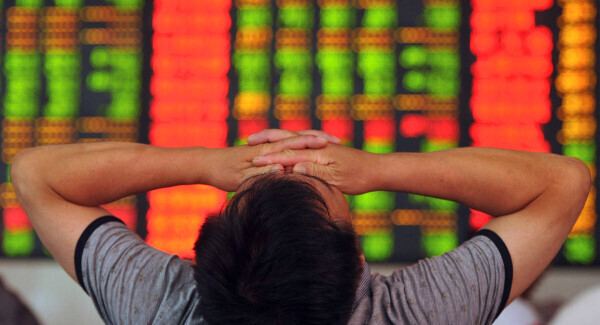
China’s economy isn’t headed for a hard landing and isn’t dragging on the global economy, China’s top economic planner said, but uncertainty and instability in the global economy do pose a risk to its growth.

China rubbishes economic ‘hard landing’ talk

China acknowledged it faced a tough battle to keep world’s No.2 economy growing by at least 6.5% over the next five years while pushing hard to create more jobs and restructuring state-owned enterprises.

The comments, as Beijing kicked off its 12-day annual national parliament, underscored the challenges facing China as its economy transitions from an investment and export focused economy to one based more on services and consumption.

“China will not experience a hard landing,” Xu Shaoshi, head of the National Development and Reform Commission (NDRC), said at a briefing. “These predictions of a hard landing are destined to come to nothing.”

China’s economy grew 6.9% in 2015, the slowest pace in a quarter of a century, but still comfortably the fastest among major economies.

It has set a growth target of 6.5% to 7% for this year, introducing a band rather than a hard target as it seeks greater flexibility in juggling growth, job creation and restructuring of a host of “zombie companies” in bloated industries. Premier Li Keqiang outlined a series of targets on issues such as energy consumption, job creation and inflation but few details on how they would be met.

Many investors had been hoping China would post an aggressive target for fiscal spending to prop growth.

But the draft goal of running a fiscal deficit equivalent to 3% of GDP, while up from the previous year’s target of 2.3%, disappointed some.

Xu emphasized China will work to improve the “efficiency” of government investment, suggesting a desire for more targeted spending. That would be a contrast to the last stimulus injection after the global financial crisis when Chinese local governments built ghost cities, roads to nowhere and airports to juice growth.

China has massive foreign exchange reserves of more than $3tr to tap if needed, but a sharp decline in reserves in the past 18 months as Beijing sought to support its yuan has rattled some investors.

Central bank vice governor Yi Gang on Sunday reiterated Beijing will keep the yuan basically stable and there was no basis for continued depreciation.

The state of China’s economy and Beijing’s ability to manage it were key talking points at a Group of 20 finance ministers and central bankers in Shanghai last month.

In the run-up to parliament, Beijing has flagged major job losses in the country’s bloated coal and steel industries.

But plans to reduce industrial over- capacity were unlikely to result in large-scale layoffs, Xu said.Economic growth will create more jobs and help offset the impact of capacity cuts, he said.Nonetheless, the broader world economy poses challenges to China this year, Xu said.

“First, we estimate the slow recovery and low growth rates in the world’s economy will continue for a period of time,” he said. “Also we could not overlook the risks from unstable (global) financial markets, falling prices of commodities and risks of geopolitics.”

China also plans to launch several mixed ownership pilot programmes in the oil, natural gas and rail sectors, Xu said, part of the most far-reaching reforms of its sprawling and inefficient state sector in two decades.

* Reuters

x

More in this section

The Business Hub

Newsletter

News and analysis on business, money and jobs from Munster and beyond by our expert team of business writers.

Cookie Policy Privacy Policy Brand Safety FAQ Help Contact Us Terms and Conditions

© Examiner Echo Group Limited