Inside Fianna Fáil’s general election campaign success
IT’S just three days after Christmas, on a dark and dank day on the Limerick-Clare border. Fianna Fáil leader Micheál Martin has left his family in Cork to hold a secret meeting with his key team to finalise the party’s strategy for the pending general election.
The beauty of the 20 acres of landscaped parkland which surrounds the Raddison Blu Hotel on the Ennis Road in Limerick was lost on those gathering as they arrived at 9am, given the inclement weather.
Whatever unhappiness existed about being away from loved ones at this time of year, all share a sense of relief the election had not been called in November, as the party simply wasn’t ready for it.
“We were fucked. Had Enda called it in November, we were goosed. We had a lot done but we were only 75% ready at best. So when they bottled it, we all breathed a sigh of relief and got to work,” says one senior party figure.
Among those present are Martin’s chef-de-cabinet Deirdre Gillane, general secretary Sean Dorgan, party communications director Pat McParland and TD Billy Kelleher, the party’s director of elections.
The team agreed the party’s “An Ireland for All” election slogan as well as the four main themes for the campaign. After seven hours of “robust debate” with the job done, and darkness falling outside, the gathering broke up at 4.30pm and they headed for home.
For a party that was decimated in 2011 — this was a make or break election. Depleted in terms of TDs, starved of resources, and stagnant in the opinion polls, fixing on the right message was a tricky proposition.
They didn’t have the access to the same level of focus group market research that Fine Gael have become so reliant on and had to be somewhat imaginative.
The party suffered a major setback when its director of elections, Pat Carey, resigned and was replaced by Kelleher, who caused some consternation by suggesting the party was heading back into Opposition on his first day in the job.
Under Martin, Fianna Fáil has shifted left back to the centre ground, eschewing big business in favour of the working man, the young family and the small business owner.
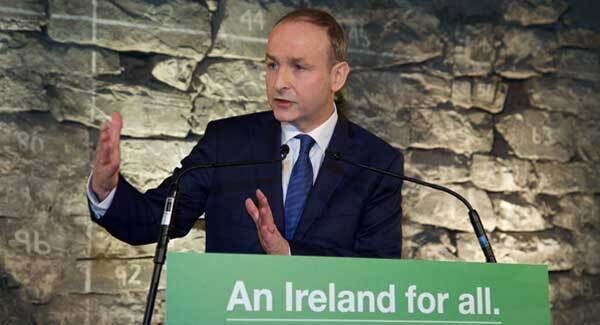
“Fine Gael had already begun to dish out the Tory playbook of stability versus chaos. But the little research we did showed people didn’t equate a change of Government with chaos. It also showed us they wanted a fairer society and better services ahead of tax cuts,” one party figure says.
Martin, since becoming leader, had spent two to three nights a week knocking on doors and canvassing across the country. This first-hand interaction became a major influence in the party’s message positioning for the election.
Two weeks after the key meeting in Limerick, the party held its one-day ard fheis in Dublin’s CityWest Hotel.
It was to mark a major turning point for the party thanks to Martin’s keynote address which went down very well with party members but also the media.
“It was significant,” says one TD.
The party had also established its election HQ in an empty office block, Clanwilliam Court, on Mount St. The Shelbourne Hotel or even the Treasury Building it was not. Many observers took the basic facilities to be a sign of how far the party’s fortunes had fallen.
Every morning, the key campaign team of Martin, Kelleher, Dorgan, Gilllane, McParland gathered with people like Martin Mackin (former general secretary turned PR operative) and Peter McDonagh (Martin’s Czech-based confidant and adviser whose nickname is the “Child of Prague”).
On February 3, when Kenny announced the election and the campaign started in earnest, Fianna Fáil could not believe their luck as the Taoiseach and Fine Gael fluffed their lines.
Fianna Fáil had decided to try and force the debate away from the economy, but they knew their offering in terms of taxation and spending would come under close scrutiny.
For five years in the Dáil, the party’s finance spokesman Michael McGrath had one major goal in mind. To show the country that the party could be trusted to run the country again.
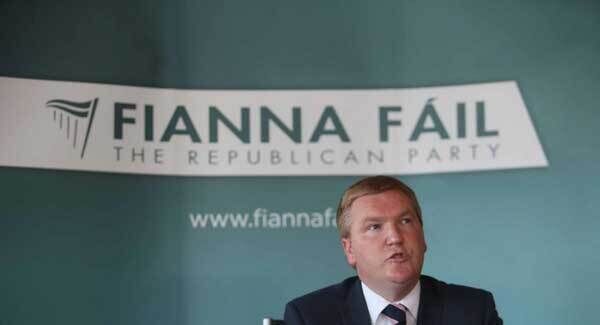
So, McGrath and Martin attacked Kenny for promising US-style taxes but also decided to offer a much lower commitment of abolishing the universal social charge (USC).
“We got it right on the USC in not seeking its total abolition. That was a key decision as Fine Gael lost the high moral ground. Our more modest plan sat better with the public,” says a key figure.
The party did come under some fire over its planned extra spending until 2021 — the dreaded fiscal space term — as Sinn Féin claimed credit for being the only party to get their numbers correct.
Pressure came on McGrath to kill the issue off from within.
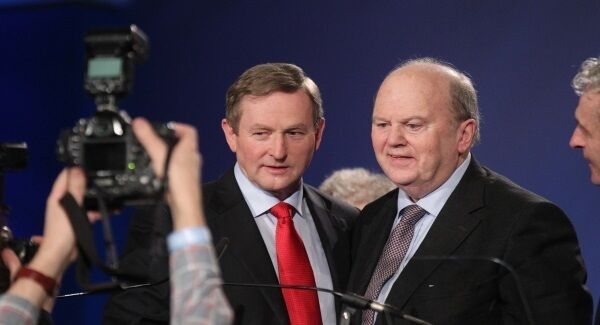
“Calls were made to Michael to ensure the numbers stacked up, but he was more than able to deal with it. The pressure was more on Noonan who again failed to kill it as an issue,” says the party source.
While the party held daily policy launches in Dublin, Martin’s leader’s tour saw him target key marginal constituencies where the party saw they had a shot of gaining seats.
The party came under huge pressure during the campaign about its plans for Coalition and whether it would do a deal with Fine Gael. “Every day, the same fucking questions kept coming. We did well to hold the line,” says one TD.
If the Ard Fheis was key for the party before the campaign, then the leaders’ debates were as important. But there is a consensus within that the first debate on TV3 was the most important as Martin was seen to win out, if only marginally.
By the second week, Fianna Fáil could not believe their luck as Fine Gael continued to misfire in spectacular fashion.
“Noonan was flagging, looking tired and jaded. Kenny was becoming a major Achilles’ heel and their message was tanking. We saw a noticeable shift to us in how people were engaging with us on the doors,” said one strategist.
The last weekend of the campaign, saw four separate opinion polls which mainly suggested the party’s support was now solidly above 20%, which could see them achieve the 35-plus seats they were seeking.
But they could not believe their luck again when Kenny in Castlebar made his comment about whingers, and then refuse to retract it the following day, only to do so two days after making the remark.
“It took them days to kill the story about doing a deal with Lowry, it took them days to kill off the fiscal space thing. It took him three days to kill off the whingers comments. That cost them seats,” says one TD.
For the final few days of the campaign, Kelleher, Timmy Dooley and others were adamant the party had to keep it tight and not make any mistakes. They carefully selected who went out on key TV programmes and radio shows to minimise the potential for disaster.
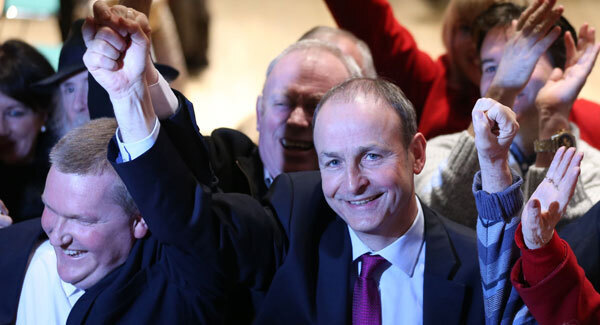
When the ballot boxes opened up last weekend, even though they had sensed a swing away from Fine Gael, no one expected the surge that came about.
As the dust settled on the result for the team and their new TDs last Monday, the media had already turned to the next step in terms of forming a government.
Martin may have had readied his Dáil reform demands but most others had their minds on other things.
“Danny, to be honest, lads are in their bed, dying of a hangover”, one TD said, adding that others were probably getting reacquainted with their partners after six weeks of campaigning.
It was certainly the election Fine Gael threw away, but Fianna Fáil were in the right place to capitalise on it, having been able to stay on message. Three weeks ago no one would have said Micheál Martin could be the next taoiseach. Now, he is odds on.
For more election news, analysis and general banter join us HERE
CONNECT WITH US TODAY



Be the first to know the latest news and updates











