Over half of planned hotel rooms in Dublin ‘will not be built’
Fewer than half of the 5,000 hotel rooms awaiting planning permission in Dublin are likely to be built despite a serious lack of supply in the capital, the hotel industry’s main annual conference heard yesterday.
Over half of planned hotel rooms in Dublin ‘will not be built’

Despite the recession having decimated much of the hotel sector only a few years ago, research suggests a much greater supply of rooms is now needed in Dublin to accommodate resurgent demand.

A range of issues mean that fewer than half of those 5,000 new rooms may ever see the light of day, however, Aiden Murphy, partner with business advisory firm Crowe Horwarth, warned.

Poor planning on behalf of developers and a lack of funding are some of the reasons that projects are mired in the planning stage and may never materialise.

“What I think we’re going to see is that the newer planning [applications] that are going in at the moment will advance quicker than a lot of the older [applications] that are stuck in the system.

There’s a certain level of confusion in the market in that some developers went for planning for a hotel to try and add value to their site but they didn’t have any funding to be able to move the project forward.

“Therefore while on an objective basis you could see there are 5,000 rooms in the planning system in Dublin, when you drill deeper what you’re going to find is that there’s probably only 2,000 of those, at most, you could say with any degree of confidence, that will move forward or could move forward and therefore a lot more needs to happen,” Mr Murphy said.

Areas where development is likely include the Dublin Docklands where sites are zoned specifically for for hotels.

Mr Murphy mentioned Dalata’s acquisition of a 190-room site at the former Charlemont Clinic in Dublin 2 and Irish investment group Tetrarch’s planned 158-room development on Sackville Place behind the former Clerys department store as projects that should bring additional capacity on stream in the coming years.

He added that expanding existing premises was affordable at present and often presented a better option given the cost and completion time relative to new builds.

The lack of supply in the Dublin market has also driven room rates past 2007 levels which is beginning to become a concern now that sterling is on the slide against the euro and Irish exports are becoming more expensive, he said.

The pound’s position against the euro over the past two years has meant that just under half of the 42% increase in room rates in Dublin has been passed on to UK visitors but that is beginning to change.

Room rates may decrease rather than visitor numbers falling, Mr Murphy said.

“The UK visitor has absorbed the 20% increase over a two-year period, 2014 and 2015, and, if we’re looking at rates in other UK cities also appreciating, I believe they could absorb another 10% on room rates but not the full 20% that otherwise would be likely and therefore we’re looking at that maybe having a drag of €10 per room,” he added.

Mr Murphy said he felt there was “a good argument” to keep the reduced 9% Vat rate applying to the hospitality sector in place in the medium term despite Finance Minister Michael Noonan’s claim, when introducing the last budget, that the case for retaining the measure in Dublin was “diminishing each year”.

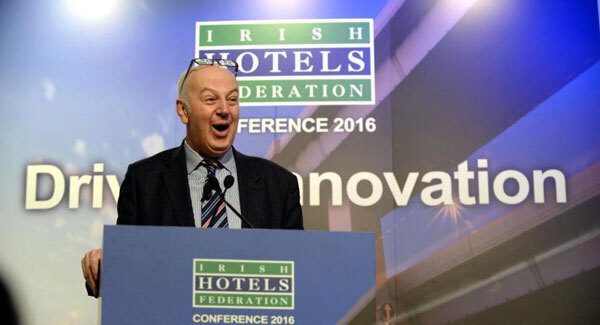
Mr Murphy was speaking at the Irish Hotels Federation (IHF) annual conference in the Gleneagle Hotel and INEC in Killarney.

More in this section

The Business Hub

Newsletter

News and analysis on business, money and jobs from Munster and beyond by our expert team of business writers.

Cookie Policy Privacy Policy Brand Safety FAQ Help Contact Us Terms and Conditions

© Examiner Echo Group Limited







