Richard Bruton planned to woo returning emigrants with flat tax of 30%
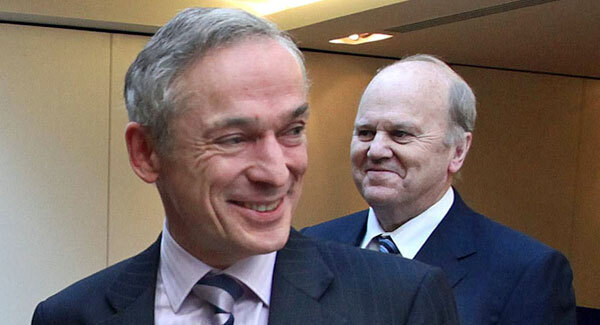
The Government parties, particularly Fine Gael, have repeatedly made attracting up to 70,000 Irish workers home from abroad a key tenet of their economic plan.
It had been expected that last October’s budget would include a package of measures including tax breaks aimed at making a return home more attractive to overseas workers, but these were not included in the final raft of policies.
Documents obtained by the Irish Examiner under the Freedom of Information Act show that the Coalition was considering a drastically different tax regime for returning emigrants capable of filling skills gaps in the Irish economy.
In correspondence between Mr Bruton and Finance Minister Michael Noonan ahead of last year’s budget, the jobs minister pushed for “an internationally competitive flat rate of tax of approximately 30%” to woo overseas workers.
This simplified tax rate, which would see workers paying a reduced rate of income tax as well as universal social charge, would make Ireland one of the most attractive countries in the world from a tax perspective, Mr Bruton argued.
“Given the global competition for scarce skills, the persistence of skills gaps experienced acutely by our SMEs, and our desire to attract back the many skilled Irish that have gained valuable experience overseas, it is essential that the Irish tax environment enables all Irish-based firms to attract and retain the skills necessary to propel growth and job creation,” Mr Bruton wrote.
“We recommend the introduction of an internationally competitive flat rate of tax of approximately 30% [income and universal social charge] in order to position Ireland in the top four to five countries in terms of attractiveness and which could be easily communicated [similar to the Dutch ‘30% rule’].”
Mr Bruton made the proposal as part of a mooted Talent for Ireland scheme which a department spokesperson said “would only apply where there is a key skills shortage and very limited risk of displacement”.
The measure has echoes of the 23% flat rate of tax advocated by Renuawhich the party has been forced to defend amid accusations that it is “economically illiterate” and “anti-poor”.
Renua’s policy — the only flat tax rate suggestion currently being proposed by a political party — was also dealt a significant blow when the Revenue Commissioners advised that the rate would have to be twice that proposed by the party.
Mr Bruton suggested introducing a much narrower flat-tax regime, however, focused largely on enticing skilled workers from abroad into the domestic workforce.
If introduced, it would have seen workers paying taxes under an entirely different taxation regime than the majority of the workforce and at a reduced rate.
Cuts to the Universal Social Charge in last year’s budget reduced the marginal rate of tax to 49.5% for those earning less than €70,000; a move also advocated by Mr Bruton in his submission to the finance minister.
“A more competitive tax regime is essential in attracting and retaining individuals in Ireland and more generally to encourage people to remain in, or return to, the labour market,” Mr Bruton wrote.