Everyone has role to play in eliminating food waste
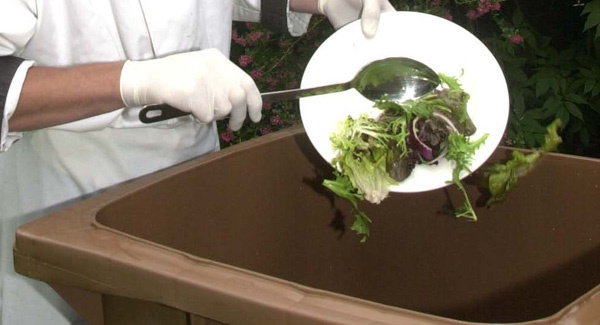
Food-waste bins are bulging after Christmas, while retail stores are calculating the amount of edible product left on their shelves after the big shopping spree.
Everyone has role to play in eliminating food waste

It is timely to focus on the amount of food that is wasted across the globe each year.

Some 300m barrels of oil, and 550trn litres of water, are used annually to produce the 1.3bn tonnes of food that is wasted even as one in seven people suffers from food proverty.

Every year, up to 40% of the food produced in the US is thrown away, or rots between farms and kitchens.

That’s enough to feed the 800m people worldwide who are hungry every day.

Ireland, where one in 10 people are in food poverty, generates one million tonnes of food waste annually, at a cost of €1bn — and that does not include the loss on land and at sea.

The average Irish household bins between €400 and €1,000 worth of food annually.

Some 300,000 tonnes of it comes from households, with distribution and commerce responsible for 270,000 tonnes and factories 450,000 tonnes.

Despite the ongoing roll-out of brown bins across the country, a large proportion of wasted food still ends up in landfills, where it has a significant environmental impact.

FoodCloud, a not-for-profit social enterprise, with headquarters in Dublin, helps businesses that have too much food to redistribute it to charities in their communities.

Wasting food, while one billion people around the world suffers from hunger, raises moral questions, the charity says.

“Reducing waste across the entire food-supply chain has been put forward as one of the high-priority actions that needs to be part of any strategy to feed nine billion people, sustainably and equitably, by 2050,” it says.

Not all of the one million tonnes of food waste produced annually in Ireland is actually waste. Large quantities are better described as surplus food.

“This is perfectly good food that, as a consequence of the modern food system, does not reach consumers and invariably ends as waste.

“Within communities across Ireland, food businesses frequently experience food surpluses, while charities struggle to provide food for those who need it most,” Food Cloud says on its website.

Earlier this year, the French government introduced a new law that will force supermarkets to donate their surplus food to charity, and any food no longer fit for human consumption must be processed into animal feed or compost.

Supermarkets with a floor area of more than 400 square metres can no longer throw away food and will have to sign contracts with charities by July next year, or face penalties, including fines of up to €75,000, or two years in jail.

European Agriculture and Rural Development Commissioner, Phil Hogan, speaking at a British-Irish Chamber of Commerce lunch in London recently, said the expert advice, whether from the Joint Research Centre or the World Bank, all points in the same direction: “We are simply using too much water and land and we are wasting too much food. I’m sure that there are people in this room, today, who must see perfectly good food wasted, perhaps because a ‘use by’ date has expired or simply because of our personal, undisciplined consumer habits,” he said.

Mr Hogan said that as with meeting the climate-change targets, everyone has a contribution to make — individually and collectively — person-by-person, business-by-business, sector-by-sector, country-by-country.

“None of us are exempt from our responsibilities,” he said.

Sinn Fein TD, Pearse Doherty, also asked Agriculture, Food and Marine Minister, Simon Coveney, in the Dáil, what plans he had to introduce legislation requiring supermarkets and large food retailers to donate and make available, without charge, any unsold and edible food stuffs to registered charitable organisations and food banks.

Mr Doherty also asked the Minister if he had considered making it a criminal offence for such businesses to dispose of, and destroy, edible produce, without having first offered it to these groups.

Minister Coveney said retail legislation, on the lines proposed, does not come within the remit of his Department.

More in this section

The Business Hub

Newsletter

News and analysis on business, money and jobs from Munster and beyond by our expert team of business writers.

Cookie Policy Privacy Policy Brand Safety FAQ Help Contact Us Terms and Conditions

© Examiner Echo Group Limited