Business is creating jobs but next government must deliver
At the time, many were sceptical.
However, after a year where Irish growth will again significantly outperform the rest of Europe, and with key economic indicators pointing in the right direction, it is increasingly clear that such a vision is there for the taking.
It will fall to the next government to make the most of the opportunities and overcome some of the significant challenges that come with the strong recovery.
In the first instance, we need to rethink how we plan and invest in infrastructure.
We need to be much more ambitious and we need the political system to look beyond the short-term electoral cycle.
When it comes to public investment, we must plan for significant economic and population growth. Sizeable infrastructure gaps in the transport, health, education, energy, and environmental services sectors need to be addressed as a priority.
As it stands, we’re not investing nearly enough.
Ireland’s level of capital expenditure is the second lowest in the EU, at a time when we have Europe’s fastest-growing population.
This is not sustainable.
The next government needs to double infrastructure investment to 4% of GDP by 2020.
And we need to find new financial ways of connecting the stock of private capital with productive investment to achieve this target.
Of course, we have to invest wisely.
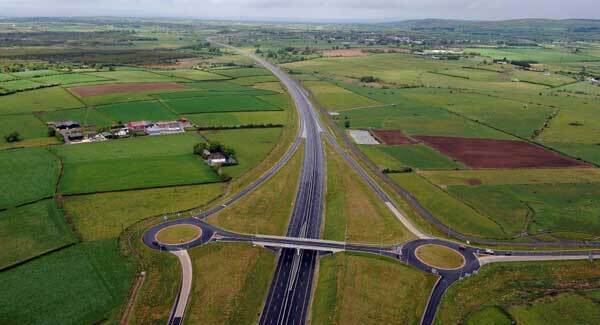
Our motorway network, for example, is far from complete.
During the boom years, we successfully connected Dublin to the other main cities, but not to all the regions.
There is still a job to do to better connect all of our major cities to each other, such as a Cork-Limerick motorway.
Affordable housing supply is also fast emerging as a massive concern that demands urgent attention.
Under-supply in key urban centres has the potential to undermine competitiveness and make it more difficult to attract and retain talented workers.
The next government needs to do much more to address the escalating housing crisis.
Ireland needs at least 25,000 new homes each year to meet demand but we are currently building just half of that.
We need to increase the supply of affordable and quality housing to meet demand.
A new national investment plan needs to be supported by a streamlined planning process and a new spatial strategy.
It must be supported by more effective and integrated planning.
A relatively small number of strategically located growth centres must be identified, which can in turn attract economic activity to their neighbouring towns and rural catchment areas.
For the plan to succeed, the administrative and political system must prioritise investment in these areas.
This must not be an “anti-Dublin” plan, but one that fosters the full potential of each region, including the capital city.
When it comes to the labour market more generally, it is worth reminding ourselves how far we have come, even if there remains work to do.
Over the last three years, Irish businesses have put 140,000 people back to work, providing families with new opportunities, and entire communities with a fresh sense of value and purpose.
Wage pressures are re-emerging in the economy.
Most companies will be in a position to award modest pay rises next year.
However, not all companies are recovering or growing at the same rate and this needs to be reflected in wages.
Next year, we have the chance to further cut unemployment and attract back migrants that left during the crisis, but we must not repeat past mistakes.
If costs spiral and we lose our competitive edge, we will pay for it in jobs.
Business is playing its part in creating jobs, and the next government must do the same.
When it comes to designing a tax system that supports long-term growth and productive investment, we need to reform the existing code.
Too much of our tax take falls on work and the lion’s share of the burden is borne by too few.
Despite welcome moves to reduce the income tax burden in the last budget, there is scope to do a lot more.
At just under 50%, we still have one of the highest marginal tax rates in the OECD.
It remains a barrier to investment and job creation.
The decision to also retain an even higher marginal tax rate for those earning over €70,000 means we risk losing our best and brightest to competing jurisdictions.
A single worker earning €80,000 in Ireland, for example, takes home about €6,000 less than a similar worker in the UK.
This is making it difficult for Irish business to attract and retain skilled workers.
It also flies in the face of the shared aim of making Ireland a leading centre of design and innovation.
Notwithstanding these issues, our economic recovery remains the talk of Europe.
It has been a tough journey, but we have come a long way in a short time.
Over the coming months and years, we have an opportunity to lay the foundations for a new phase of our country’s social and economic development.
A phase that should be characterised by world-class infrastructure, productive investment, an education system fit for the 21st century, and a tax code that supports growth and rewards work.
The first task, however, is to choose a government that turns this ambition into reality.
It will be up to the wider population to choose a government that is up to the task: a government with ambition and an appetite for reform, but also one that engenders confidence and provides stability.
Danny McCoy is CEO at business group Ibec
CONNECT WITH US TODAY



Be the first to know the latest news and updates








