Patrick Honohan: No quick fix for loan-starved SMEs
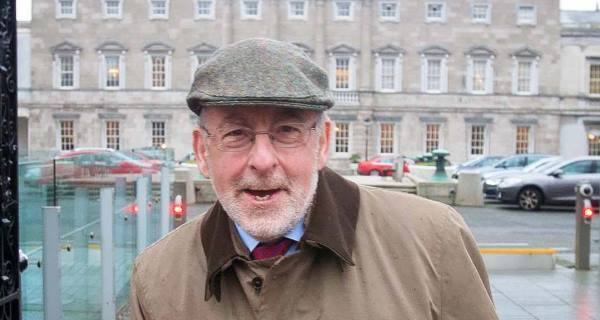
In a speech to the Small Firms Association yesterday, Mr Honohan appeared to suggest that there are no easy fixes, and that only more entrants into Irish banking will boost competition and, in time, provide new sources for business loans.
The comments are significant because they were made in what will be one of Mr Honohan’s last public addresses before he steps down in two and a half weeks.
After holding the job during the worst of the crisis years since late 2009, he will be succeeded by fellow TCD professor Philip Lane.
Mr Honohan had the opportunity yesterday to signal the best approaches to healing the deep economic scars left over from the worst financial crisis to face the State.
It is well known that credit to businesses and households has been shrinking since the crisis, despite the economy surging this year by over 6%, the fastest rate in Europe.
This has raised fears that there will in time be insufficient credit available to sustain the recovery, especially for Irish SMEs, who unlike multinationals, must rely on the small number of domestic lenders that were recused at huge cost and survived the crash.
Mr Honohan told the SFA annual gathering that although the recovery was “not a jobless recovery”, it was indeed a “creditless” recovery.
He said he had previously signalled his concerns that care should be taken about 6% growth rates because the large number of multinationals based here can distort the figures.
Nonetheless, there was “no doubt” the recovery was producing many jobs, unlike upturns in many other countries.
He told the SFA audience that the jobs were being created not in the public sector, but by small businesses and other firms.
And he said that the banks had no shortages of capital to fix the legacy issues of non-performing small business loans on their balance sheets, and “a lot of fixing” had been done.
Many non-performing SME loans have either been restructured or written off. However, he said the picture for new lending for SMEs was a lot less rosy.
The rejection rate for new lending had fallen here for small businesses, but not as steeply as in other peripheral and “stressed” countries whose rejection rates were “considerably lower”.
He said rejection rates had fallen particularly in those countries since 2014, but not in Ireland, even though the Central Bank’s revised code of lending to SMEs provide SMEs with more grounds to appeal any loan rejections.
Interest rates for small businesses for loans of under €250,000 have fallen “considerably everywhere” in the eurozone since 2014, “but not in Ireland”.
“We could all do with more competition in the banking system and I am, of course, encouraging new investors to come into the system, in whatever way, through acquisition, and new start-up,” said Mr Honohan.
He said Irish banks had, in the past, mispriced credit risk and could be doing the same again.
“Competition between banks has the potential to lower interest rates further,” he said.
SFA chairman AJ Noonan also said that small businesses were “facing problems with much reduced competition in the market”.
CONNECT WITH US TODAY



Be the first to know the latest news and updates