Key lessons for business in Irish golf
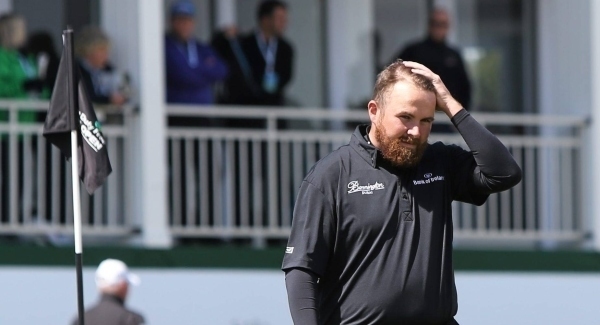
Aside from what it says about his performance and emotions around such an important step in his own career, it also underlined the power that a cluster of successful individuals can attain.
In that narrative, there are key lessons for Irish business.
Shane is one of a set of Irish golfers that are excelling magnificently on the world stage. Relative to the size and population of our country their ability to conquer marquee competitions is an inspirational wonder.
It began when Pádraig Harrington broke the mould in 2007 when he won the Open and followed up with the PGA and another British Major.
He was followed into the Pantheon by Graeme McDowell, Darren Clarke, and Rory McIlroy, as they all won key competitions around the world.
At various times they have been ranked among the top 20 golfers on the planet. To top it off, Paul McGinley captained the winning Ryder Cup last year.
Shane name-checked a number of his Irish peers after the WGC win and spoke about McDowell and Harrington’s enthusiastic support and encouragement.
These golfers are an example of what in business school could be referred to as a “cluster”.
A cluster, as defined by the business guru Michael Porter in 1990, is a group of companies that collectively increases productivity and competitiveness.
A group of proximate companies collectively drive performance by raising productivity and innovation and increasing the number of entrants. This helps that collection of businesses, despite being fierce competitors, to excel in large marketplaces.
You can see examples of the “clustering effect” alive and thriving within the Irish economy.
Take agribusiness. Over the past 30 years a group of Irish managed agrifood companies, with no natural entitlement to be global winners, has set out and conquered a broad range of global markets.
Companies did so while competing hard with each other while also learning from the successes and failures of individual businesses as they travelled that journey.
Aircraft lessors are another prime example.
Over 30 leasing companies in Ireland now dominate the world’s aircraft financing sector and they are battle- tested companies that have to compete head to head for large contracts from airlines in Asia, Africa, Europe and the Americas.
IT is another industry where clustering is having enormous benefits on employment and wealth creation. The recent developments around Google, Facebook and Twitter in Dublin’s docklands are an extension of earlier success by Microsoft and others who laid down roots in Ireland and prospered in recent decades.
Being a small country with a relatively tiny population pool is no barrier to success when clusters develop. What you do need is ambition, an appetite for hard work and an institutional framework that facilitates success.
The group of golfers that Ireland has produced seems to have had a constructive and supportive golfing fraternity that helped them evolve in a measured way.
Equally, the Government funded institutions like the IDA and Enterprise Ireland play a central role in nurturing and providing support for both fledging and mature companies that pick Ireland as their base for growth and expansion.
After emerging from a near-death experience, the Irish economy needs icons and heroes that can show a sustainable path to driving employment and financial wellbeing.
All too often we have a collective penchant to see our glass as half empty with cracks appearing in the base. If you look outwards, however, and consider what has been and can be achieved there is much to be mulled over.
Irish golfers may be laser-like focussed on their own performances, but in doing so they also shine a light on how Irish clusters can generate success and prosperity.
CONNECT WITH US TODAY



Be the first to know the latest news and updates











