Markets reel as China devalues a second time
Germany’s two-year yield fell to a new record low of minus 0.29% as investors feared the deflationary pressures of a slowdown in China’s economy would sap growth globally.
The prospect of a US interest rate rise by the Federal Reserve next month dimmed as a result, dragging the US dollar, financial stocks and US Treasury yields lower. The 10-year US Treasury yield fell to 2.045%, the lowest in more than three months. “China is still a big unknown, and the market is pricing in the worst,” said Marc Chandler, global head of currency strategy at Brown Brothers Harriman in New York.
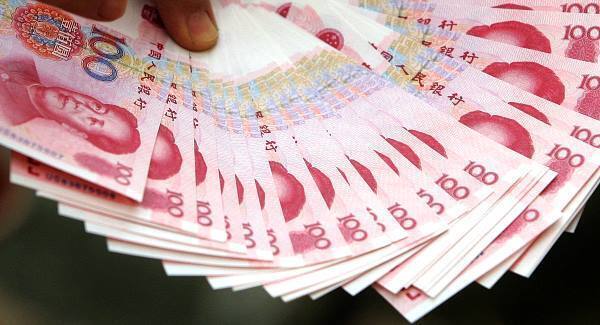
Yesterday, the People’s Bank of China set the yuan’s midpoint rate lower than Tuesday’s closing market rate, resulting in nearly a 4% devaluation of the yuan in two days against the dollar.
The yuan’s spot value fell further after Beijing released weak July output and investment data, trading as low as 6.4510 to the dollar.
Sources said the move to devalue the yuan reflects a growing clamour within Chinese government circles for a devaluation of perhaps up to 10% to help its struggling exporters.
Major stockmarkets lost ground worldwide, with sectors exposed to China’s economy falling most, as a lower yuan makes exports to China from the rest of the world more expensive.
Luxury goods stocks like the French giant LVMH and Coach, were lower, along with carmakers like BMW which lost 2.6% and General Motors which lost 2.4%. The pan-European FTSEurofirst 300 index and the eurozone’s blue-chip Euro Stoxx 50 index fell 2.9% and 3.5%. MSCI’s broadest index of Asia-Pacific shares outside Japan hit a two-year low, closing down 1.75%.
The dollar weakened against most major currencies, with US debt yields lower also, as investors questioned whether China’s devaluation would affect the Federal Reserve’s plans to raise interest rates later this year.
Short-term US interest rates markets signalled that traders see no more than a 40% chance the US central bank would raise rates at its September 16-17 meeting, even though the effective fed funds rate rose to 0.15% yesterday, the highest since April 2013.
“Volatility is picking up and it’s causing turmoil, it’s pushing bond yields lower and it’s casting more doubt on the Fed,” said Axel Merk, president and chief investment officer of Palo Alto, California-based Merk Investments.
Banks were the weakest sector in the US stockmarket, falling 1.9%, as investors scaled back bets that the US Federal Reserve would boost rates this year. The euro rose 1.4% above $1.11 for the first time in three weeks and the dollar fell 0.5% against the yen, its biggest fall in more than a month, to 123.91 yen. Emerging market currencies from Indonesia to Brazil reeled as investors feared central banks could rush to weaken their own currencies in response to China’s move.
Gold rose for the fifth consecutive day, hitting a three-week high of $1,119.890 an ounce.
Meanwhile, the Chinese central bank, which had described the devaluation as a one-off step to make the yuan more responsive to market forces, sought to reassure financial markets yesterday that it was not embarking on a steady depreciation.
“Looking at the international and domestic economic situation, currently there is no basis for a sustained depreciation trend for the yuan,” the People’s Bank of China said.
Reuters