Mario Draghi can enjoy the sun, but hard work lies ahead
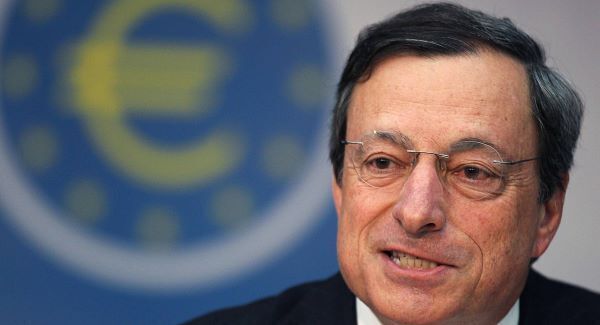
For the first summer since he took office as president of the ECB, the region’s four biggest economies are posting growth, spurred by a weaker euro and lower oil prices that are boosting consumer spending.
Fears about deflation have abated, and another year of ECB extraordinary stimulus means economic tailwinds are likely to persist.
Reports coming Friday will likely show output in the eurozone expanded for a ninth quarter, with Germany, France, Italy, and Spain all growing.
This relatively smooth sailing stands in contrast to summer 2012, when Mr Draghi said he would do “whatever it takes” to keep the union together.
A year later, his home country Italy lumbered on in its longest recession since the Second World War, while August 2014 marked Mr Draghi’s shift towards quantitative easing. “It fits in to the general picture of a gradual recovery taking shape,” said Anatoli Annenkov, a senior economist at Société Générale.
Spain, whose government had to seek aid for the banking sector in 2012, is at the forefront of the eurozone economy. Germany, Europe’s largest economy, is seeing consumer spending benefit from the lowest unemployment rate since reunification.
“It all points to us having relatively robust growth in the second quarter despite all the troubles in Greece,” said Jens Kramer, economist at Nord in Hanover, Germany.
In Italy, where Prime Minister Matteo Renzi has promised tax cuts to support growth and make up for ground lost, the economy probably expanded 0.3% in the period. France may have grown for the fourth consecutive quarter.
“We expect positive growth across all euro-area countries except Greece and, possibly, Finland,” said Peter Sidorov of Deutsche Bank. Data is set to show that Greece’s economy contracted 0.5% in the second quarter, extending the country’s recession. The ECB has committed to running its bond-buying programme until at least September 2016.
Still, Mr Draghi can’t relax completely. Just a month ago, the eurozone faced the possibility of a breakup and ensuing financial market turmoil as Greece threatened to default on its debts. German industrial production unexpectedly fell in June, resulting in stagnation for the second quarter. In France and Italy, the gauge also declined in June.
“A ‘Grexit’ scenario could massively hit sentiment, and thus weigh on the [eurozone] economy,” said Johannes Gareis, an economist at Natixis in Frankfurt.“Another question is China. It’s a risk factor for Germany and its exports.”
Mr Annenkov recommends Mr Draghi make the most of any vacation he may take. “It’s not going to be a long holiday for him.”
Bloomberg
CONNECT WITH US TODAY



Be the first to know the latest news and updates











