Ministers to decide on Greek proposals
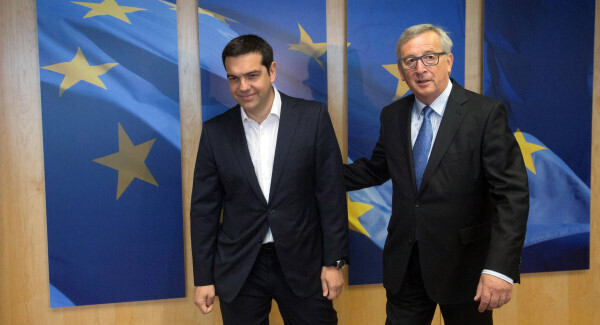
Today is ‘D-Day’ for Greece as the eurogroup wait to receive and evaluate proposals from the Tsipras government for a third bailout programme.

Ministers to decide on Greek proposals

The ECB held its fire too, agreeing to maintain ELA (emergency liquidity assistance) at its current level but not increasing the amount of collateral they hold against it — which would have, in effect, reduced the amount of liquidity in the system. The Greek Central Bank said banks are unlikely to reopen this week.

Greek prime minister Alexis Tsipras took his case to the European Parliament that was sitting at its monthly plenary session in Strasbourg and explained his case to a mixed reception. If he had any doubts about convincing all shades of political opinion about the justice of his cause, he was left in no doubt that not all shared his economic perspective.

His new finance minister, Euclid Tsakalotos, sent a letter to Jeroen Dijsselbloem and Klaus Regling, the chairperson and managing director of the ESM, the EU’s bailout fund making a formal request for stability support on the basis that his country’s predicament presents a risk to the financial stability of Greece as a member state and of the euro area as a whole — and so meeting the demands of the ESM Treaty.

This request was, in fact, the only item he needed to include in the letter, but given the urgency of the situation, he went further, by asking for a three-year programme, saying the money would be used to meet Greece’s debt obligations and to ensure stability of the financial system.

Greece would commit to a comprehensive set of reforms and measures in the areas of fiscal sustainability, financial stability and long-term economic growth. Within this framework, they intend to implement measures in the Greek parliament next week to include tax reform and pension-related measures.

He undertook to present today detailed proposals for a comprehensive and specific reform agenda. They need the new programme agreed by July 20 when the ECB must be paid €3.6bn plus interest of €600m.

When they arrive they will immediately be assessed and the ESM board – effectively, the finance ministers of the eurozone – to see if it meets their requirements. While it is expected to be based on the final proposals before the referendum, known as the Juncker MoU (Memorandum of Understanding), EU sources said it would need to be more comprehensive and detailed as it will be for more money and for three years, while the previous proposals were just for a five-month extension.

The summit of EU leaders, next Sunday, will decide whether to give the go ahead to negotiate the programme in detail with Greece.

“If the programme is not enough and is just a list of political slogans as previously, this will not be enough”, he said. The leaders will also consider a debt sustainability and risk assessment for Greece.

Any one country can veto the request, while both Greece and Germany and a number of other countries need agreement from their parliaments to the new programme. According to the IMF they would need €10bn immediately and a further €50bn over the three years.

The finance ministers can decide whether to release the SMP — profits made by the ECB on their purchase of Greek bonds – €1.85bn from last year and €1.45bn for this year. However, this wouldn’t be sufficient to cover the total ECB bond of €4.2bn —which includes interest of €0.6bn — and part of which they may be entitled to receive back next year.

x

More in this section

The Business Hub

Newsletter

News and analysis on business, money and jobs from Munster and beyond by our expert team of business writers.

Cookie Policy Privacy Policy Brand Safety FAQ Help Contact Us Terms and Conditions

© Examiner Echo Group Limited