Irish concerns as political deadlock in Britain looms
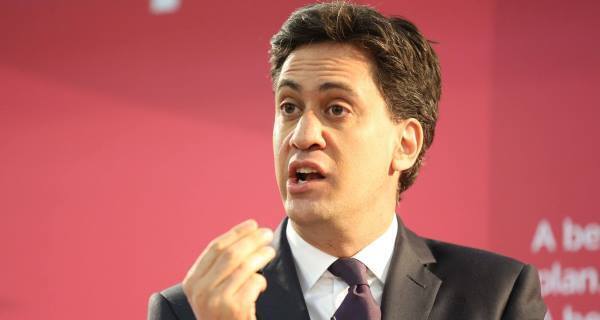
Ukip and the SNP are making inroads ahead of the election. Deadlock at Westminster would spell bad news for Ireland, writes 

Irish concerns as political deadlock in Britain looms

Britain’s general election campaign is under way and the fur should be flying. However, with three-and-a-half weeks to go, the campaign is a bit of a snore.

The opposition Labour Party has had a solid start to the campaign while a Tory surge, on the back of solid economic news, has yet to materialise. The Conservatives are looking edgy as constituency polls in key marginals indicate a switch away from the Cameron team.

Ed Miliband’s reputation as a bit of a geek, a man who guzzles bacon sandwiches when not stabbing his brother in the back, is firing blanks when it comes to hitting his party support, though he has acquitted himself well in early TV jousts.

The other big news, however, is the surge in support for the leftist SNP — ironically at Labour’s expense. Here, Miliband is facing the consequences of decades of neglect of Scottish voters.

A consequence of this could be complete deadlock in Westminster once the votes are counted. That would have serious implications for the economy. It is early days yet, but constitutional lawyers and senior civil servants are preparing for the possibility of such a deadlock, or of a minority Labour government propped up, perhaps on an issue-by-issue basis, by the SNP. Led by Nicola Sturgeon, the star of the most recent televised leaders’ debate, perhaps the Scottish Nationalists will look to one Charles Stewart Parnell and his Irish Parliamentary Party for inspiration.

Already, the British pound, after a good run, has been looking shaky. The uncertainty of a political deadlock would not be good news for this country. Our exporters have benefited from the relative strength of sterling and, of course, the dollar. For Irish firms, the UK remains the key market, particularly for those in the early stages of expansion. Many more firms must compete with British importers.

Miliband — some say, to his credit — has ruled out a referendum on continued EU membership of the sort promised by Prime Minister David Cameron in an effort to neutralise the threat from the UK Independence Party.

The removal of the coalition comprising the Liberal Democrats and Conservatives is likely to be quietly welcomed in Northern Ireland, where a severe round of cutbacks in public spending is planned. Sinn Féin, of course, is caught between a rock and a hard place on the issue, not wishing to be viewed as irresponsible yet unwilling to alienate its voter base while providing handy arguments to opponents, particularly among the hard left south of the border.

The problem is that the Tories and Labour are seeking to outbid each other in promising a boost to health spending, with health secretary Jeremy Hunt angling to outflank Labour on this, one of its strongest electoral areas.

Such promises, in an unforgiving fiscal environment, could lead to increases in the health budget at the expense of social welfare, defence, and other key areas. However, deadlock could give the Democratic Unionist Party, in particular, welcome leverage when it comes to extracting largesse from London. (Sinn Féin, through its policy of absention at Westminster, would miss out in terms of influence.)

Ed Miliband raised eyebrows when he was unexpectedly elected as Labour leader in September 2010 at the expense of his brother David. He has since appeared to move away from the centrist politics espoused by predecessors Tony Blair and Gordon Brown.

Spiritually he seems closer to the ‘New Jerusalem’ politics practised by the Attlee administration after 1945, when one fifth of the economy was nationalised and the National Health Service established.

The NHS, despite growing problems associated with a rapidly ageing population, retains a strong reputation. The Attlee government was ultimately broken after six years by the country’s huge debt, which was more than twice national income — itself a product of the Second World War.

At the time, some wealthy people, such as the mining tycoon Chester Beatty, moved to Ireland to escape the high taxes imposed.

Appearances may deceive. Miliband is not promising penal income taxes of the sort that existed before Margaret Thatcher came to power. However, his shadow chancellor, Ed Balls, has not ruled out a return to a top income tax rate of 50p in the pound.

Such a move would somewhat lessen pressure on the authorities to ease back taxes on the highly paid.

The concern is that many of our most talented people are being lured overseas, and to London in particular, by the promise of much higher take-home pay.

The current chancellor, George Osborne, has also been targeting some of the foreign direct investment that has flowed to Dublin by lowering the corporation tax rate and offering incentives related to special intellectual property. Osborne has, put simply, been greedily eying our juicy foreign investment lunch.

It is unlikely that Labour would seek to strangle the geese that lay all the golden eggs in the City, which throws up hundreds of billions in revenues.

However, a Miliband-led government would seek to rein in some of the wilder elements in the financial sector, aware of how Gordon Brown dropped the regulatory ball while he was chancellor in the run-up to the financial crash.

If anything, Labour governments tend to be more cautious on fiscal matters than the Tories. Roy Jenkins and Denis Healey both stood out firmly against the party left while in charge of the country’s finances. Brown was a big spender on the back of a booming economy, but made much of his adhering to a golden rule on avoiding long-run budget deficits.

Labour is likely to favour reducing indirect taxes, seen as a burden on the poor, and to shift the burden to the higher paid.

There will be no re-nationalisations, while moves to sweep away Thatcher’s trade union legislation are also unlikely. The real concern is that our neighbour could be entering a long period of political deadlock and that a new Tory leader — Boris Johnson, say — could be waiting in the wings with a raft of populist policies.

Johnson may renew promises of a referendum on EU membership that would unsettle the markets. However, recent polls suggest that Ukip’s hardline rhetoric may be backfiring and that support for EU membership is shared by a clear majority and is rising.

If that trend was to firm up, it would remove a key source of the political and economic uncertainty that is looming over us all.

x

More in this section

The Business Hub

Newsletter

News and analysis on business, money and jobs from Munster and beyond by our expert team of business writers.

Cookie Policy Privacy Policy Brand Safety FAQ Help Contact Us Terms and Conditions

© Examiner Echo Group Limited










