Patrick Honohan: Strengthen laws to tackle bad bankers
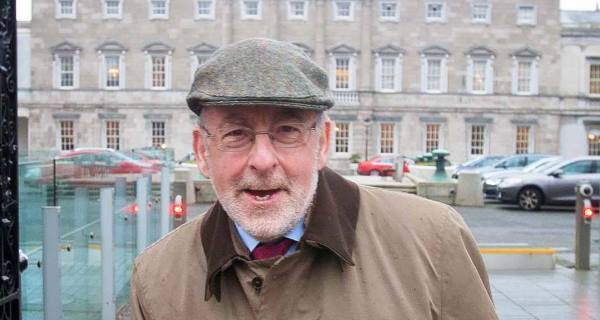
In a speech to the annual conference of the George Soros-chaired think-tank, the Institute for New Economic Thinking (INET), in Paris yesterday, Mr Honohan said that while the behaviour of bankers in the run-up to the financial crisis in Ireland was more “unwise” than criminal, it was still the “unrestrained and reckless” behaviour of the Irish banks that de-stabilised the economy and the public finances, here, and not the State’s membership of the single currency.
“The Irish legislative framework deserves to be strengthened to take account of egregious recklessness in risk-taking by those who were in charge of failed financial firms. Recently, the UK enacted legislation of this type, which I believe could be usefully mirrored in Ireland,” he said.
Towards the end of last year, the British Government started putting in place powers that could see senior bankers jailed for up to seven years if found guilty of reckless misconduct.
“In my view, the first line of defence against what has happened must be the directors and managers of the banks. Over just a few years, this credit-fuelled bubble created a pattern of over-indebtedness and mispricing that made Ireland’s economic performance during the ‘great recession’ period among the worst in Europe. With greater prudence by management and boards of the lending banks, this bubble could not have happened,” Mr Honohan said in his speech.
“It is also worth emphasising that international lenders, too, were an essential part of the process; they were, surely, lucky to recover all of the funds they complacently advanced to fuel the boom,” he noted.
Mr Honohan also said that the idea of a weak regulatory regime in Ireland at the time of the crisis, or “lax supervision” as he calls it, being to blame for the domestic meltdown is only “partly true”.
“Only partly because, as mentioned, any attempt to assign responsiblity must start with the banks,” he said.
However, he did acknowledge that the regulators came up short in their duties: “Still, we must not neglect the ineffectual supervision which failed to inhibit this banking behaviour. These supervisory flaws were similar in character to what happened in half a dozen other countries, reliant on un-intrusive supervision that presumed a well-managed bank would not create systemic failure. But, in Ireland, the scale of the bank credit expansion and the associated construction and housing price boom was of a different life-threatening order of magnitude.”
“Credit expansion on such a scale should have rung alarm bells, triggering much more intrusive examination of the vulnerabilities, and corrective measures should have been introduced,” he said.
In his speech, Mr Honohan also said that it is a myth that the bank guarantee brought about the need for fiscal austerity and crippled the Irish economy and that the bailout caused the recession, with him noting that the downturn, here, was “well under way” by the time of the guarantee.
He also suggested it would be wrong to think Ireland would have been better off only borrowing from the IMF, and not also its European counterparts.
CONNECT WITH US TODAY



Be the first to know the latest news and updates