Greece fails to secure EU allies in debt talks
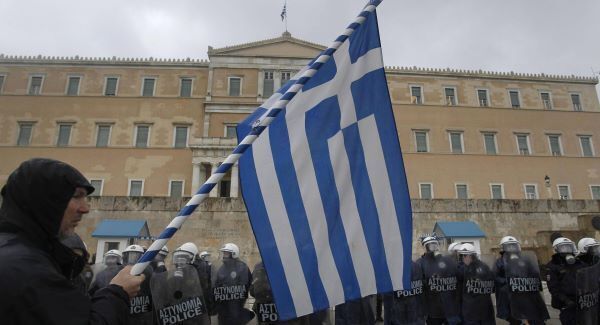
Greece’s new leftist-led government, isolated in the eurozone and under pressure from the ECB, said yesterday it would not accept any deal in crunch talks next week that keeps its current international bailout programme in place.

Greece fails to secure EU allies in debt talks

The defiant stance came as Standard & Poor’s cut its credit rating on Greece amid concerns over the country’s cash position.

The agency said it has lowered Greece’s long-term rating by one notch to B- and warned a further downgrade is possible by keeping the country on so-called “creditwatch negative”.

S&P says the downgrade “reflects our view that the liquidity constraints weighing on Greece’s banks and its economy have narrowed the timeframe during which the new government can reach an agreement on a financing program with its official creditors”.

A government official said Finance Minister Yanis Varoufakis would ask for a “bridge agreement” to keep state finances running until Athens can present a new debt and reform programme.

“We will not accept any deal which is not related to a new programme,” said the official, who asked not to be named.

Varoufakis returned empty-handed from a tour of European capitals in which even left-leaning governments in France and Italy insisted Greece must stick to commitments made to the EU and IMF and rejected any debt writeoff.

Eurozone finance ministers will discuss how to proceed with financial support for Athens at a special session next Wednesday ahead of the first summit of EU leaders with new Greek Prime Minister Alexis Tsipras the following day.

Participants said no progress was made at a meeting of senior finance ministry officials in Brussels on Thursday because Greece and its eurozone partners were so far apart.

“It was Greece against all others, basically one versus 18,” one official said. Athens’s partners broadly lined up in support of a hardline German document rejecting any rollback of reforms or commitments made by previous Greek governments.

Tsipras and his ministers promised in their first days in office to raise the minimum wage, rehire some sacked government employees and stop some privatisation. This clashed with IMF and eurozone countries’ conditions, which have lent Athens €240bn.

Adding to pressure on Tsipras, the US told Greece yesterday through its ambassador to work co-operatively with European partners and the IMF and “exercise fiscal prudence”.

The new premier will need to tread a fine line when he delivers a policy speech to parliament tomorrow and seeks a vote of confidence on Tuesday. The ECB raised the stakes this week by deciding to bar Greek banks from using Greek government bonds as collateral

* Reuters

More in this section

The Business Hub

Newsletter

News and analysis on business, money and jobs from Munster and beyond by our expert team of business writers.

Cookie Policy Privacy Policy Brand Safety FAQ Help Contact Us Terms and Conditions

© Examiner Echo Group Limited










