Good year for European stocks
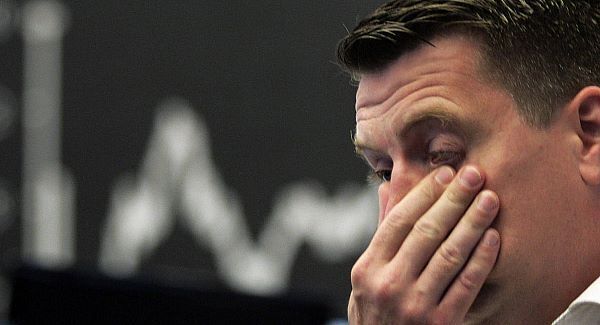
European stocks grow at lesser rate

Good year for European stocks

European stocks climbed for a third year, although their advance was the smallest since 1992.

The Stoxx Europe 600 index gained 4.4% in 2014 after rallying 14% in 2012 and 17% in 2013.

However, the gauge lost 1.4% last month, its first December decline since 2008, amid a slump in oil prices and in Greek equities as prime minister Antonis Samaras failed to get enough backing for his presidential candidate, leading to early elections.

Property firms, travel stocks, and drugmakers increased the most in 2014, up over 18%. Energy and commodity producers posted the biggest drops.

“For most active managers, it’s been a tough year,” said Colin McLean, founder and chief executive officer of SVM Asset Management in Edinburgh.

“If you had a Roche or AstraZeneca, then you’ve done OK. Europe has got the stimulus of the oil price, of a lower currency. We’re bullish on Europe overall.”

While the Stoxx 600 dropped in December, the Standard & Poor’s 500 index, Dow Jones Industrial Average and Russell 2000 index climbed to records, and the Nasdaq Composite index reached its highest level since March 2000.

Strategists forecast more advances for European stocks through the end of 2015. After falling to a low in October, the Stoxx 600 rebounded 13% to an almost seven-year high on December 5. It then retreated to a two-month low amid a plunge in oil prices and political turmoil in Greece.

In the week ended December 12, the Stoxx 600 slumped 5.8%, the most in three years, as Greece’s ASE index posted its biggest plunge since 1987.

The Greek gauge sank 14% last month, the most since June 2013. Mr Samaras’s failure revived concern over the European currency union and ECB stimulus plans. The nation will have elections almost 18 months before the prime minister’s term was due to end.

The benchmark index lost 29% in 2014, becoming the world’s worst-performing equity market after Russia. The concerns pushed lower national equity indexes of Europe’s periphery.

Italy’s FTSE MIB index fell 5% in December, Portugal’s PSI 20 index lost 7.3% and Spain’s IBEX 35 index dropped 4.6%. The Spanish gauge was still up 3.7% for the year, while the Portuguese index sank 27% and the Italian one was little changed.

Germany’s DAX index, which also fell in December, rose 2.7% in 2014. France’s CAC 40 index slipped 0.5% last year, while the UK’s FTSE 100 index retreated 2.7%. With a 21% surge, Denmark’s OMX Copenhagen 20 index posted the biggest rally among 24 developed-market equity gauges in 2014.

* Bloomberg

x

More in this section

The Business Hub

Newsletter

News and analysis on business, money and jobs from Munster and beyond by our expert team of business writers.

Cookie Policy Privacy Policy Brand Safety FAQ Help Contact Us Terms and Conditions

© Examiner Echo Group Limited










