Economy set to increase by 4.8%
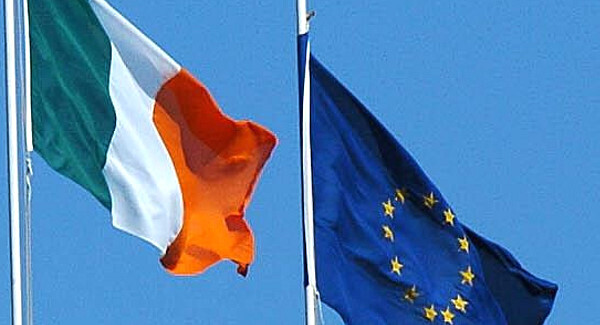
The economy will increase 4.8% this year and 3.3% next year as a broadbased recovery takes hold, according to EY’s latest economic outlook.

Economy set to increase by 4.8%

These forecasts have been revised up from a growth rate of 2% for 2014 and 2.4% for 2015 contained in the firm’s last economic outlook.

Ireland is on course to be one of the fastest-growing economies of the 28 EU states over this year and next.

“At first glance, one might expect Ireland to now be able to relax the purse strings as its public finances are in better shape, but the reality is with high debt and EU rules, even with its deficit under better control, the Republic of Ireland is not going to be in a position anytime soon to have a more expansionary fiscal policy,” said Neil Gibson, economic advisor to EY.

“So, despite all the good news about the Republic of Ireland economy and it being the poster child of the eurozone crisis economies, a more voter-friendly budget will not be on the horizon for several years.”

The company’s revised forecasts are the latest in a series of upgrades for the economy, including the Department of Finance and the Central Bank. On Friday, the credit rating agency, Standard & Poor’s upgraded the country’s credit rating from BBB+ to A.

According to Prof Gibson, growth for this year and over the next few years will be underpinned by an increase in exports, investment, consumer spending and full-time employment.

The improvement in Ireland’s reputation reflects the Government’s return to bond markets and successful completion of the bailout programme, while upgrades to the credit ratings from BBB+ in early 2012 to A- have seen the lowest long-term government-borrowing rates and best credit rating among the peripheral eurozone economies, said EY.

The biggest threat to growth is the risk of eurozone deflation, it added. Partly as a result of the large relative size of the export sector, and partly a function of its strong growth, net trade accounted for three-quarters of economic growth between 2012 and 2014.

Growth in Ireland remains heavily dependent on exports compared to the UK’s more consumer and business investment-led growth. Ten out of the 13 broad industries have registered net jobs growth since 2012 and, as the domestic economy has recovered, the sectoral pattern of jobs recovery has broadened bringing improved prospects to both urban and rural areas.

The four biggest contributors to output growth are industry (manufacturing), professional services, financial services and information and communications technology.

More in this section

The Business Hub

Newsletter

News and analysis on business, money and jobs from Munster and beyond by our expert team of business writers.

Cookie Policy Privacy Policy Brand Safety FAQ Help Contact Us Terms and Conditions

© Examiner Echo Group Limited