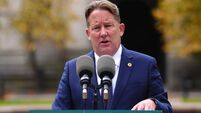
ECB: QE is on the cards early next year
“We expect that the adopted measures will lead, within the time of the programme, the balance sheet to go back to the size it had in early 2012,” Constancio said in a speech in London. “If not, we will have to consider buying other assets, including sovereign bonds in the secondary market, the bulkier and more liquid market of securities available. It would be a pure monetary policy decision, buying according to our capital key, within our mandate and our legal competence.”
The comments underline the ECB’s desire to be ready to add more stimulus if needed, with president Mario Draghi last week vowing to revive inflation “as fast as possible.”
Even so, Constancio reflects a growing consensus on the need to wait to see the impact of existing measures, with executive board member Benoit Coeure saying in an interview this week that policy makers “won’t rush” to any decision.
“They think the measures that they’ve put in place are just about good enough — if not, they’ll reassess,” said Marchel Alexandrovich, senior European economist at Jefferies International Ltd. in London.
“Given that they’ve just now kicked off this asset-backed securities programme, it’s perfectly reasonable to see how much it moves the market and how it goes. The idea of delaying quantitative easing until next year makes sense.”
ECB expert committees have been tasked with examining further measures to help boost the region’s near-stagnant economy, even after programmes buying up covered bonds and ABS started this year. Should the ECB buy sovereign debt, using the capital key would mean German bunds would be the top target. The eurozone’s largest economy paid in just under 18% of the central bank’s capital. France accounts for 14%, Italy 12% and Spain 9%.
“To explore new channels of transmission of monetary policy that have worked in other countries like the UK and the US, we are aiming at increasing the size of the monetary base and our balance sheet by directly injecting money also into non-bank economic agents,” Constancio said. The impact of buying sovereign debt would go “well beyond the direct effect on the yields of the purchased securities.”
The ECB’s Governing Council isn’t united on either the need for further stimulus or the design of purchases. Constancio sought to dispel some of the arguments against large-scale sovereign bond-buying in the euro area, saying the argument that such intervention is pointless because yields on government debt are already low “is not well founded.”
Bloomberg

CONNECT WITH US TODAY



Be the first to know the latest news and updates